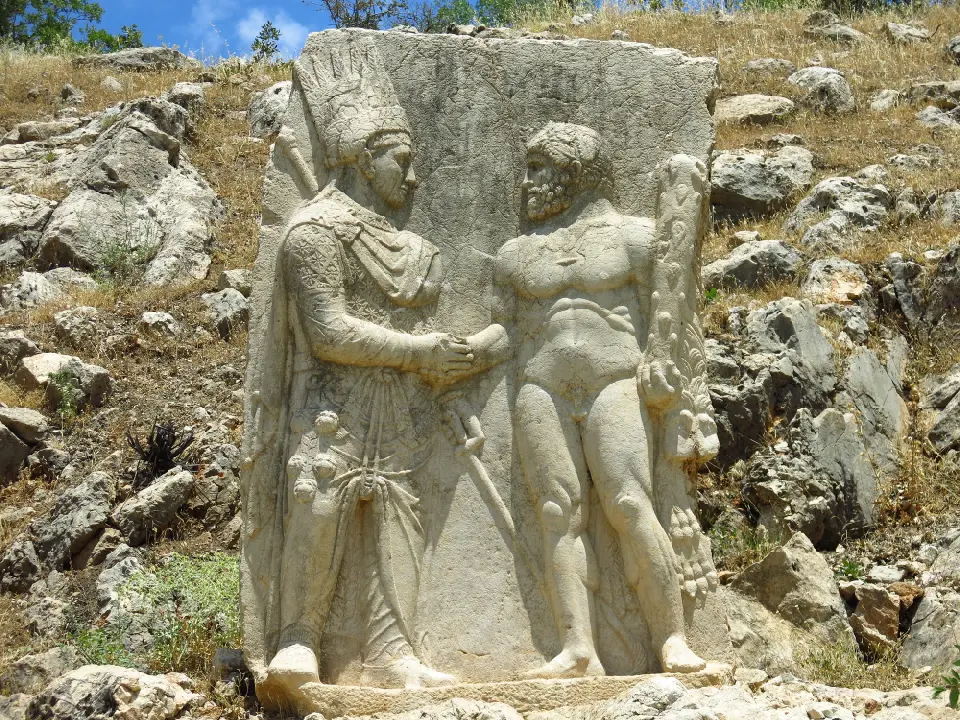
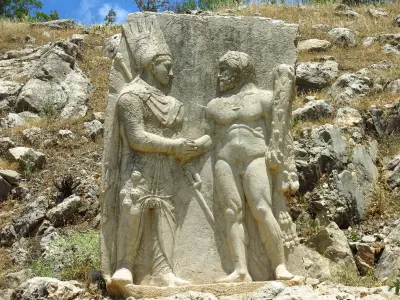
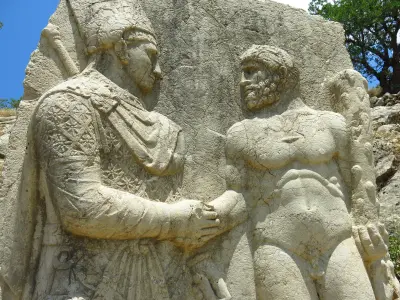
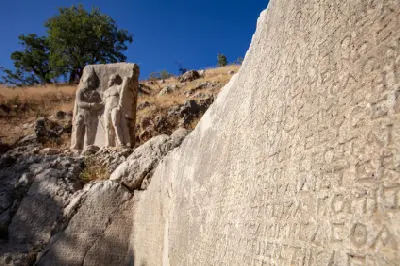
King Antiochus I of Commagene shakes hands with Heracles in the monumental dexiosis relief at Arsameia.
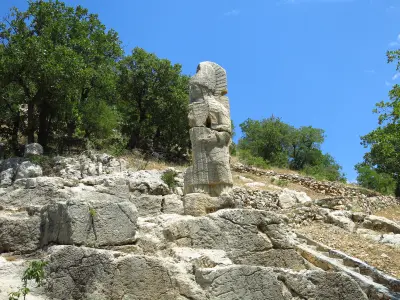
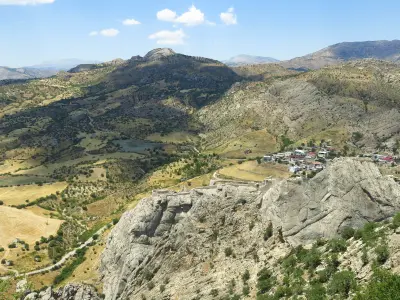
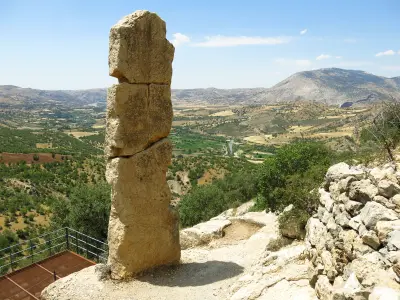
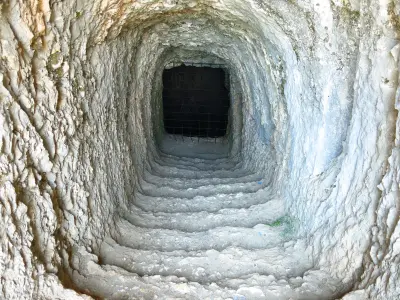
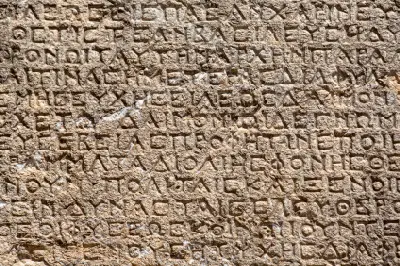
Arsameia on the Nymphaios is an ancient Commagene sanctuary and royal site set among rugged hills near Mount Nemrut in southeastern Turkey. Established as a royal centre during the Commagene period, the site contains monumental inscriptions, rock-cut chambers and surviving reliefs carved into the mountainside. Its best-known feature depicts King Antiochus I shaking hands with Heracles, while the scattered archaeological remains overlook the surrounding valleys and mountains.
37.94322, 38.65469
Gallery
Quick Facts
Access
Visitor Access
15–45 min
Elevation Gain
100 m
Best Light
Directional light reveals shallow carving in the rock reliefs and inscriptions while adding depth across the surrounding mountainous landscape.
Why This Light
Season
Seasonally Distinct
Spring brings greener hillsides and wildflowers around the ruins, while summer produces a dry, exposed mountain landscape. Autumn brings warmer vegetation tones, while winter snow and poor weather can make access more difficult.
Crowds
Usually Quiet
Restrictions
Arsameia is reached by road within the wider Mount Nemrut archaeological landscape, followed by walking on steep and uneven paths between the surviving monuments. Some archaeological features lie on exposed slopes, and winter weather can affect access.