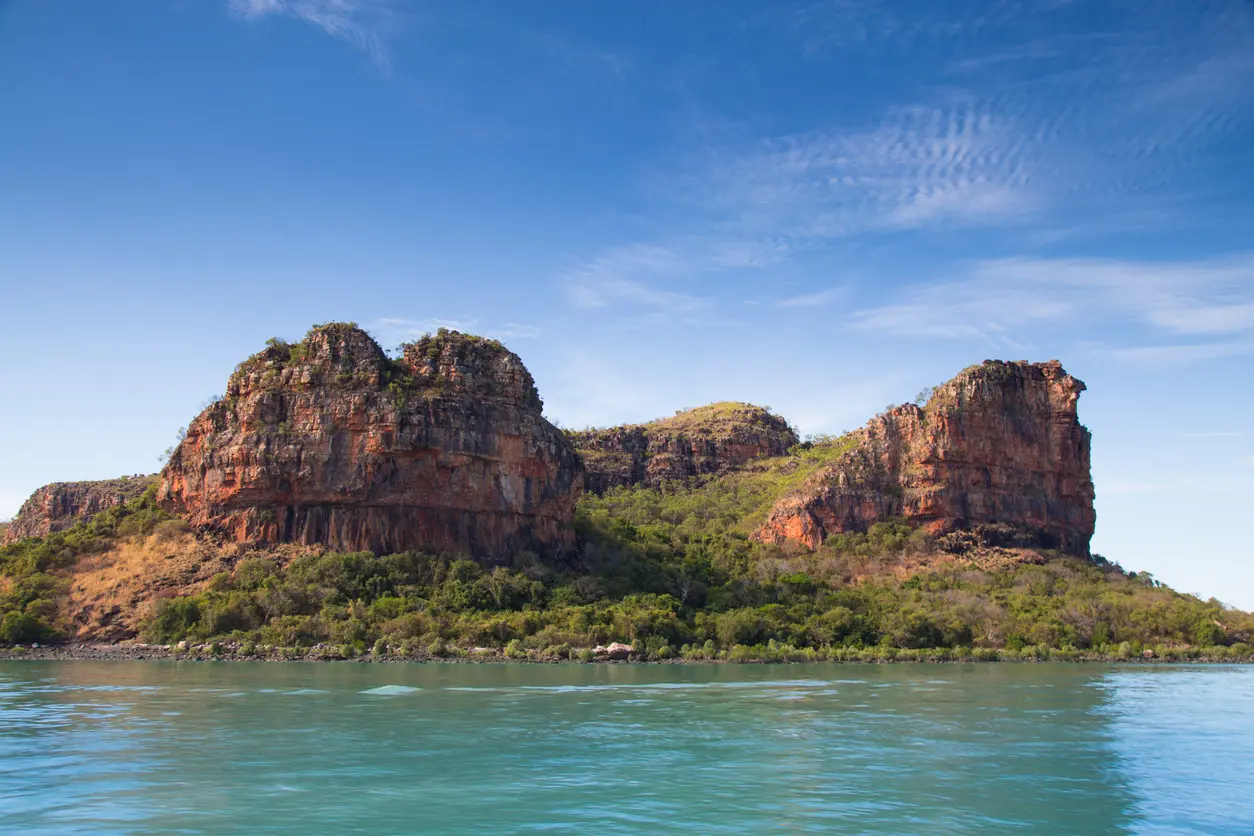
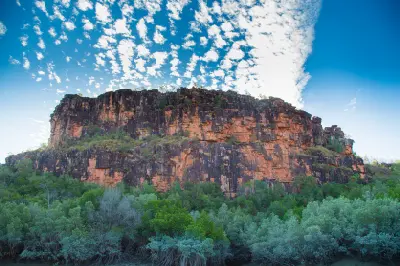
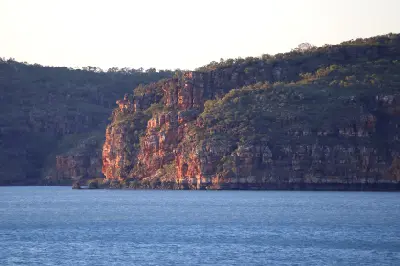
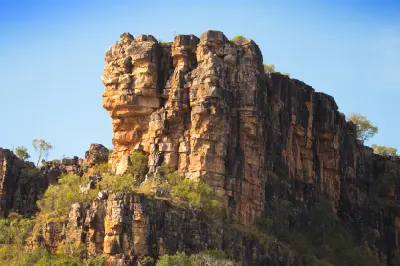
Sandstone cliffs along the Hunter River in the Kimberley, Western Australia.
Hunter River is a remote tidal river flowing into Prince Frederick Harbour on the northern Kimberley coast. Mangrove-lined waterways wind beneath steep red sandstone escarpments, with isolated rock formations rising directly above the river. The combination of calm water, mangroves and layered cliffs provides opportunities for landscape, wildlife and geological photography.
-15.01660, 125.41663
Gallery
Quick Facts
Access
Short Walk
0–5 min
Elevation Gain
0 m
Best Light
Low-angle light reveals texture in the sandstone escarpments, while calm water can reflect cliffs and mangrove-lined banks.
Why This Light
Season
Seasonally Distinct
Summer brings greener vegetation, higher runoff and storm conditions across the surrounding sandstone country during the Kimberley wet season. Winter brings drier vegetation, clearer skies and stronger red and ochre tones across the exposed escarpments.
Crowds
Usually Quiet
Restrictions
Hunter River is extremely remote and has no conventional road access, with visits generally made by expedition cruise vessels and smaller excursion boats operating along the Kimberley coast. Tides strongly influence navigation through the river and mangrove channels, while weather and seasonal conditions can affect access. Saltwater crocodiles inhabit Kimberley waterways, so visitors should follow operator guidance and avoid entering the water.