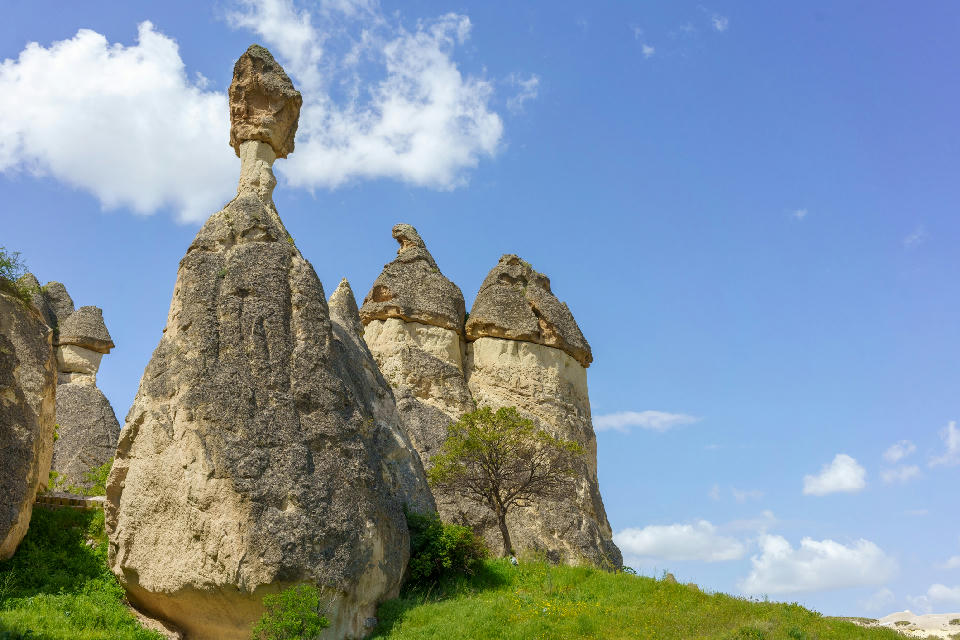
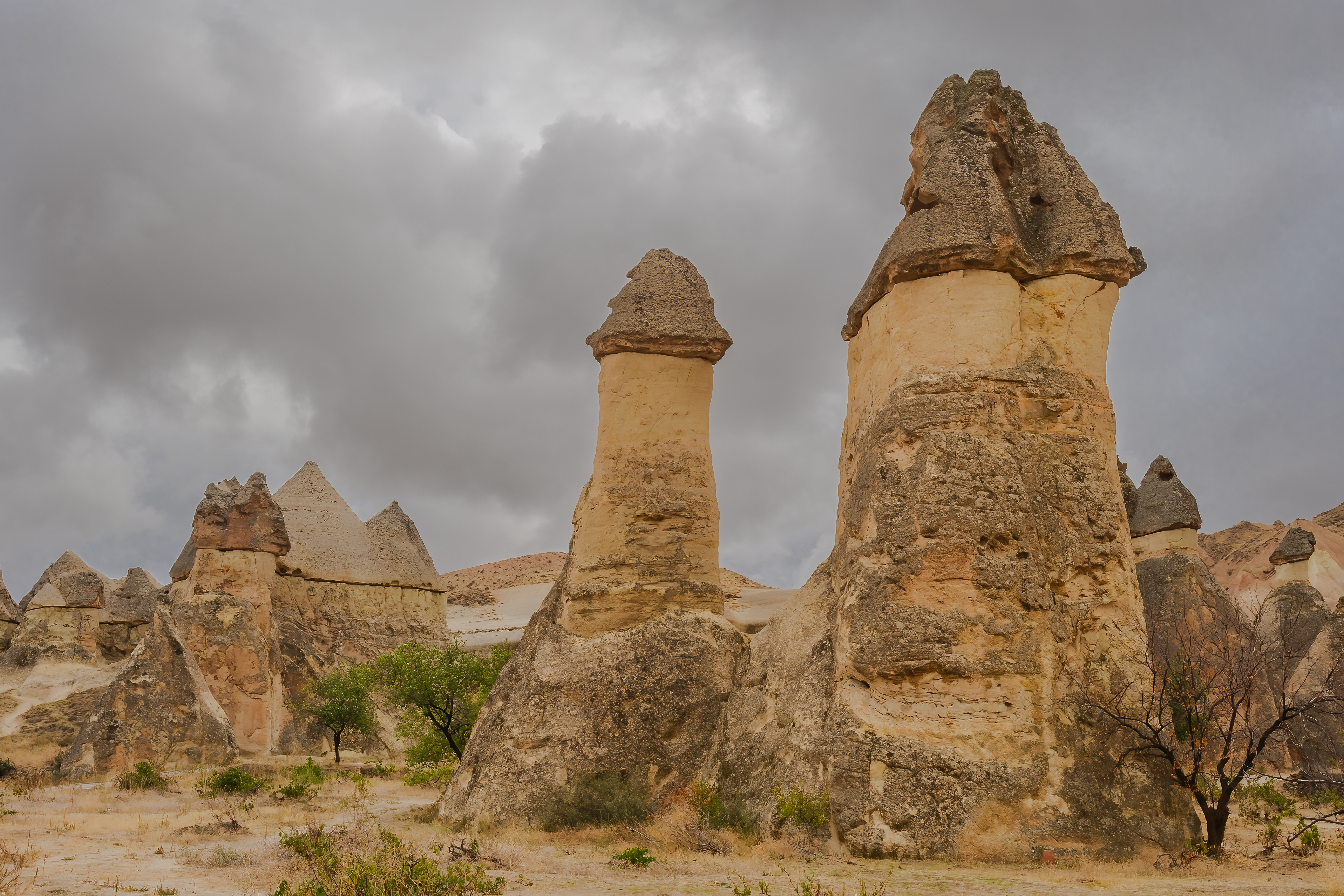
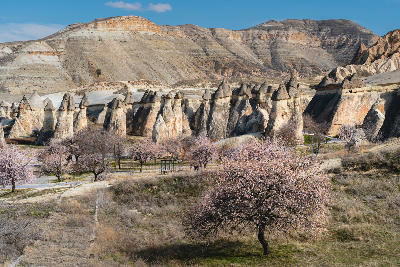
The iconic mushroom-shaped fairy chimneys of Paşabağ Fairy Chimneys rise above the valley floor, their protective basalt caps preserving some of Cappadocia's most spectacular rock formations.
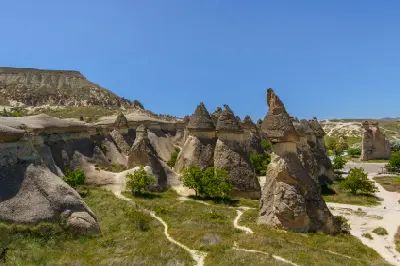
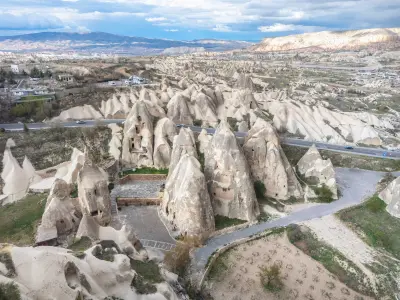
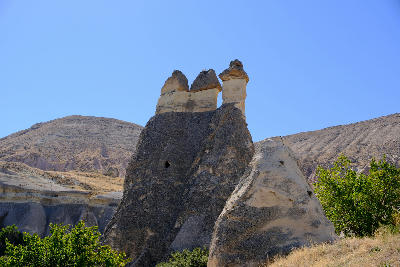
Paşabağ Fairy Chimneys is a distinctive volcanic landscape in Cappadocia, characterised by clusters of tall mushroom-shaped rock formations carved from soft volcanic tuff. Many of the formations have multiple stone caps balanced above narrow columns, illustrating the unusual erosion processes that shaped the region. Walking trails pass directly between the formations, revealing variations in scale, texture and shape throughout the valley. Paşabağ is one of the best-known concentrations of fairy chimneys in Cappadocia.
38.67701, 34.85491
Gallery
Quick Facts
Access
Short Walk
45–90 min
Elevation Gain
50 m
Best Light
Low-angle light reveals the textures and unique shapes of the volcanic rock formations while creating depth between the fairy chimneys.
Why This Light
Season
Year-Round Stable
The dry seasons generally provide clear skies and warm light that emphasise the textures of the volcanic rock formations. Winter occasionally blankets the fairy chimneys in snow, creating dramatic contrasts between the white landscape and the golden volcanic tuff.
Crowds
Often Busy
Restrictions
Paşabağ Fairy Chimneys is easily reached by road from Göreme and is explored on well-maintained walking paths. An entrance fee applies, and visitors should remain on designated trails to help protect the fragile volcanic landscape.