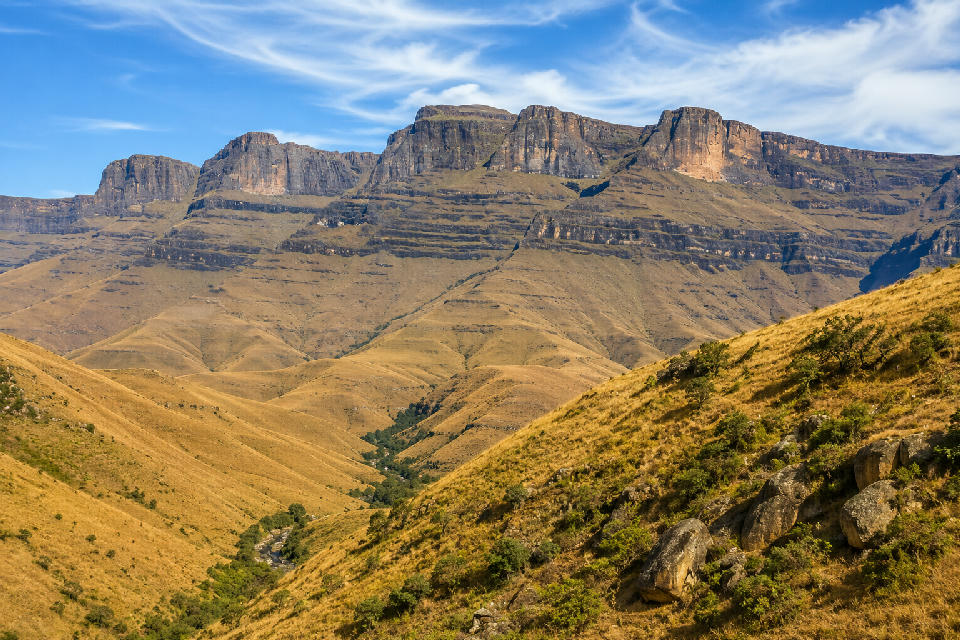
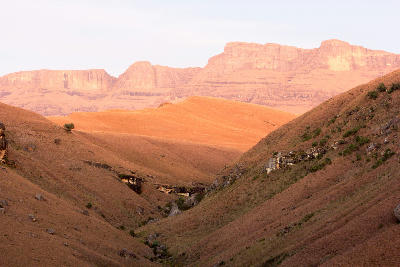
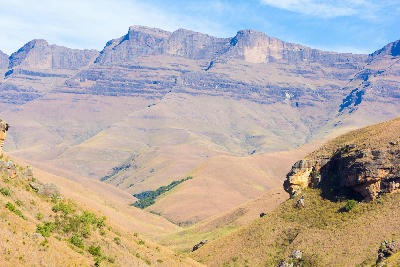
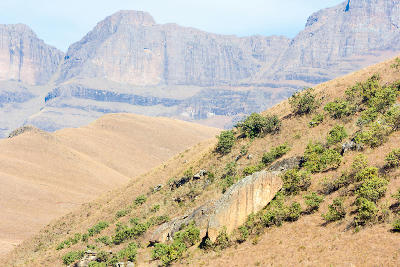
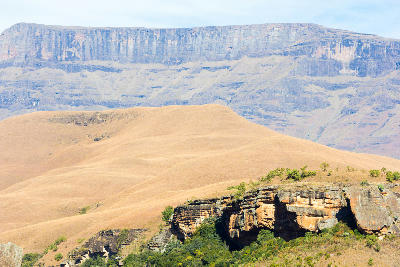
Panoramic view of the Giant's Castle massif rising above the rolling foothills of the Central Drakensberg, KwaZulu-Natal, South Africa.
Giants Castle is one of the flagship destinations of the central Drakensberg, combining dramatic mountain landscapes with exceptional hiking, wildlife and cultural heritage. Named after the distinctive silhouette of its towering cliffs, the reserve protects alpine grasslands, deep valleys, indigenous forests and one of the largest collections of San rock art in southern Africa.
-29.34406, 29.48184
Gallery
Quick Facts
Access
Roadside / Step-out
0–5 min
Elevation Gain
10 m
Best Light
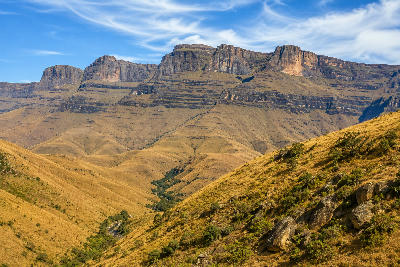
Low-angle light defines the rugged cliffs, highlights the mountain's distinctive profile and reveals the scale of the surrounding landscape.
Season
Seasonally Distinct
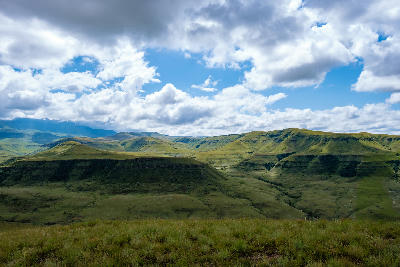
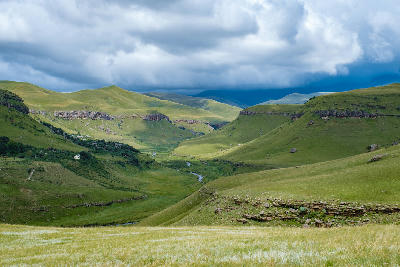
Each season creates a distinct mountain landscape, from lush summer grasslands and flowing streams to crisp winter air, occasional snowfall and colourful spring vegetation.
Crowds
Usually Quiet
Restrictions
Most scenic viewpoints are easily accessible within Giants Castle Nature Reserve, while longer hiking routes require additional planning. Entry fees apply, and access is subject to reserve regulations. San rock art sites are protected heritage areas and should be visited responsibly.