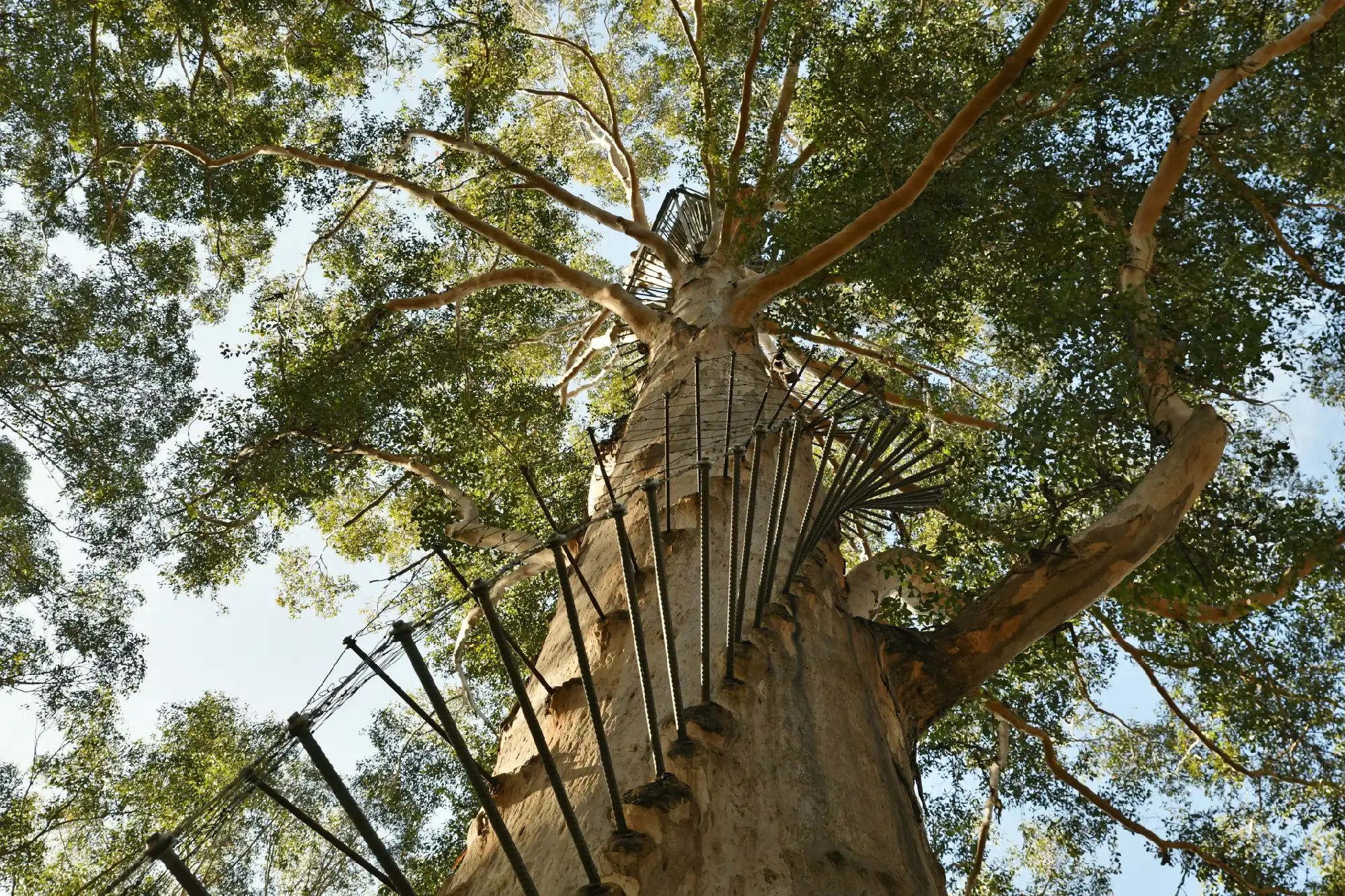
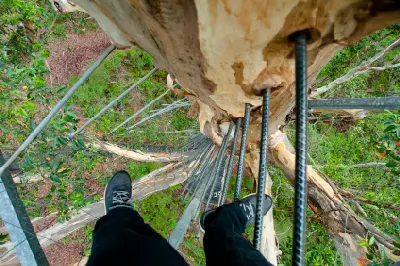
Climbing pegs spiral up the towering trunk of Gloucester Tree, a former fire-lookout tree in the karri forest near Pemberton.
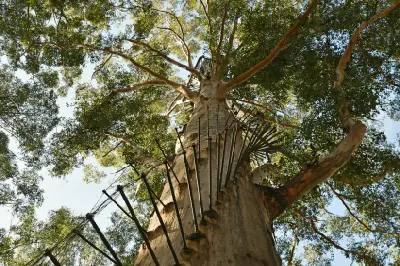
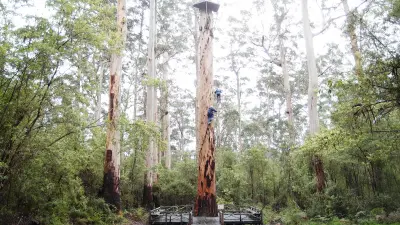
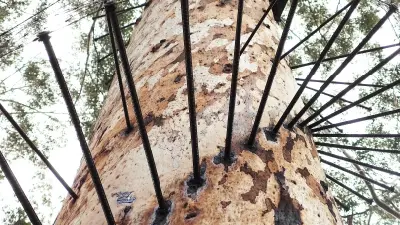
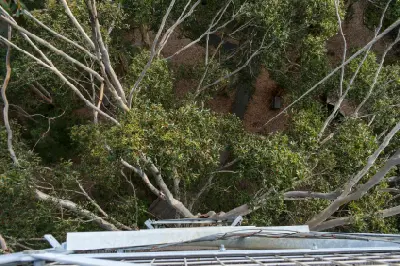
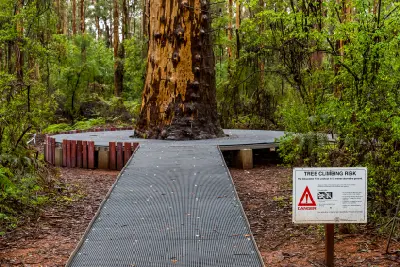
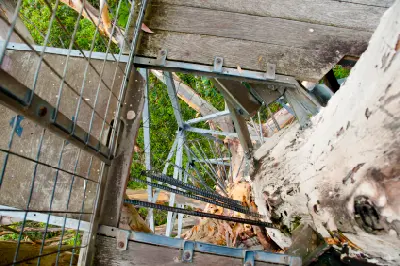
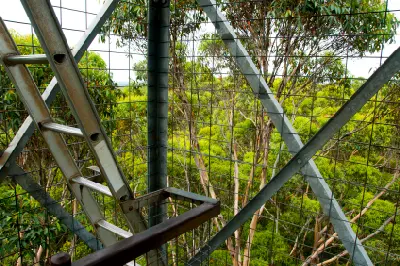
Gloucester Tree is a giant karri near Pemberton that was selected as a fire lookout in 1947 and fitted with metal climbing pegs leading into its upper canopy. The tree stands within dense karri forest in Gloucester National Park, with the restored climb now reaching a lookout 37 m above the ground. The immense trunk, repeating climbing pegs and surrounding vertical forest provide opportunities for forest, documentary and scale photography.
-34.44765, 116.05585
Gallery
Quick Facts
Access
Short Walk
5–15 min
Elevation Gain
0 m
Best Light
Soft light controls contrast beneath the tall canopy and retains detail across the pale karri trunk, surrounding foliage and forest floor.
Why This Light
Season
Seasonally Distinct
Summer brings drier forest conditions, warmer bark tones and patches of stronger light filtering through the karri canopy. Winter brings wetter trunks, deeper greens and softer forest light, while spring and early summer can bring white karri flowers into the canopy.
Crowds
Often Busy
Restrictions
Gloucester Tree is reached by sealed road about 3 km south of Pemberton, and park entry fees apply. The Gloucester Tree is currently open for climbing. The climb uses metal pegs with near-vertical sections and limited passing space, reaching a lookout 37 m above ground; sturdy footwear is required, backpacks should not be carried, and a maximum of 15 climbers is permitted at one time. Visitors do not need to climb the tree to access or photograph it from ground level.