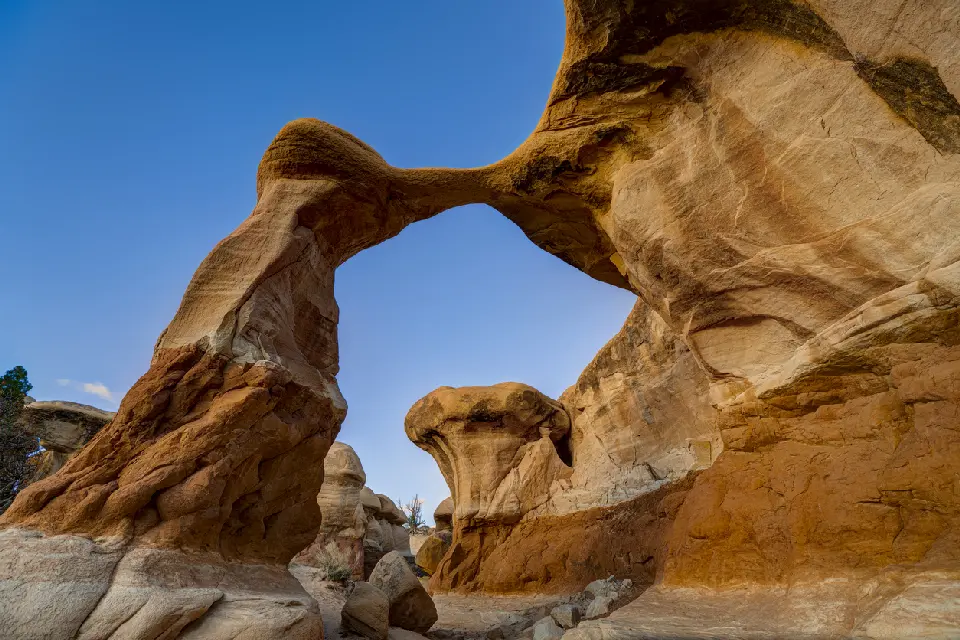
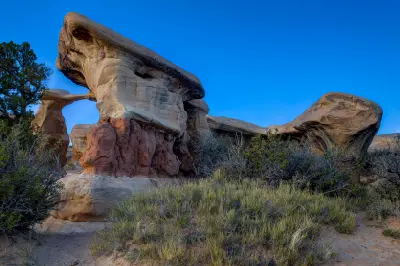
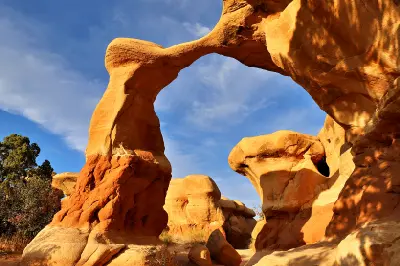
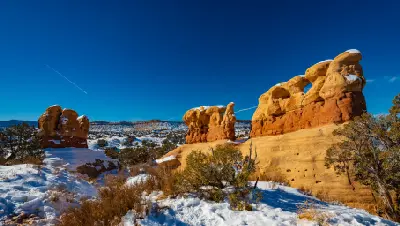
Metate Arch in Devil’s Garden, Grand Staircase-Escalante, Utah, USA.
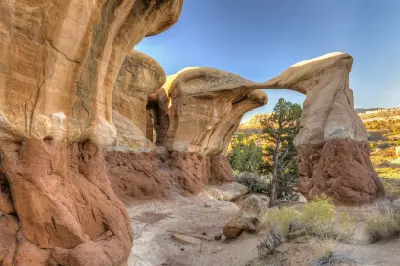
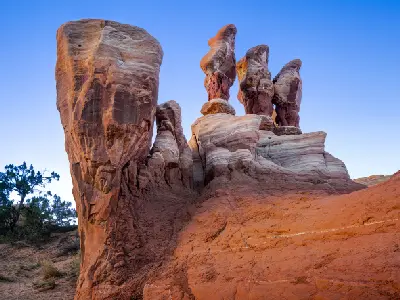
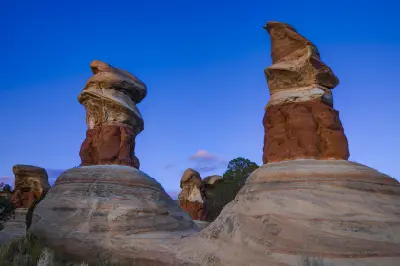
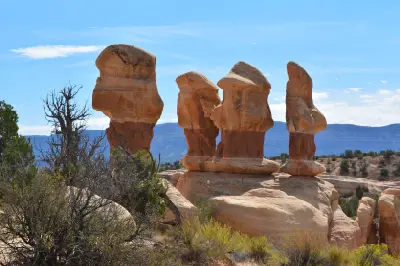
Devil's Garden is a compact area of eroded sandstone formations within Grand Staircase-Escalante in southern Utah. Hoodoos, arches and rounded rock forms are scattered across an open desert floor, allowing visitors to move freely among the formations. The concentration of isolated shapes, textured sandstone and open sky provides opportunities for both landscape and detailed geological photography.
37.58373, -111.41411
Gallery
Quick Facts
Access
Short Walk
15–45 min
Elevation Gain
20 m
Best Light
Low-angle light separates the hoodoos and arches, revealing sandstone texture and casting defined shadows across the formations.
Why This Light
Season
Seasonally Distinct
Summer brings dry desert vegetation, warm sandstone tones and occasional storm clouds above the exposed formations. Winter brings paler vegetation, lower-angle shadows and occasional snow that can create strong separation against the sandstone.
Crowds
Often Busy
Restrictions
Devil's Garden is reached from Hole-in-the-Rock Road south of Escalante, with parking immediately beside the formations. Exploring the site requires only short walks over generally open but uneven desert terrain. Hole-in-the-Rock Road is unpaved and can become difficult or impassable after rain, so current road and weather conditions should be checked before travelling.