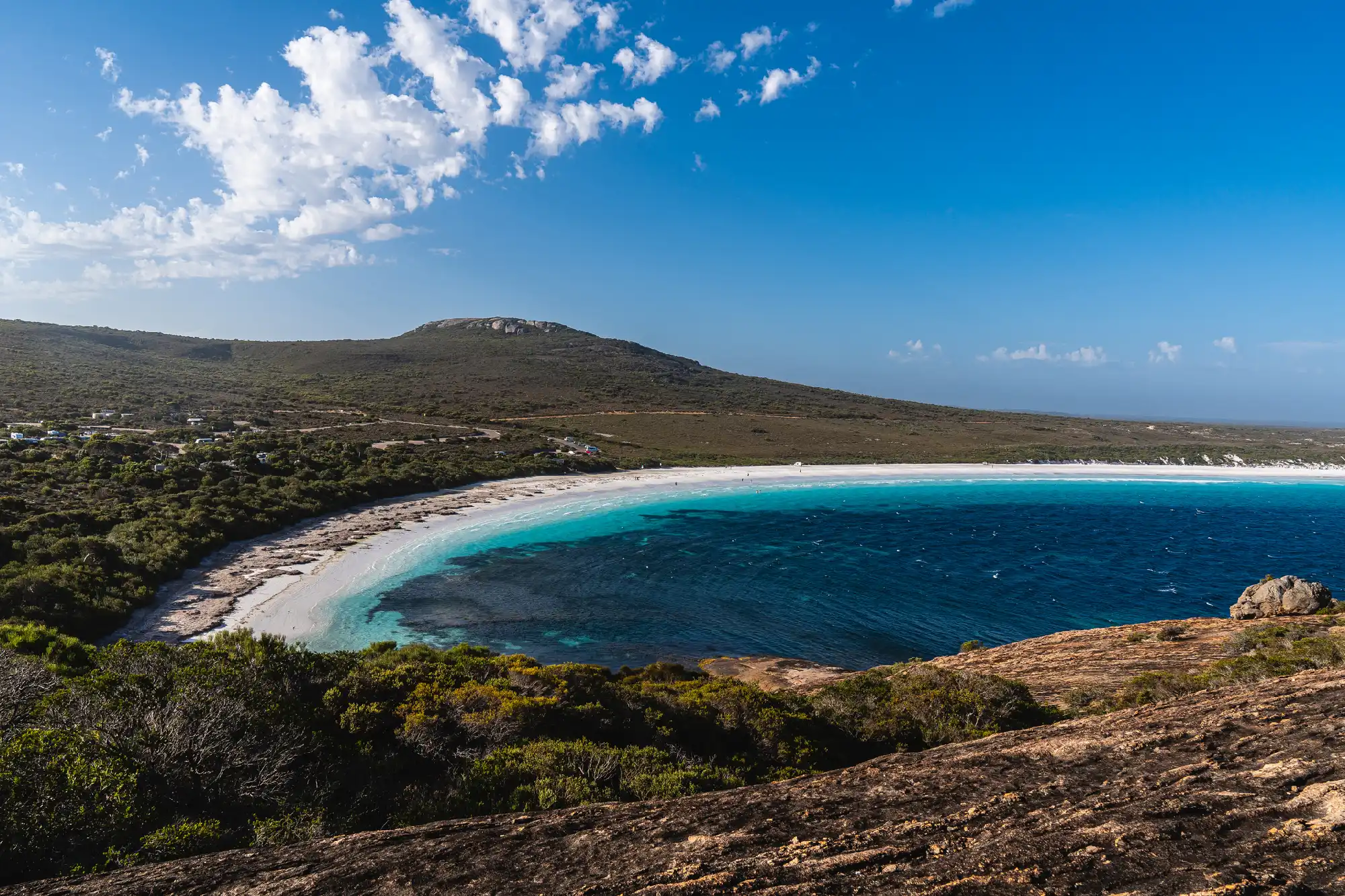
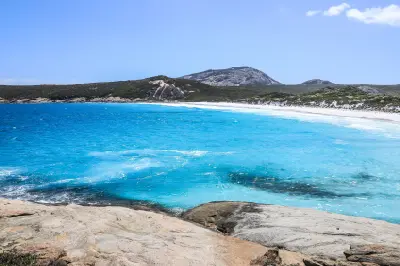
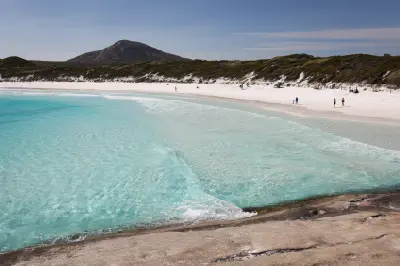
Hellfire Bay forms a brilliant arc of white sand and turquoise water between granite slopes and coastal heath in Cape Le Grand National Park.
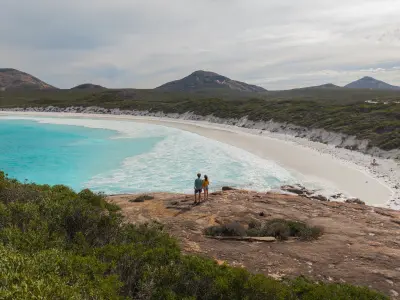
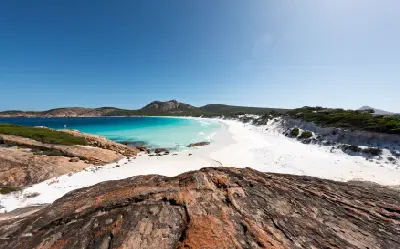
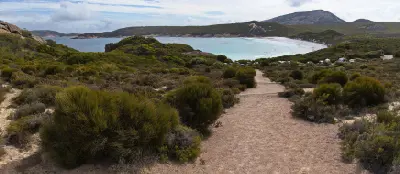
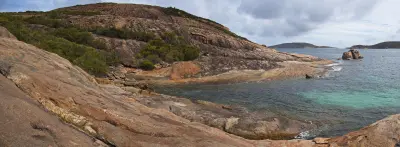
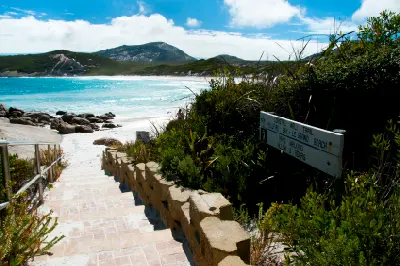
Hellfire Bay is a sheltered beach within Cape Le Grand National Park, enclosed by rounded granite headlands east of Esperance. Pale sand curves around clear turquoise water, with granite boulders and low coastal vegetation extending around the edges of the bay. The compact shoreline, coloured water and sculpted granite provide opportunities for coastal, geological and aerial photography.
-34.00808, 122.16527
Gallery
Quick Facts
Access
Short Walk
5–15 min
Elevation Gain
10 m
Best Light
Low-angle light reveals texture across the granite and pale sand, while calm conditions strengthen colour and reflections in the shallow water.
Why This Light
Season
Seasonally Distinct
Summer brings brighter turquoise water, drier coastal vegetation and stronger colour contrast between the pale beach and surrounding granite. Winter brings greener vegetation, more changeable skies and rougher ocean conditions, while the enclosed shape and granite headlands remain visually prominent.
Crowds
Often Busy
Restrictions
Hellfire Bay is reached by sealed road within Cape Le Grand National Park, with parking close to the beach and a short established walking route to the shoreline. A national park entry fee applies. Granite surfaces around the bay can become slippery when wet, and swimming and shoreline conditions vary with swell, wind and weather.