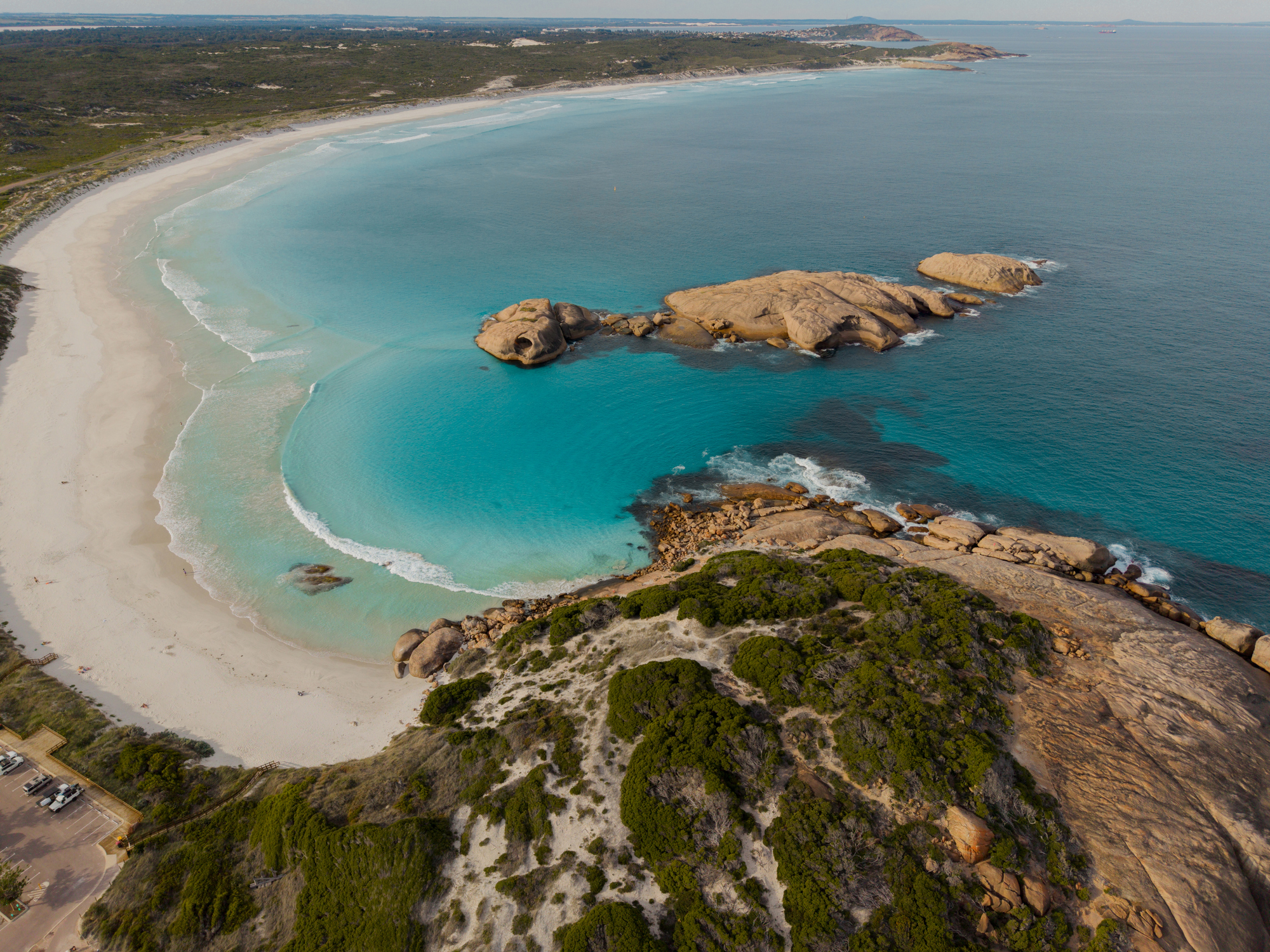
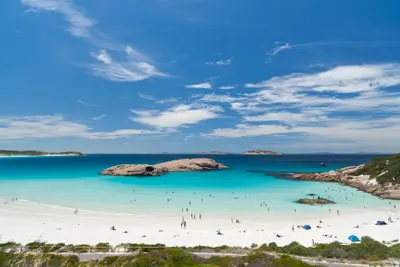
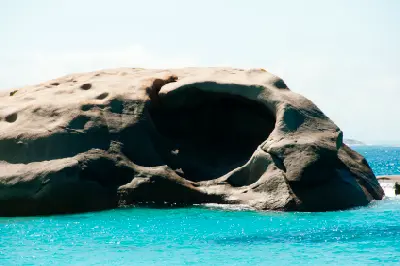
Twilight Beach curves around brilliant turquoise water and sculpted granite formations on the Esperance coast, with its white sand extending west beneath low coastal heath.
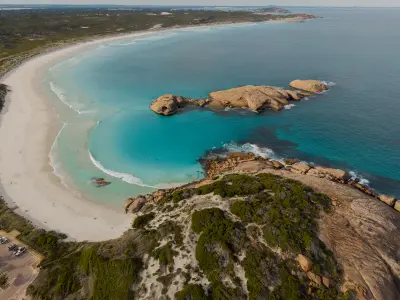
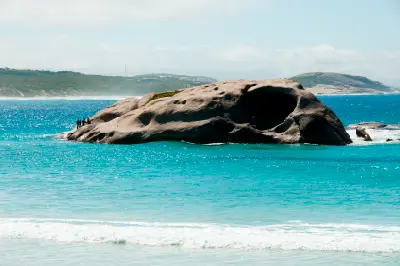
Twilight Beach is a white-sand beach west of Esperance, framed by smooth granite outcrops and clear turquoise water along the Southern Ocean coast. A distinctive offshore granite rock and sheltered sections of shoreline give the beach a recognisable character, with exposed headlands extending on either side. Pale sand, coloured water and sculpted granite provide opportunities for coastal, abstract and long-exposure photography.
-33.89120, 121.82465
Gallery
Quick Facts
Access
Short Walk
0–5 min
Elevation Gain
5 m
Best Light
Why This Light
Season
Seasonally Distinct
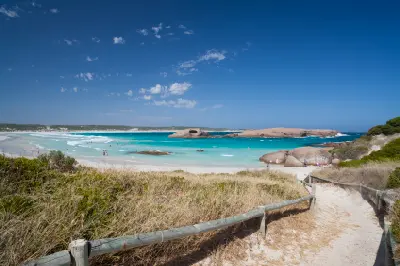
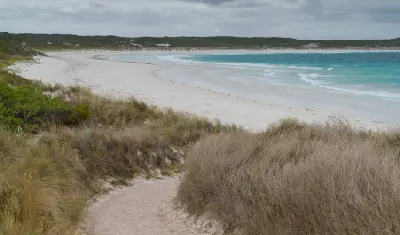
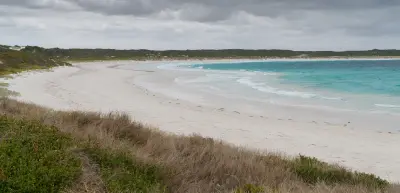
Summer brings brighter turquoise water, drier coastal vegetation and stronger colour contrast between the white sand and granite. Winter brings greener vegetation, larger swells and more changeable skies, while the granite formations and pale shoreline remain visually prominent.
Crowds
Often Busy
Restrictions
Twilight Beach is reached by sealed road along the Great Ocean Drive west of Esperance, with parking and established access immediately behind the beach. The shoreline is readily accessible, but granite surfaces can become slippery when wet and ocean conditions vary with swell and wind. Visitors should remain cautious around exposed rocks and breaking waves during rough conditions.