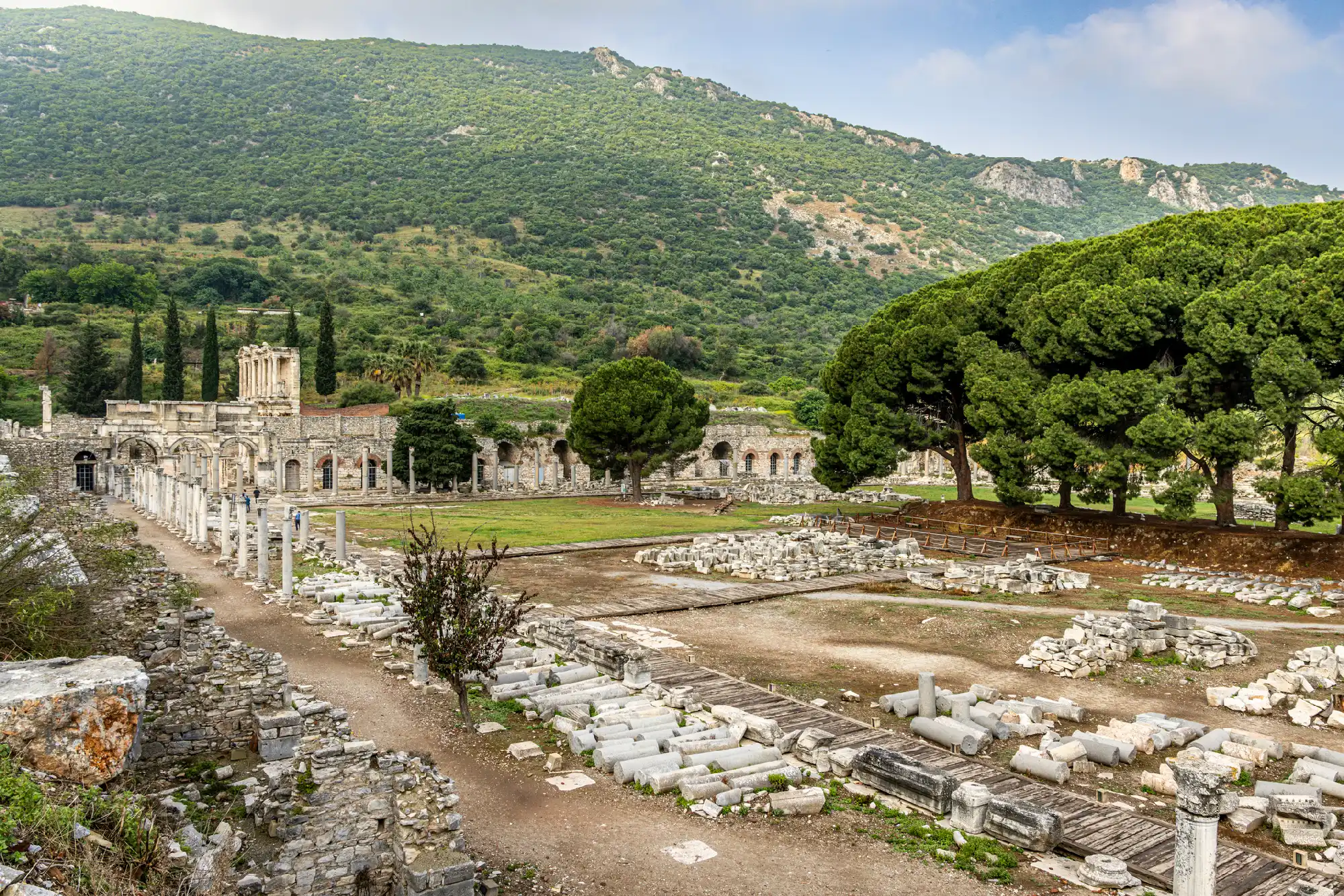
Ancient city of Ephesus, Turkey
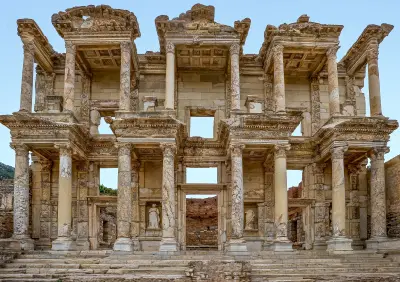
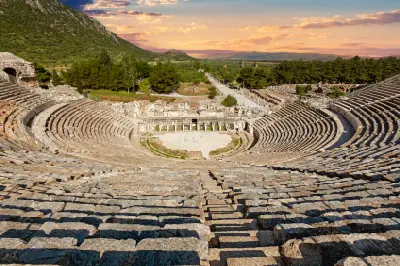
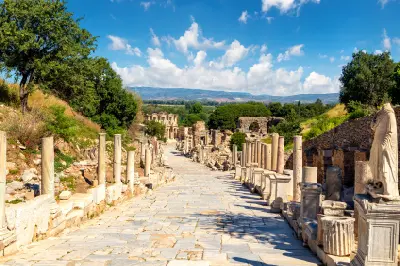
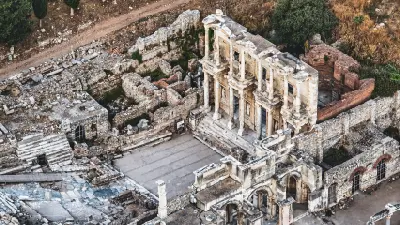
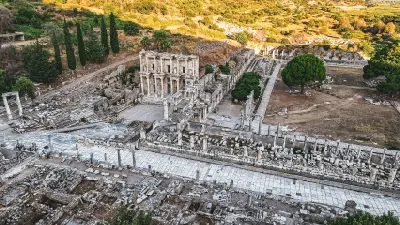
Ephesus is one of the best-preserved and most extensive ancient cities in the Mediterranean, where monumental architecture, marble streets, theatres, temples, and richly decorated public buildings reveal the scale of a major urban centre of the classical world. Established in western Anatolia and transformed over many centuries, the city preserves layers of Greek, Roman, Byzantine, and earlier history. The surviving archaeological landscape extends across the slopes between the upper and lower city. Curetes Street descends past temples, fountains, baths, and terraced houses towards the Library of Celsus, while the immense Great Theatre occupies the lower city near the route of the ancient harbour. Beyond the main archaeological site, the remains of the Temple of Artemis recall one of antiquity's most celebrated sanctuaries. The appearance of Ephesus changes with season, weather, and light. Spring vegetation and wildflowers soften the surrounding hills and ruins, while summer produces a drier, more exposed landscape of pale stone and earth. Low sunlight, cloud, mist, and changing shadows continually alter the texture and depth of the city's columns, façades, streets, and monumental structures.
Gallery
Key POIs in Ephesus
Overview
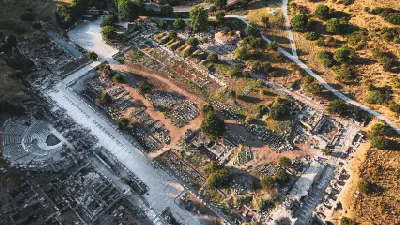
Ephesus developed around one of the most important urban and commercial centres of ancient western Anatolia. Its surviving streets and buildings reveal the organisation of a major Greco-Roman city, with monumental gateways, temples, baths, fountains, civic buildings, residential quarters, and entertainment venues connected by broad stone and marble streets. The archaeological remains extend across a large area, creating a remarkably coherent ancient urban landscape. Among its defining structures are the Library of Celsus, with its reconstructed monumental façade, and the Great Theatre, which rises dramatically against the surrounding hillside. Curetes Street forms one of the city's strongest visual axes, lined by columns and architectural remains as it descends through the site. The nearby Temple of Artemis survives only fragmentarily, but its archaeological setting represents an important part of the wider historical landscape of Ephesus. Photographically, Ephesus works through architecture, perspective, repetition, and the relationship between ancient structures and the surrounding terrain. Marble streets create strong leading lines, while columns, arches, carved stone, statues, and monumental façades provide subjects at multiple scales. Elevated viewpoints reveal the structure of the ancient city, while early and late light, cloud, shadow, and seasonal vegetation can bring depth and atmosphere to the weathered stone.
Key photography subjects
- Library of Celsus and monumental classical architecture
- Great Theatre of Ephesus and surrounding hillside
- Curetes Street, marble paving, columns, and ancient façades
- Temples, arches, fountains, statues, and carved stone details
- Terraced ruins and the broader ancient urban landscape
- Temple of Artemis and archaeological remains beyond the main city
- Golden light, shadows, seasonal vegetation, and atmospheric conditions
Workshops in Ephesus
No upcoming workshops scheduled for Ephesus at this time.
Check back soon or explore other destinations.