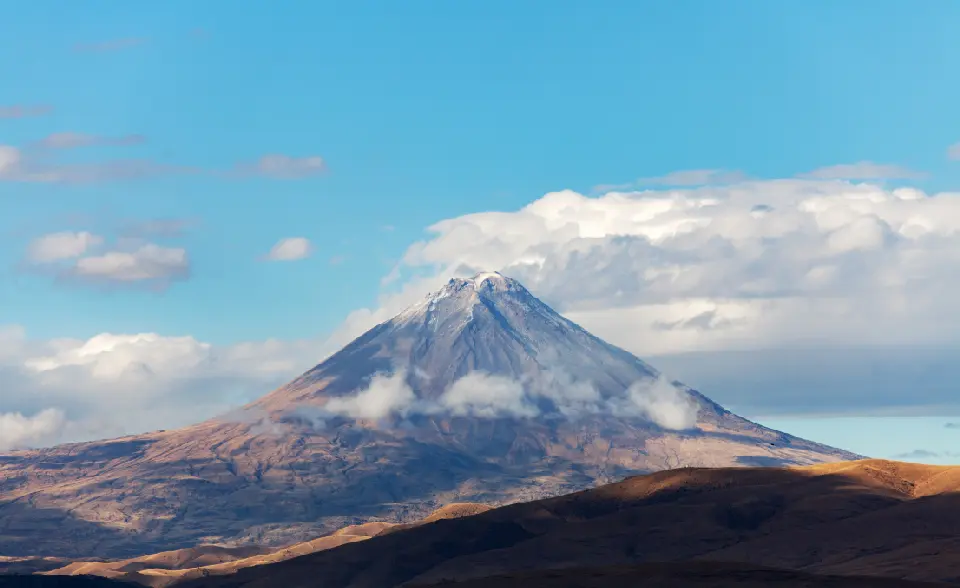
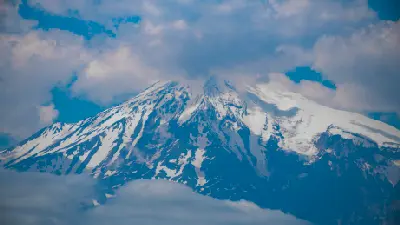
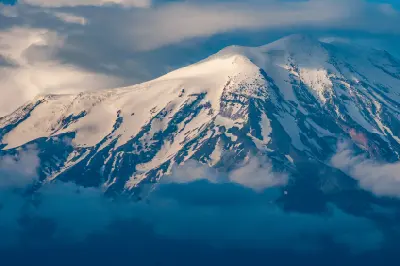
Mount Ararat rises above the high plains of Eastern Turkey, its upper slopes dusted with snow and wrapped in passing clouds.
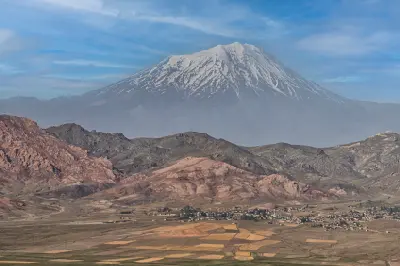
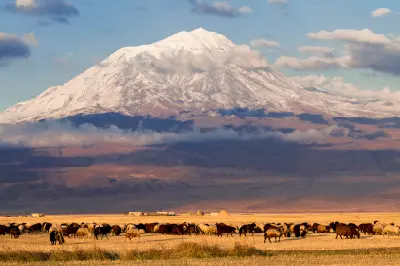
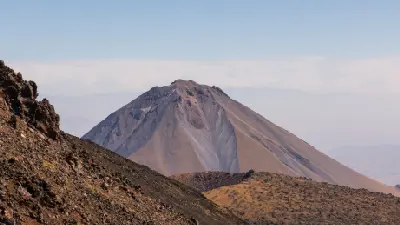
Mount Ararat is a massive dormant volcano rising from the high plains of eastern Turkey near the borders with Armenia and Iran. At 5,137 metres, Greater Ararat is Turkey's highest mountain, accompanied by the smaller cone of Little Ararat to the southeast. Its isolated position allows the snow-covered summit to dominate the surrounding landscape for enormous distances. Broad agricultural plains, volcanic foothills and rapidly changing mountain weather provide varied foregrounds to one of the most recognisable peaks in the region.
39.70193, 44.29840
Gallery
Quick Facts
Access
Roadside / Step-out
0–5 min
Elevation Gain
0 m
Best Light
Low-angle light reveals the volcanic relief and snowfields, while changing cloud can alternately conceal and dramatically reveal the summit.
Why This Light
Season
Seasonally Distinct
Spring combines greener plains with extensive summit snow, while summer generally provides the clearest access around the mountain and reduced snow at lower elevations. Autumn brings drier landscapes and changing light, while winter snow and severe weather can obscure the mountain or restrict access.
Crowds
Usually Quiet
Restrictions
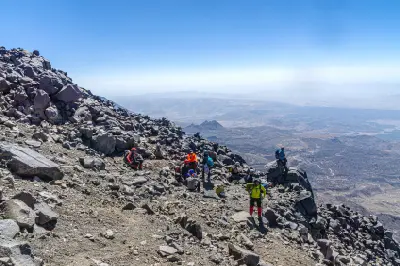
Mount Ararat can be photographed from public roads and open landscapes around Doğubayazıt without climbing the mountain. Reaching the summit is a serious high-altitude mountaineering undertaking requiring appropriate arrangements and permits, and conditions can change rapidly at elevation.