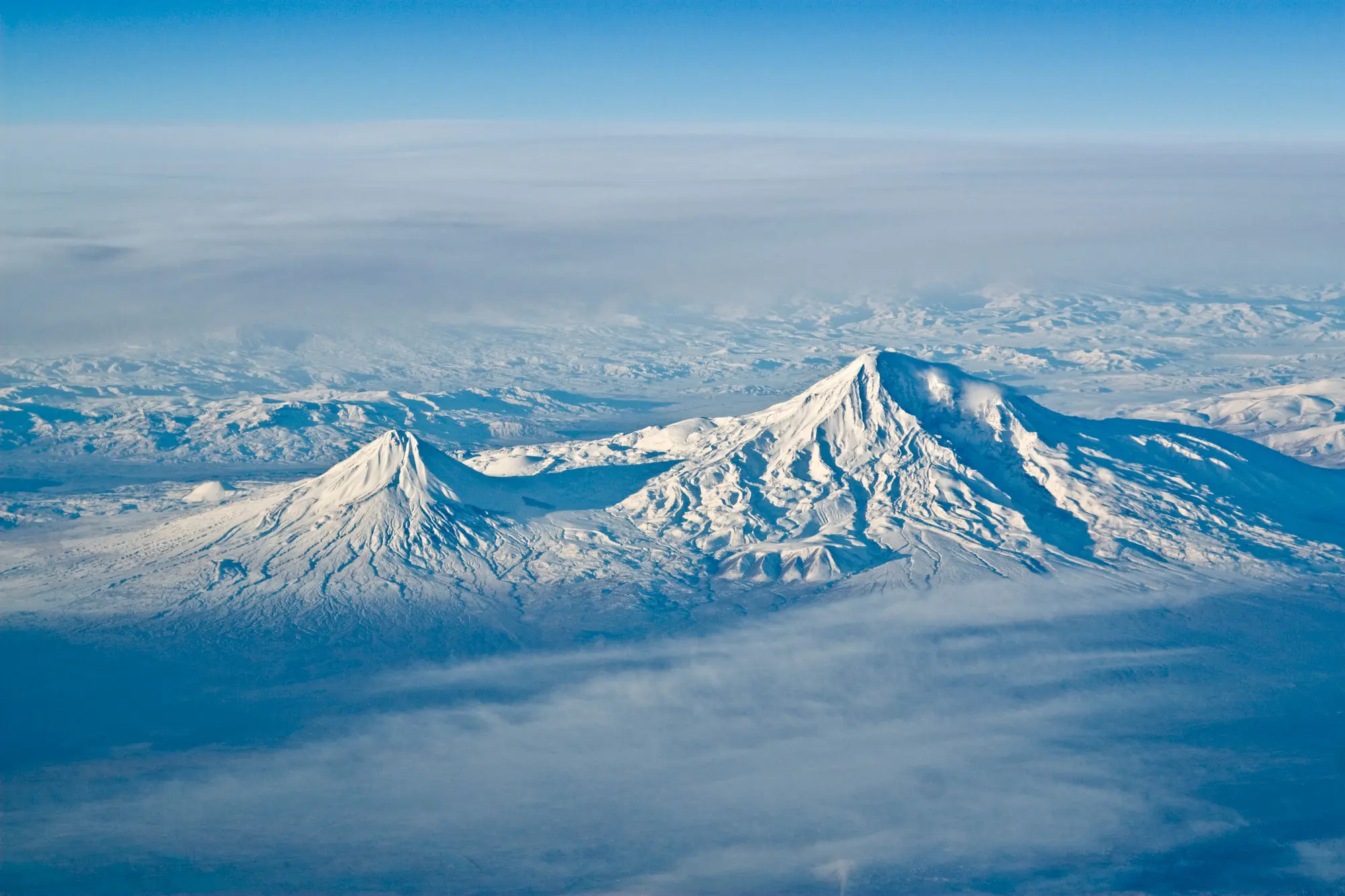
Greater Ararat and Little Ararat rising above the snow-covered landscape of Eastern Turkey.
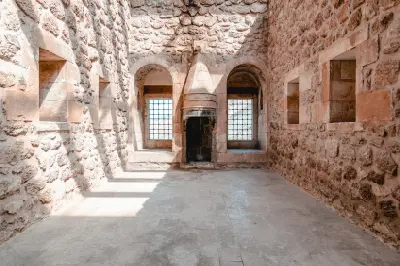
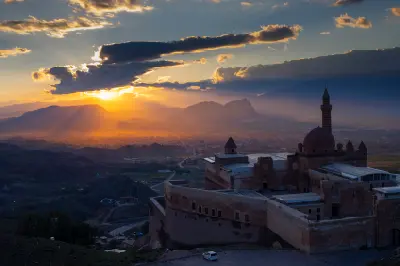
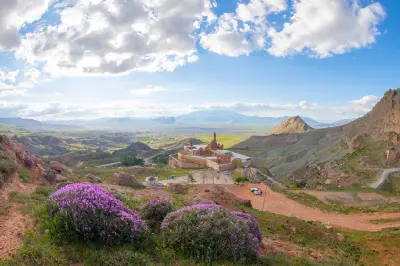
Doğubayazıt and Mount Ararat form one of the defining landscapes of Turkey’s far east, where an immense snow-covered volcano rises above a vast high-altitude plain near the borders of Iran and Armenia. The extraordinary scale of the mountain, open steppe, volcanic terrain, and isolated settlements gives this corner of Eastern Anatolia a character unlike anywhere else in the country. Doğubayazıt has long occupied an important position on routes crossing between Anatolia, Persia, and the Caucasus. Above the town, the spectacular İshak Paşa Palace combines Ottoman, Persian, Armenian, and Seljuk influences in a monumental complex overlooking the surrounding plains and mountains. The landscape changes dramatically with elevation and season. Snow can cover Ararat's upper slopes throughout much of the year, while the plains below shift between winter white, spring green, and the muted ochres of the drier months. Vast horizons, rapidly changing mountain weather, and exceptionally clear high-altitude light make the area particularly atmospheric.
Gallery
Key POIs in Doğubayazıt & Ararat
Nearby Places
View all on mapOverview
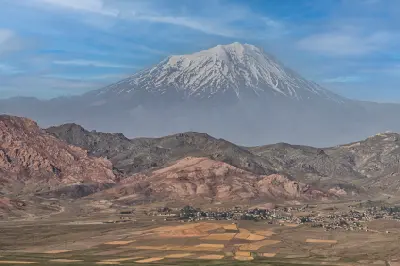
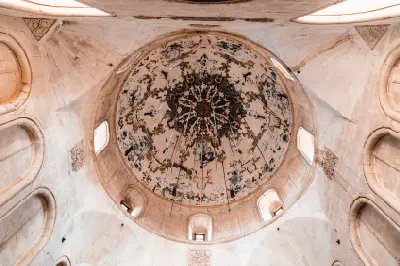
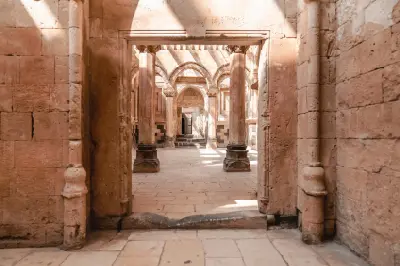
Mount Ararat dominates the region, rising to 5,137 metres and forming Turkey's highest mountain. The volcanic massif consists principally of Greater Ararat and neighbouring Little Ararat, whose distinctive profiles rise abruptly from the broad plains surrounding Doğubayazıt. Glaciated upper slopes, volcanic ridges, lava fields, high pastures, and immense open spaces give the landscape an unusually powerful sense of scale. The region also lies at an historic crossroads between Anatolia, the Caucasus, and Iran. Doğubayazıt developed along one of the principal routes eastwards, while İshak Paşa Palace occupies a commanding position above the plain. Constructed principally during the 17th and 18th centuries, the palace's courtyards, stone façades, domes, chambers, and elaborate architectural details provide a striking cultural counterpoint to the surrounding volcanic landscape. Photographically, the area is defined above all by the monumental presence of Mount Ararat. Long-distance viewpoints reveal the mountain rising almost independently from the surrounding plain, while changing cloud, snow cover, sunrise, sunset, and atmospheric haze continually alter its appearance. Closer compositions combine volcanic terrain, pastoral landscapes, roads, villages, and historic architecture with the mountain, while İshak Paşa Palace offers intricate architectural subjects and elevated views across the wider landscape.
Key photography subjects
- Greater Ararat and Little Ararat rising above the high plains
- Snow-covered volcanic peaks, glaciers, and mountain ridges
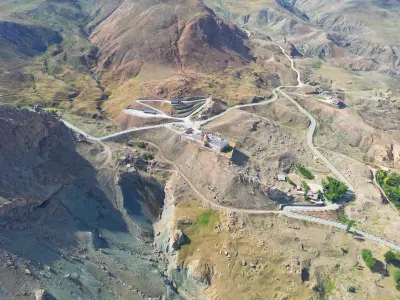
- İshak Paşa Palace, courtyards, stonework, and architectural details
- Vast steppe, pastoral landscapes, and isolated settlements
- Volcanic terrain, mountain roads, and high-altitude scenery
- Long-distance views towards the Iranian and Armenian borderlands
- Sunrise, sunset, cloud, snow, and changing atmospheric light
Workshops in Doğubayazıt & Ararat
No upcoming workshops scheduled for Doğubayazıt & Ararat at this time.
Check back soon or explore other destinations.