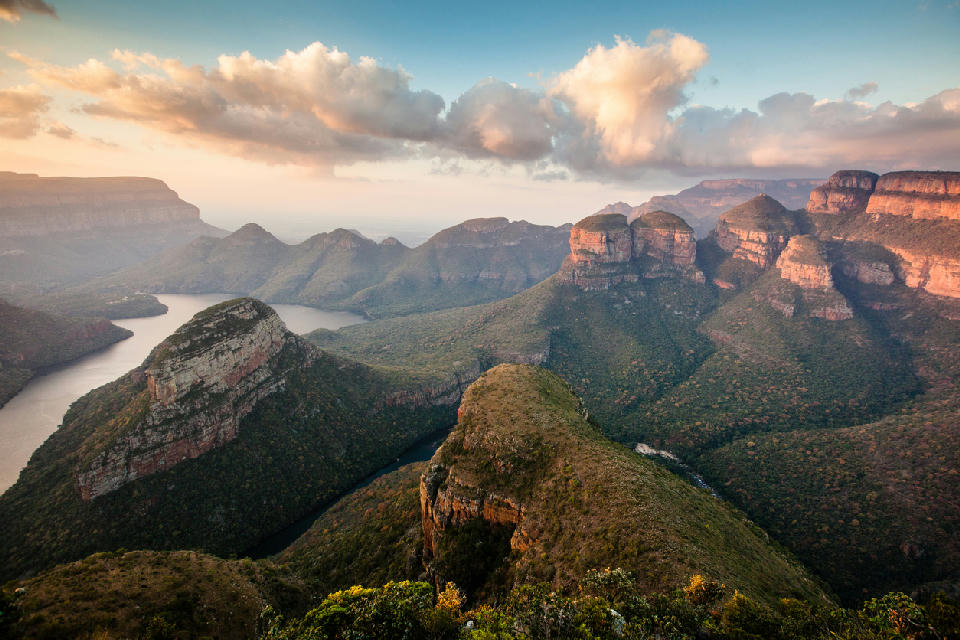
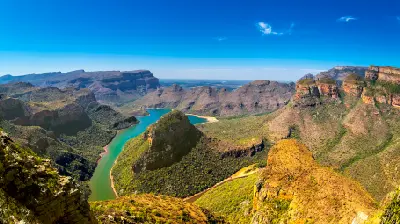
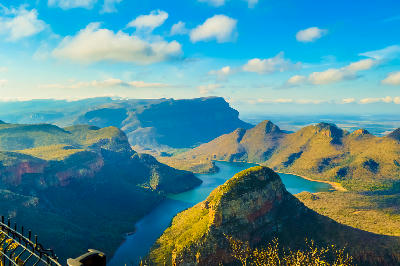
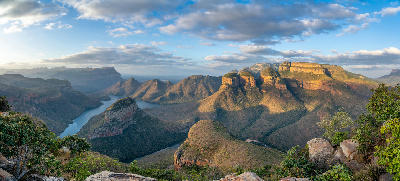
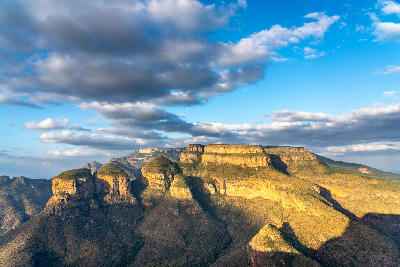
Sunrise light illuminates the towering cliffs and winding river bends of Blyde River Canyon, one of the largest green canyons in the world and the defining landscape of Mpumalanga’s Panorama Route.
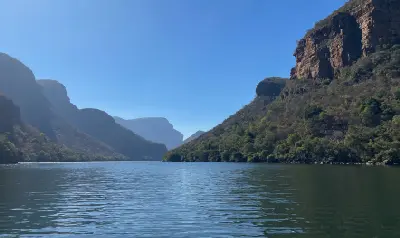
Blyde River Canyon is one of South Africa's most spectacular natural landscapes, where towering escarpment cliffs, deep river valleys and vast panoramic viewpoints overlook the Lowveld below. Forming the heart of the Panorama Route, the canyon combines dramatic geology, lush vegetation and some of the country's most iconic mountain scenery. Its scale, accessibility and ever-changing light make it one of Mpumalanga's premier photography destinations.
-24.59030, 30.81284
Gallery
Quick Facts
Access
Visitor Access
5–15 min
Elevation Gain
30 m
Best Light
Low-angle light reveals the canyon's depth and textures, while morning mist often adds atmosphere to the valley below.
Why This Light
Season
Year-Round Stable
Summer brings lush green vegetation, flowing waterfalls and frequent cloud formations. Winter offers clearer visibility, drier conditions and long-distance canyon views.
Crowds
Often Busy
Restrictions
Accessible via multiple public viewpoints along the Panorama Route. Some viewpoints may require conservation or entrance fees. Stay within designated viewing areas and barriers near cliff edges.