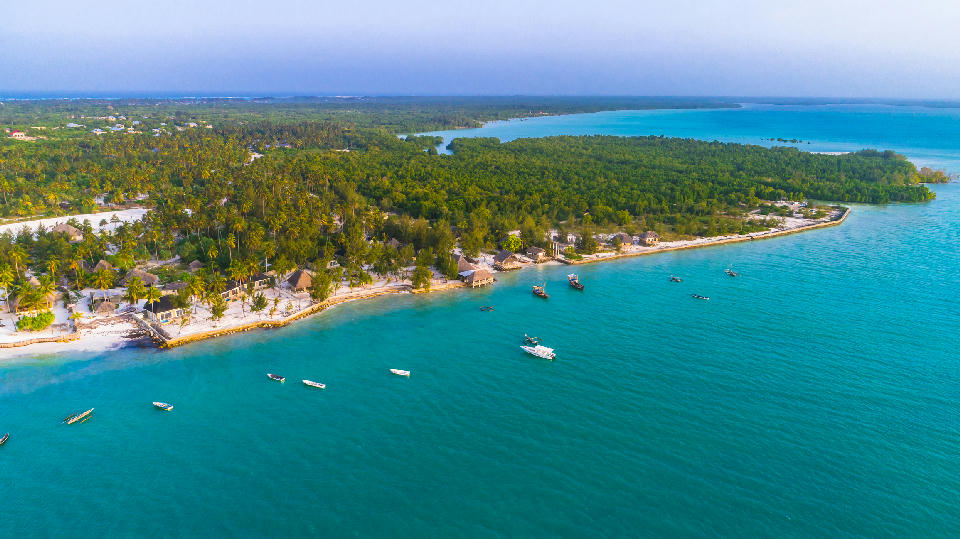
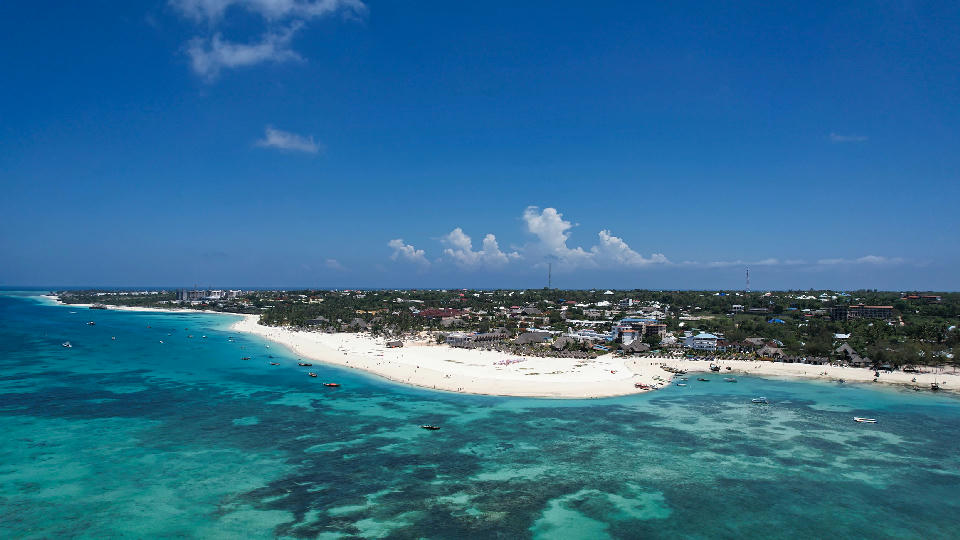
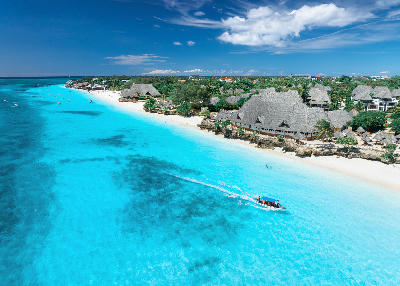
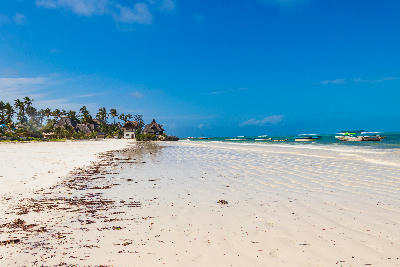
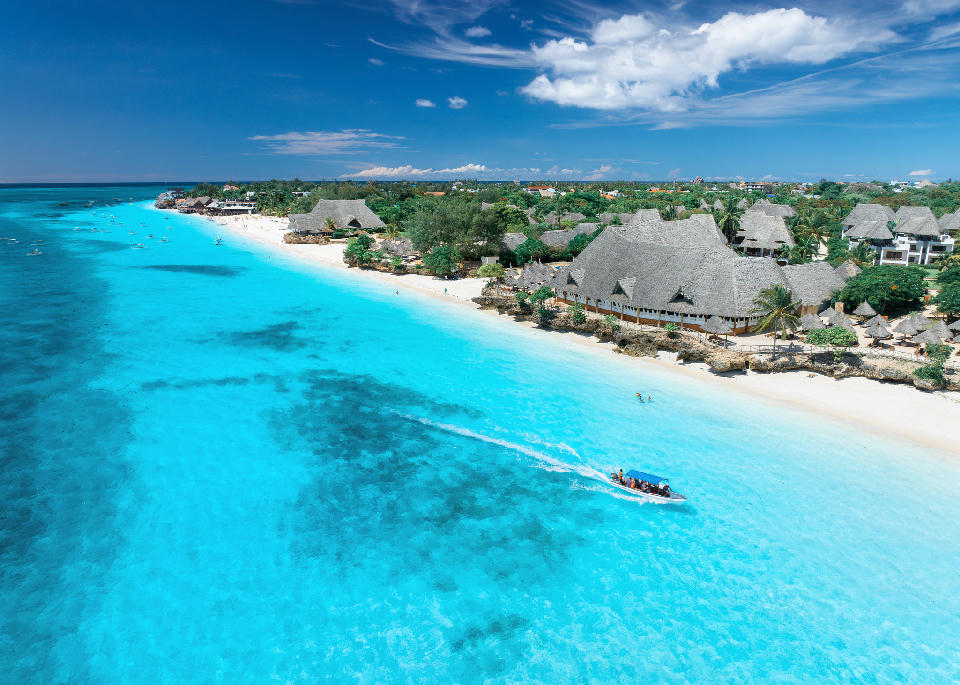
Drone view of Nungwi Beach with white sand, turquoise Indian Ocean, palm-fringed resorts, and tropical coastline, Zanzibar, Tanzania.

    Aerial view of Nungwi Beach with turquoise Indian Ocean, white sand shoreline, and beachfront resorts, Zanzibar, Tanzania.

    Zanzibar & Indian Ocean Islands

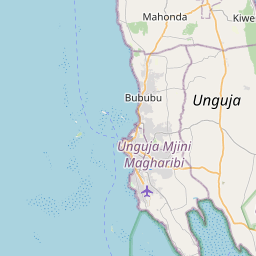
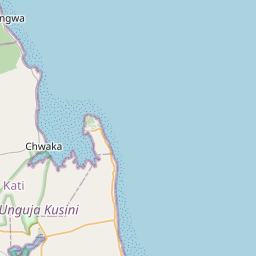
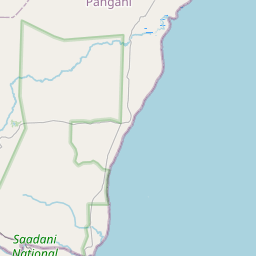
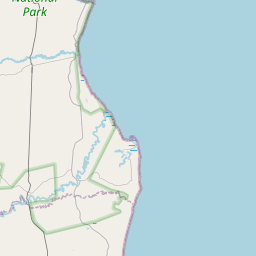
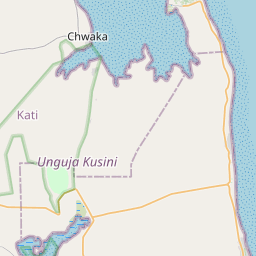
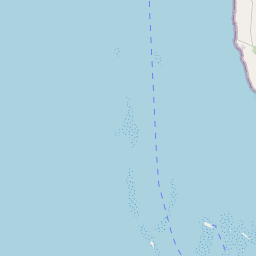
    The Zanzibar & Indian Ocean Islands region is Tanzania's tropical coastal frontier, where coral archipelagos, white-sand beaches, turquoise lagoons and historic Swahili settlements meet the warm waters of the western Indian Ocean. Anchored by the islands of Unguja (Zanzibar), Pemba and Mafia, the region combines centuries of maritime history with exceptional marine biodiversity, creating one of East Africa's most distinctive coastal landscapes.

    The geography of the region is shaped by coral limestone platforms, fringing reefs and shallow tropical seas that have evolved over thousands of years. Extensive mangrove forests protect sheltered inlets, while offshore coral reefs support vibrant marine ecosystems teeming with fish, sea turtles, dolphins and seasonal whale sharks. Inland, spice plantations, tropical forests and ancient coastal settlements reflect centuries of trade between Africa, Arabia, Persia and the Indian subcontinent, giving the islands a cultural identity unlike anywhere else in Tanzania.

    Seasonal weather patterns are driven by the Indian Ocean monsoon, bringing warm temperatures throughout the year while alternating rainy and dry seasons influence water clarity, vegetation and marine life. Calm seas during the dry months provide excellent conditions for coastal photography, diving and boat excursions, while the rainy seasons bring dramatic skies, lush tropical landscapes and striking atmospheric light across the archipelago.

    Geographic discovery

    Explore Zanzibar & Indian Ocean Islands by Area

    Choose a part of Zanzibar & Indian Ocean Islands to discover its landscapes, photographic character, and locations.

    Open interactive Explore

    Explore Areas in Zanzibar & Indian Ocean Islands

    Open in Explore
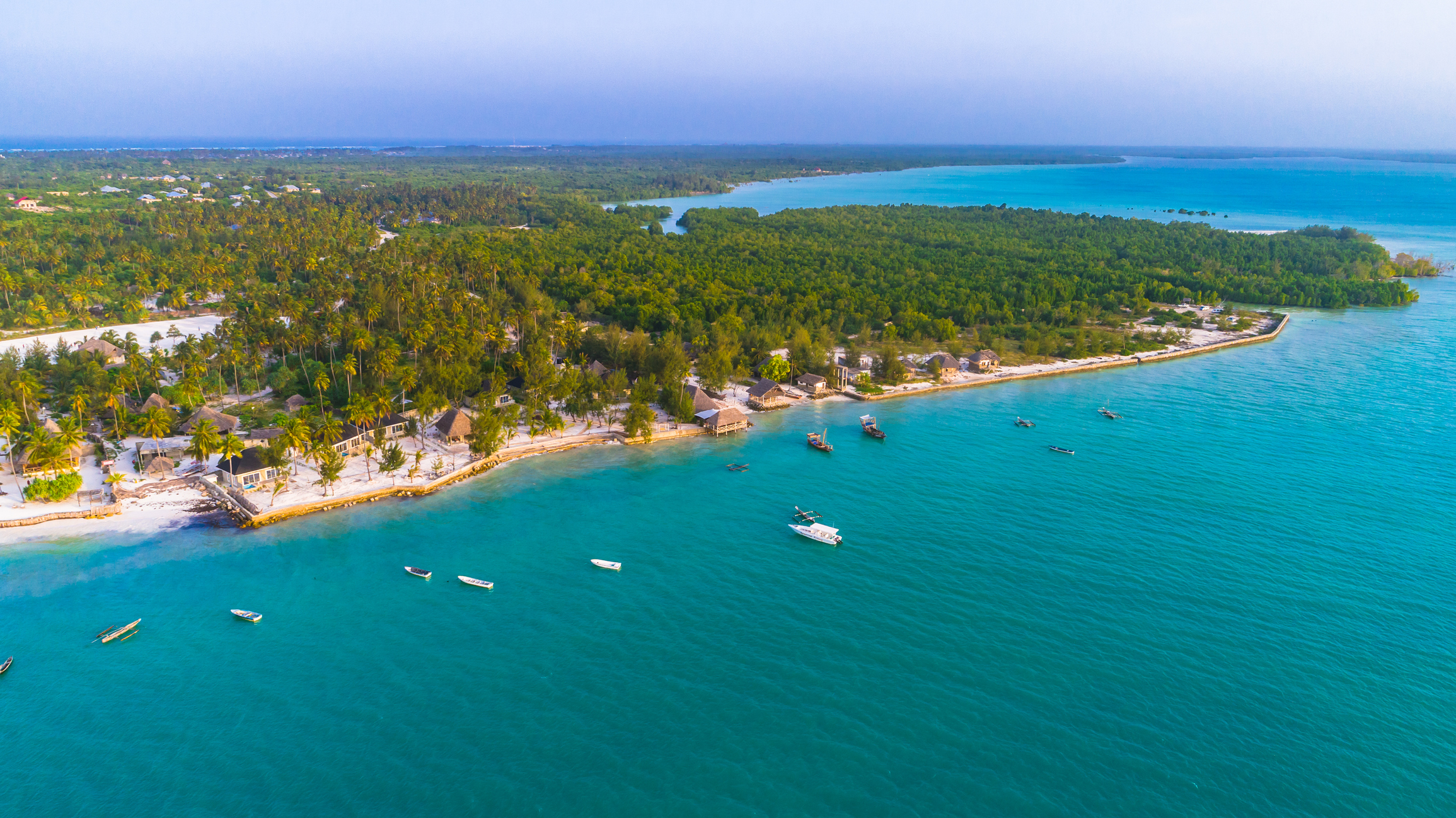
    Drone view of Paje Village, mangrove forests, turquoise lagoon, and traditional boats along the Zanzibar coastline, Tanzania.

    East Coast Beaches

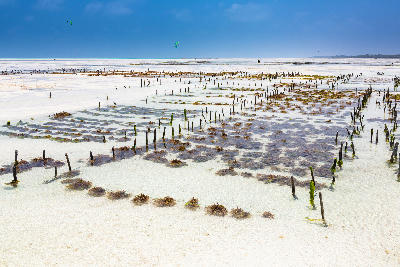
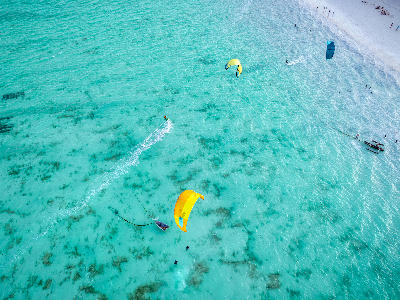
    East Coast Beaches are structured around Zanzibar's continuous coral-fringed shoreline, where wide beaches alternate with shallow lagoons, reef flats and traditional fishing villages. Matemwe, Paje and Jambiani each provide distinct coastal identities while sharing the same remarkable tidal system that defines much of eastern Zanzibar. Offshore coral reefs protect the coastline from heavy ocean swell while creating extensive turquoise lagoons and thriving marine ecosystems. Each section of the coastline contributes a distinctive photographic character. Matemwe combines long beaches with uninterrupted views toward Mnemba Atoll, while Paje is internationally recognised for kitesurfing, brilliant turquoise water and dynamic coastal activity. Jambiani preserves a quieter village atmosphere where traditional wooden dhows, seaweed farming and tidal flats create authentic cultural landscapes. Together these locations showcase the extraordinary diversity of Zanzibar's eastern shoreline. The visual character of East Coast Beaches is defined by brilliant white sand, luminous turquoise lagoons and constantly changing tidal patterns. Coral reefs emerge beneath exceptionally clear water, coconut palms line the shoreline and traditional fishing boats add cultural interest across the beaches. Combined with warm tropical light and the dramatic rhythm of the tides, the region offers some of the finest tropical coastal photography in the Indian Ocean.

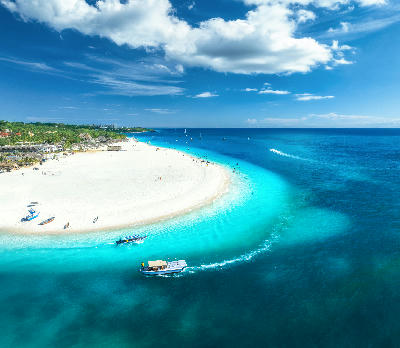
    Drone view of Kendwa Beach with white sand, turquoise Indian Ocean, coral reef flats and the north-west coast of Zanzibar, Tanzania.

    North Coast & Mnemba

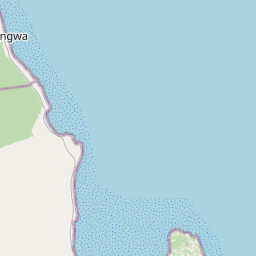
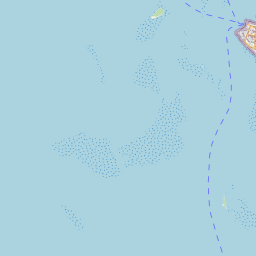
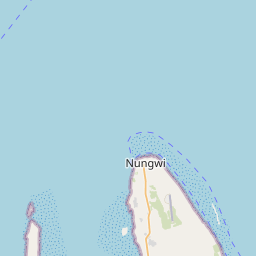
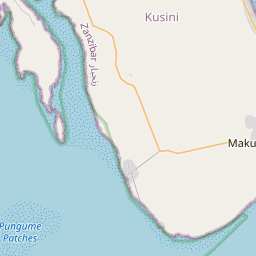
    North Coast & Mnemba are structured around Zanzibar's broad northern beaches and the protected coral reef systems that surround Mnemba Atoll. Nungwi and Kendwa form the region's principal coastal centres, combining traditional fishing communities with long white-sand beaches and sheltered lagoons. Offshore, Mnemba Atoll creates a vast marine reserve where coral gardens, shallow reefs and crystal-clear water support one of Tanzania's richest marine environments. Each environment contributes a distinctive photographic identity. The beaches provide sweeping tropical seascapes framed by palms and brilliant white sand, while traditional dhows and fishing boats add cultural interest along the shoreline. Mnemba Atoll introduces spectacular aerial patterns of coral reefs and shifting sandbanks, together with exceptional opportunities for underwater photography among colourful reef fish, sea turtles and vibrant coral formations. Together these coastal environments create one of East Africa's most recognisable tropical landscapes. The visual character of North Coast & Mnemba is defined by luminous turquoise water, brilliant white beaches and the ever-changing colours of the Indian Ocean. Coral reefs appear beneath remarkably clear water, palm-fringed shorelines stretch between sheltered bays and traditional wooden dhows move across calm lagoons. Combined with warm tropical light and outstanding water clarity, the region offers some of Tanzania's finest coastal and marine photography.

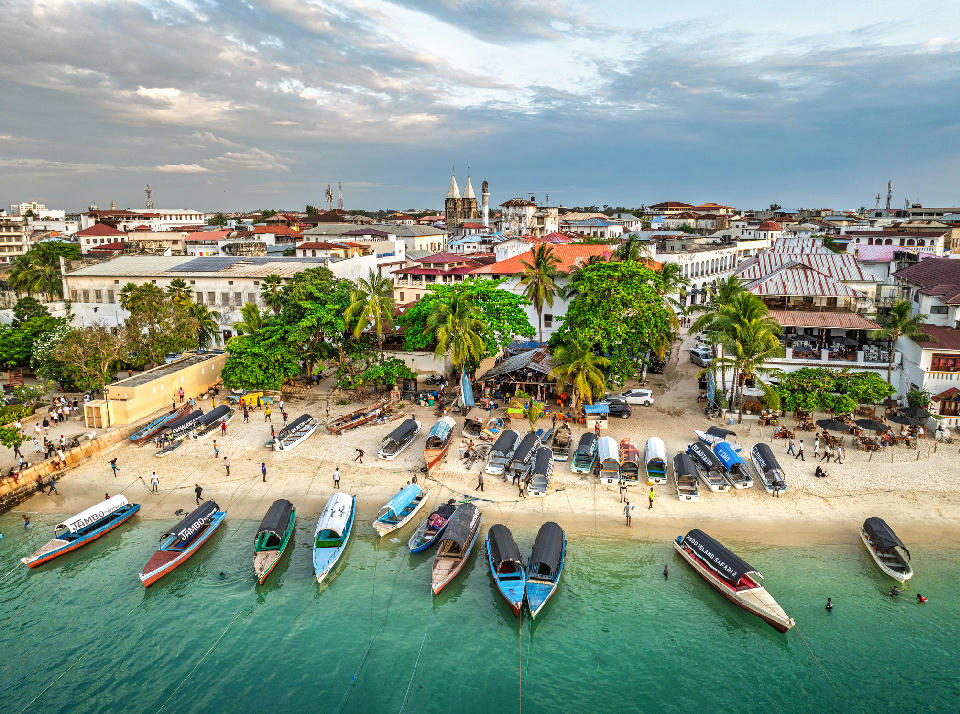
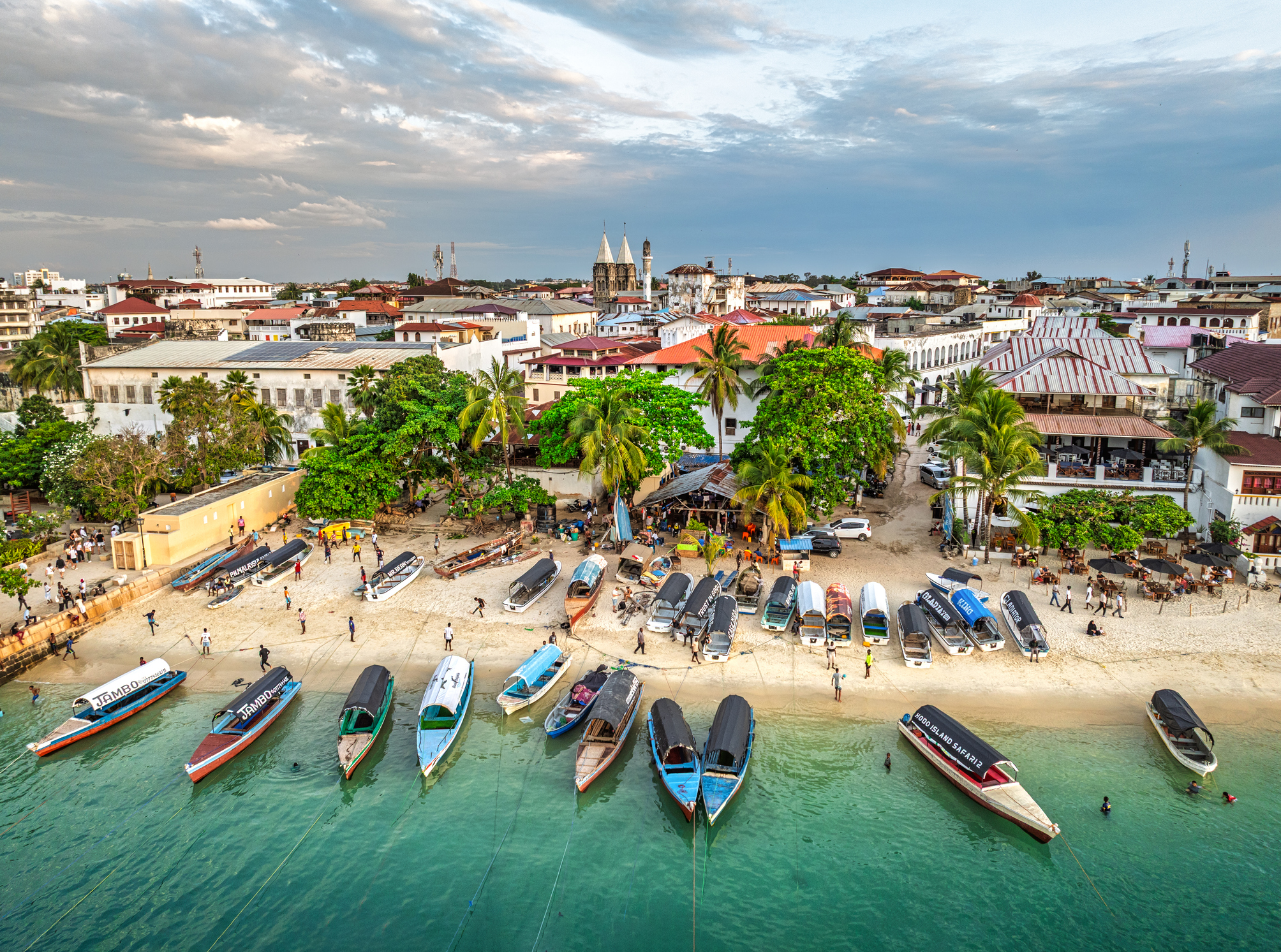
    Aerial view of dhow boats moored on the Stone Town waterfront, Zanzibar, with historic buildings and turquoise Indian Ocean waters.

    Stone Town & West Coast

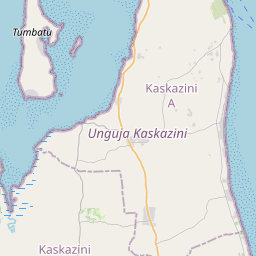
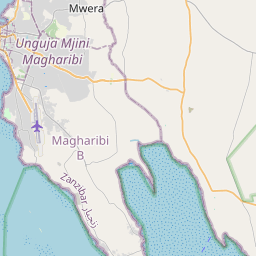
    Stone Town & West Coast are structured around the historic urban core of Zanzibar City and the coastal landscapes extending along the western shore of Unguja. Stone Town forms the densely built centre, where narrow alleys connect former palaces, religious buildings, markets, merchant houses and waterfront spaces. To the west and northwest, the urban landscape gradually gives way to beaches, fishing settlements, mangrove-fringed inlets and offshore coral islands within the Zanzibar Channel. Each part of the region contributes a distinct photographic identity. Stone Town is defined by carved doors, weathered facades, rooftop views, busy markets and intimate street scenes, while Forodhani Gardens and the harbour provide open waterfront perspectives filled with dhows, fishing boats and evening activity. Prison Island introduces a quieter island environment of coral shoreline, historic structures and giant Aldabra tortoises, while the wider west coast offers tropical beaches and expansive sunset views across the Indian Ocean. The visual character of the region is shaped by the contrast between dense historic architecture and open coastal space. Coral-stone walls frame shaded lanes, minarets and church towers rise above the rooftops, and traditional dhows move across the bright waters beyond the harbour. As evening approaches, the waterfront becomes the strongest visual focus, with warm light, silhouettes and reflections producing some of Zanzibar’s most recognisable coastal scenes.

    Photographic journey

    Zanzibar & Indian Ocean Islands Photography Route

    Zanzibar Island Circuit · 12 stops

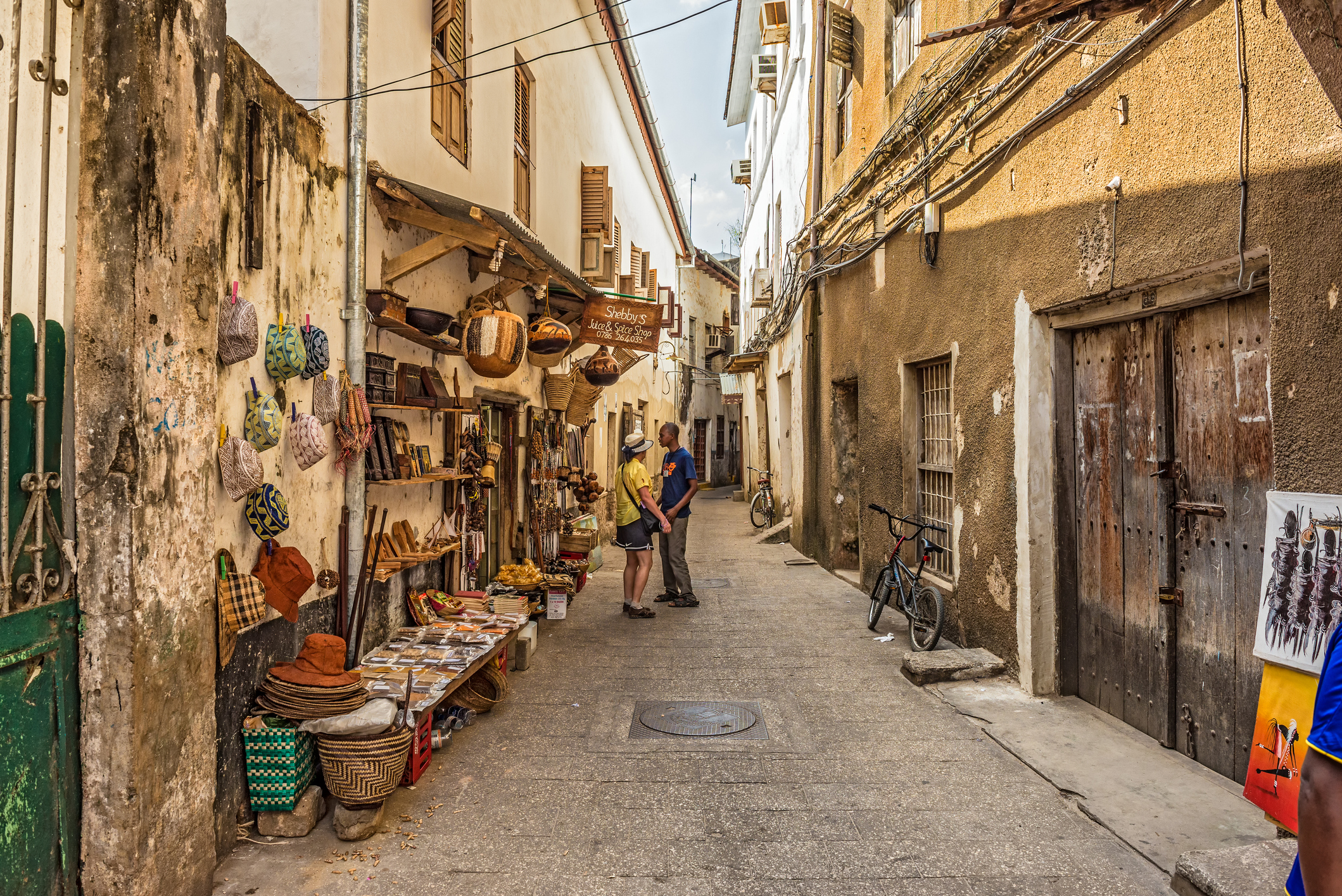
    Narrow historic street in Stone Town, Zanzibar, with local craft shops, traditional baskets, and pedestrians exploring the old town.01

    Stone Town

    Stone Town is the historic heart of Zanzibar and one of East Africa's most atmospheric cultural destinations. Its maze of narrow alleyways, carved wooden doors, coral stone buildings and bustling waterfront preserve centuries of Arab, Persian, Indian and European influence, creating exceptional opportunities for architectural and street photography.

    Aerial view of dhow boats moored on the Stone Town waterfront, Zanzibar, with historic buildings and turquoise Indian Ocean waters.03

    Stone Town & West Coast

    Stone Town & West Coast are structured around the historic urban core of Zanzibar City and the coastal landscapes extending along the western shore of Unguja. Stone Town forms the densely built centre, where narrow alleys connect former palaces, religious buildings, markets, merchant houses and waterfront spaces. To the west and northwest, the urban landscape gradually gives way to beaches, fishing settlements, mangrove-fringed inlets and offshore coral islands within the Zanzibar Channel. Each part of the region contributes a distinct photographic identity. Stone Town is defined by carved doors, weathered facades, rooftop views, busy markets and intimate street scenes, while Forodhani Gardens and the harbour provide open waterfront perspectives filled with dhows, fishing boats and evening activity. Prison Island introduces a quieter island environment of coral shoreline, historic structures and giant Aldabra tortoises, while the wider west coast offers tropical beaches and expansive sunset views across the Indian Ocean. The visual character of the region is shaped by the contrast between dense historic architecture and open coastal space. Coral-stone walls frame shaded lanes, minarets and church towers rise above the rooftops, and traditional dhows move across the bright waters beyond the harbour. As evening approaches, the waterfront becomes the strongest visual focus, with warm light, silhouettes and reflections producing some of Zanzibar’s most recognisable coastal scenes.

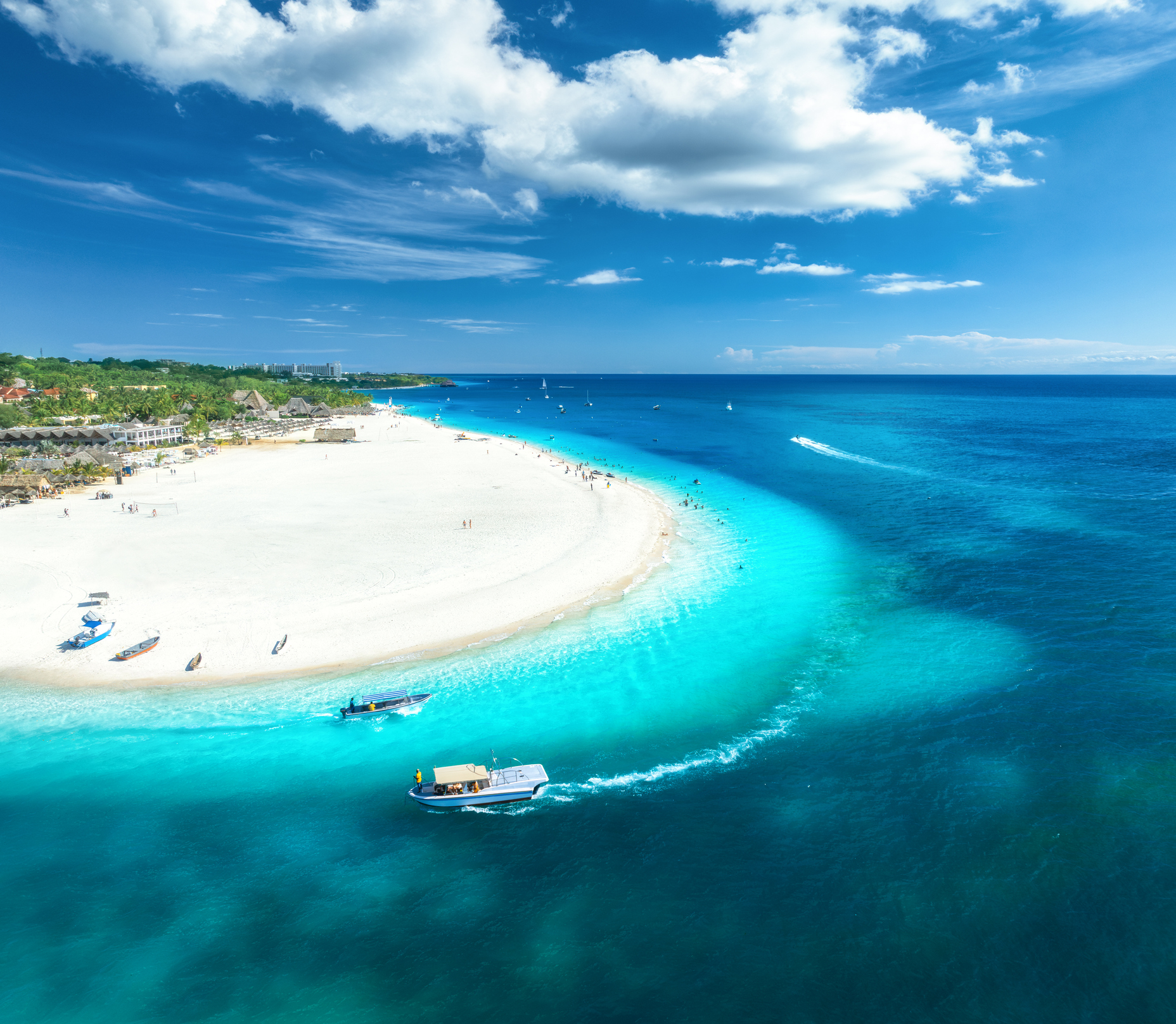
    Drone view of Kendwa Beach showing its sweeping crescent of white sand, turquoise shallows and deep blue Indian Ocean on Zanzibar's north coast, Tanzania.05

    Kendwa

    Kendwa is a picturesque beach on Zanzibar's northwest coast, renowned for its broad white-sand shoreline, calm turquoise water and spectacular sunsets over the Indian Ocean. Unlike many beaches on Zanzibar's east coast, the sea remains accessible throughout the tidal cycle, making Kendwa one of the island's most popular destinations for swimming, beach walks and coastal relaxation.

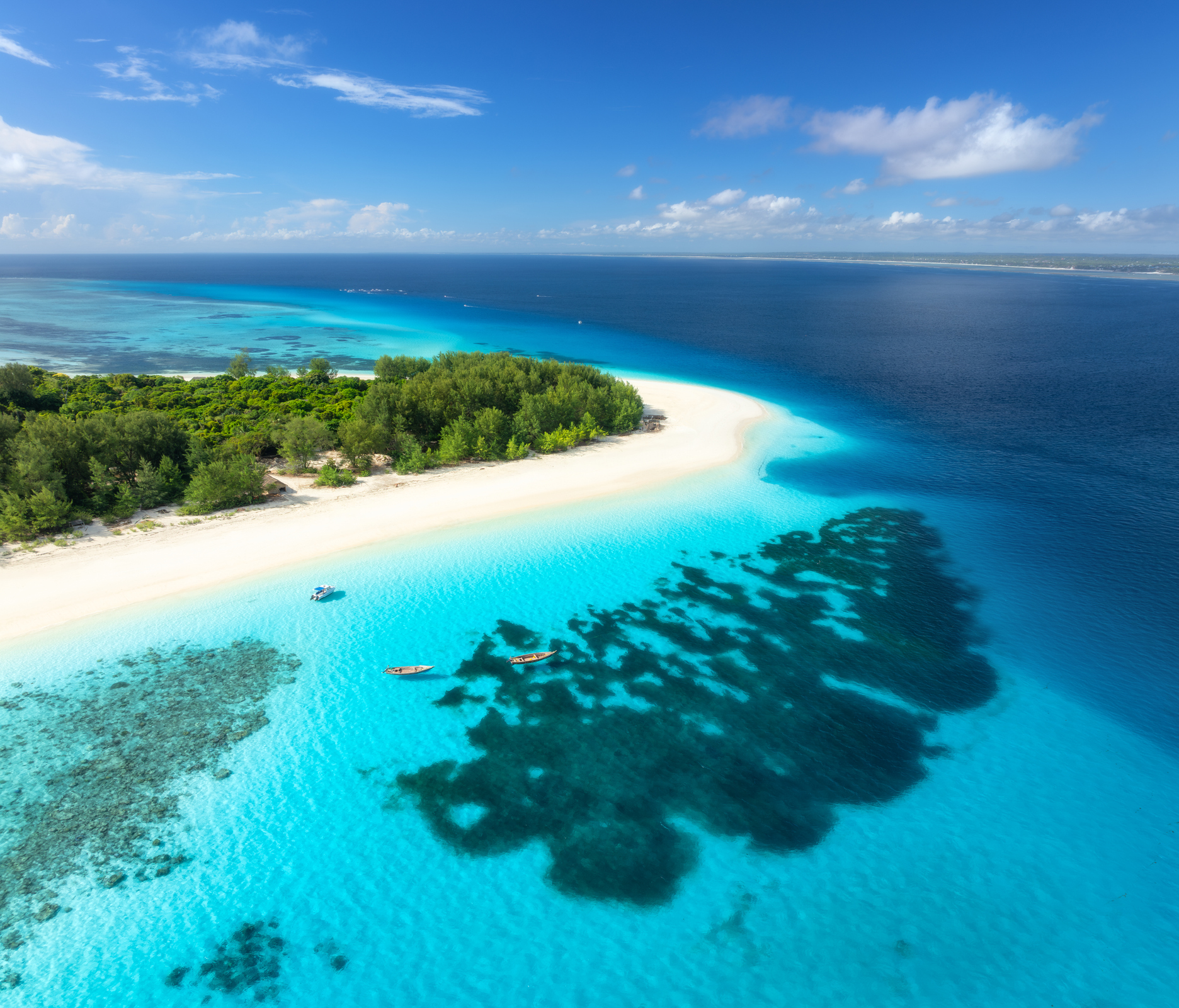
    Aerial view of Mnemba Island showing white sand beaches, turquoise lagoon, coral reefs, and the Indian Ocean off Zanzibar, Tanzania.08

    Mnemba Atoll

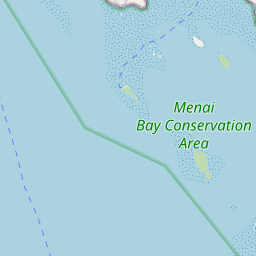
    Mnemba Atoll is a protected coral reef system off Zanzibar's northeast coast, surrounding the privately owned Mnemba Island. The atoll is internationally recognised for its exceptionally clear water, extensive coral gardens and diverse marine life, making it one of the Indian Ocean's most important marine conservation areas. Although visitors cannot land on the island itself, the surrounding reefs are accessible by boat for snorkelling and diving. The combination of tropical reefs, clear lagoons and open ocean scenery makes Mnemba Atoll one of Zanzibar's defining coastal destinations.

    Drone view of Paje Village, mangrove forests, turquoise lagoon, and traditional boats along the Zanzibar coastline, Tanzania.10

    East Coast Beaches

    East Coast Beaches are structured around Zanzibar's continuous coral-fringed shoreline, where wide beaches alternate with shallow lagoons, reef flats and traditional fishing villages. Matemwe, Paje and Jambiani each provide distinct coastal identities while sharing the same remarkable tidal system that defines much of eastern Zanzibar. Offshore coral reefs protect the coastline from heavy ocean swell while creating extensive turquoise lagoons and thriving marine ecosystems. Each section of the coastline contributes a distinctive photographic character. Matemwe combines long beaches with uninterrupted views toward Mnemba Atoll, while Paje is internationally recognised for kitesurfing, brilliant turquoise water and dynamic coastal activity. Jambiani preserves a quieter village atmosphere where traditional wooden dhows, seaweed farming and tidal flats create authentic cultural landscapes. Together these locations showcase the extraordinary diversity of Zanzibar's eastern shoreline. The visual character of East Coast Beaches is defined by brilliant white sand, luminous turquoise lagoons and constantly changing tidal patterns. Coral reefs emerge beneath exceptionally clear water, coconut palms line the shoreline and traditional fishing boats add cultural interest across the beaches. Combined with warm tropical light and the dramatic rhythm of the tides, the region offers some of the finest tropical coastal photography in the Indian Ocean.

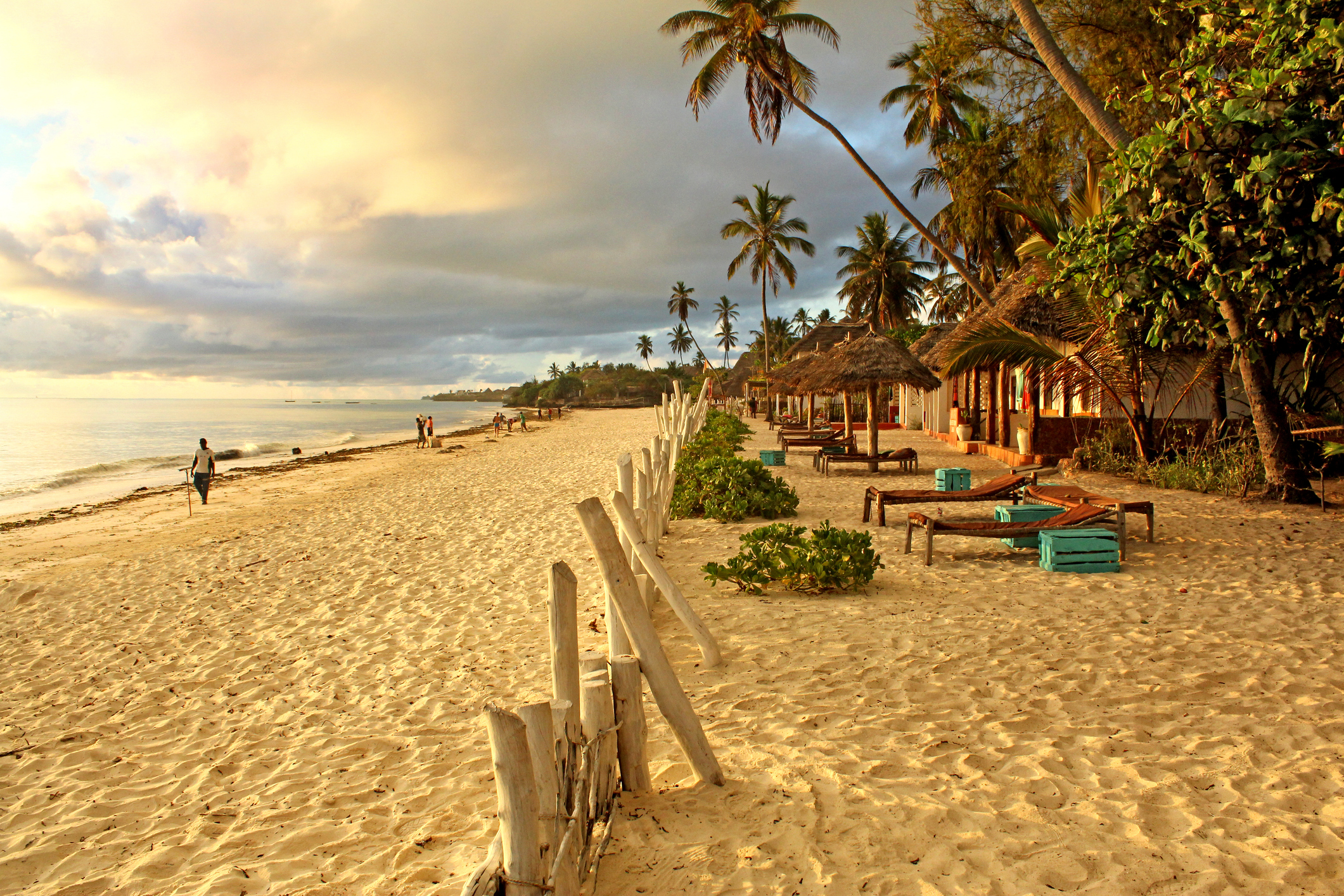
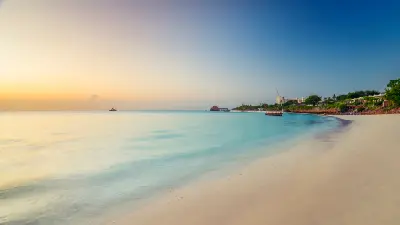
    Sunrise over Jambiani Beach with white sand, palm trees, beachfront lodges, and calm Indian Ocean, Zanzibar, Tanzania.12

    Jambiani

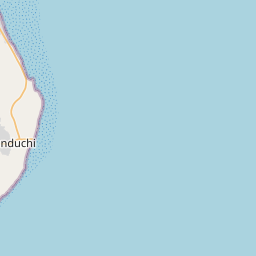
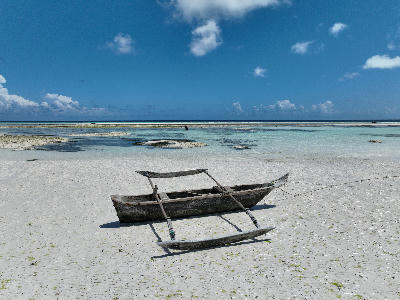
    Jambiani is a traditional fishing village on Zanzibar's southeast coast, where long white-sand beaches, shallow turquoise lagoons and expansive tidal flats create one of the island's most authentic coastal landscapes. Fishing dhows, seaweed farming and village life provide distinctive photographic subjects throughout the day.

    Explore the Full Zanzibar Island Circuit12 stops across Zanzibar & Indian Ocean Islands

    Overview

    The region is structured around three principal island groups, each offering a distinct landscape and photographic character. Zanzibar (Unguja) combines historic Stone Town, palm-fringed beaches, coral rag forests and vibrant coastal villages. To the north, Pemba Island is characterised by rolling green hills, dense clove plantations and some of East Africa's healthiest coral reefs, while Mafia Island is internationally recognised for its protected marine park, untouched beaches and seasonal whale shark encounters. Together these islands showcase the extraordinary diversity of Tanzania's coastal environments.

    Each island possesses a unique visual identity. Zanzibar is renowned for its historic architecture, dhow harbours, spice farms and idyllic beaches, while Pemba offers rugged coastlines, secluded coves and lush tropical scenery. Mafia contrasts with quieter fishing communities, extensive coral reefs and pristine marine habitats. Beyond the major islands, smaller coral islets, sandbanks and mangrove-lined channels provide additional opportunities for exploring the region's rich coastal ecosystems.

    The visual character of the region is defined by brilliant turquoise water, brilliant white coral sand and lush tropical vegetation framed by the ever-changing light of the Indian Ocean. Traditional wooden dhows, historic stone buildings, coral cliffs and swaying coconut palms create timeless coastal scenes, while sunrise over the ocean and colourful sunsets across sheltered lagoons produce exceptional conditions for landscape and seascape photography.
    Key Photography Subjects

    • White-sand beaches and turquoise Indian Ocean waters
    • Stone Town's historic Swahili and Arab architecture
    • Coral reefs, marine life and tropical lagoons
    • Traditional wooden dhows and coastal fishing villages
    • Palm-lined beaches and tropical island landscapes
    • Mangrove forests, sandbanks and offshore islets
    • Sunrise seascapes, colourful sunsets and dramatic tropical skies

    Gallery

    Workshops in Zanzibar & Indian Ocean Islands

    No upcoming workshops scheduled for Zanzibar & Indian Ocean Islands at this time.

    Check back soon or explore other destinations.