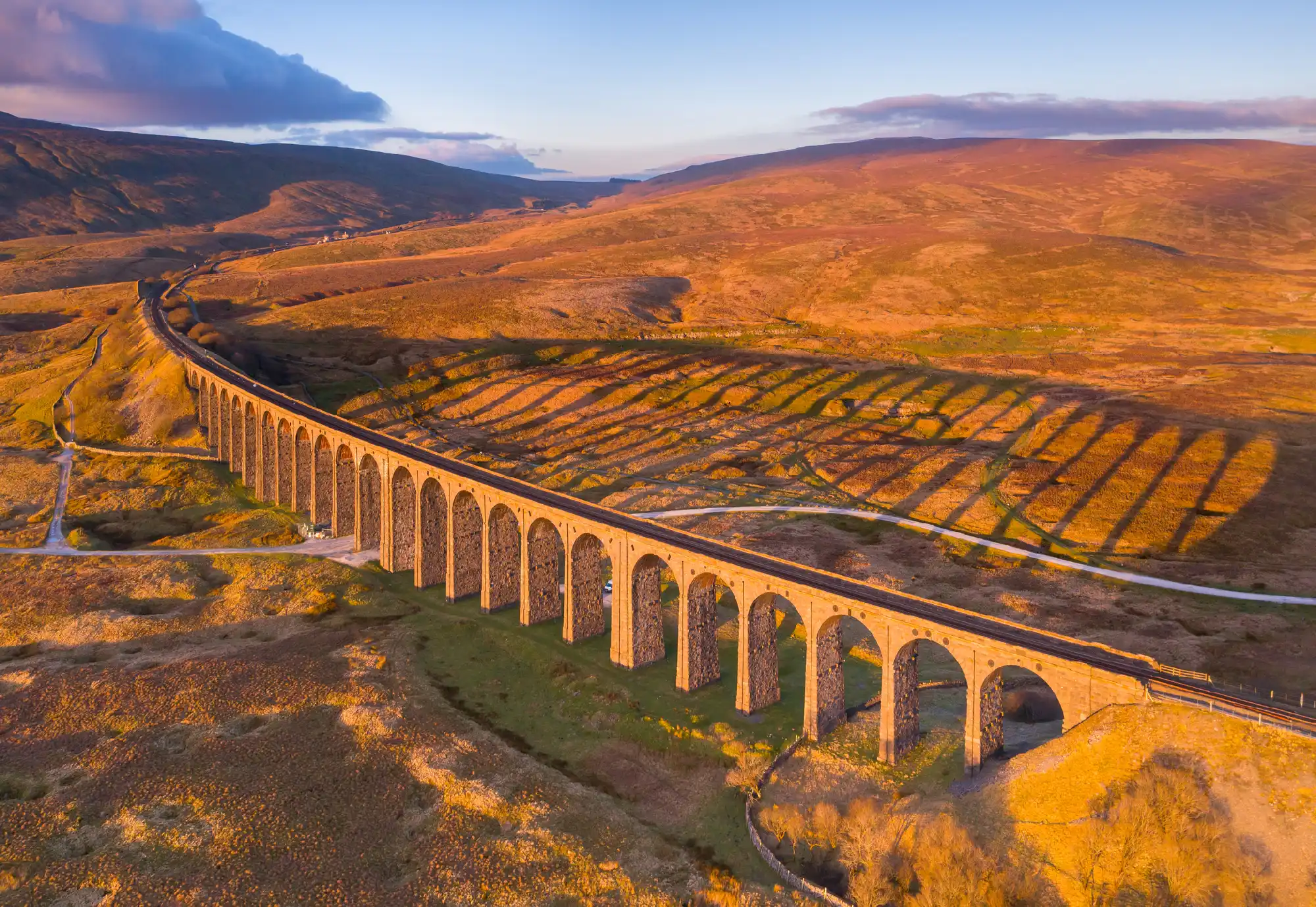
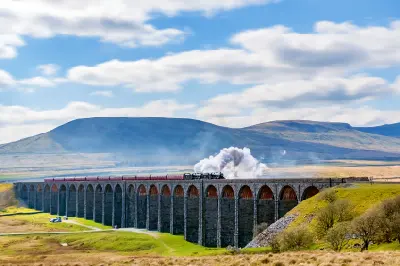
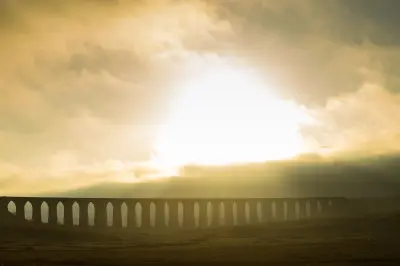
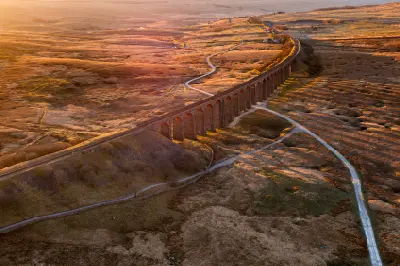
Ribblehead Viaduct stretches across Batty Moss in warm evening sunlight, its stone arches casting long shadows over the Yorkshire Dales landscape in North Yorkshire, England.
Ribblehead Viaduct is a nineteenth-century railway viaduct crossing Batty Moss in the Yorkshire Dales National Park, beneath the slopes of Whernside and Ingleborough. Its 24 stone arches carry the Settle–Carlisle railway across an exposed moorland valley, creating a distinctive contrast between Victorian engineering and the surrounding limestone hills. The viaduct's repeating arches, passing trains and open landscape provide varied opportunities for architectural and landscape photography.
54.21017, -2.37009
Gallery

Quick Facts
Access
Short Walk
5–15 min
Elevation Gain
10 m
Best Light
Low-angle sunlight defines the viaduct's repeating arches and stonework, while shadows reveal their depth against the open moorland.
Why This Light
Season
Seasonally Distinct
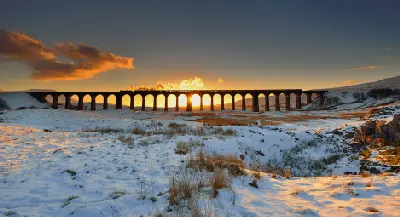
Summer brings green moorland grasses and longer daylight across the viaduct and surrounding hills. Winter reveals muted brown vegetation, with occasional frost or snow highlighting the stone arches and exposed slopes.
Crowds
Often Busy
Restrictions
Public footpaths provide access from the nearby roadside parking areas and Ribblehead railway station. The moorland ground can be uneven, muddy and exposed to strong winds, particularly in poor weather. The viaduct carries an active railway, and visitors must remain on public paths and keep clear of railway infrastructure. Parking can become busy during weekends and holidays.