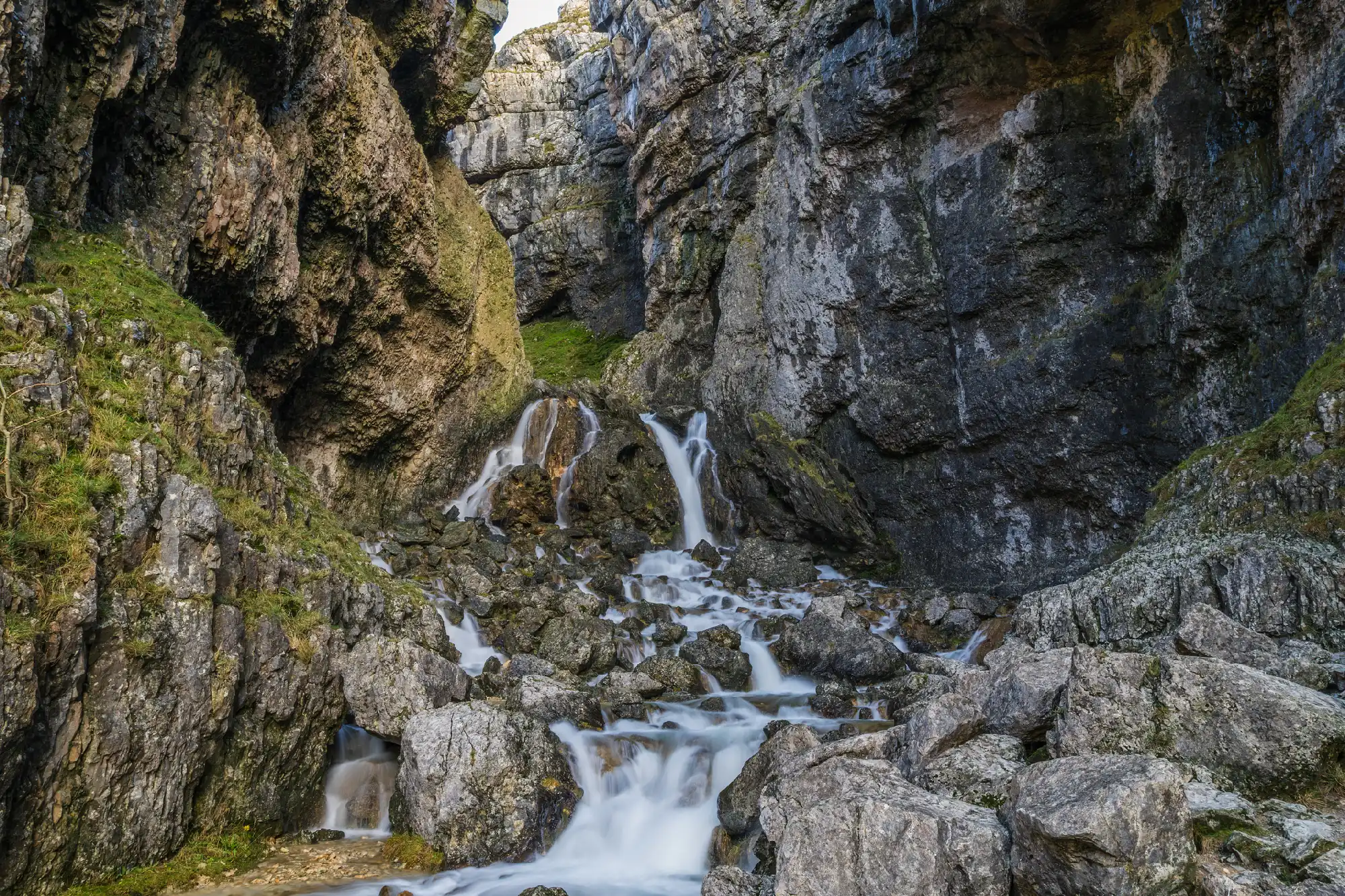
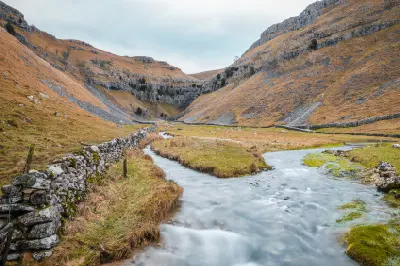
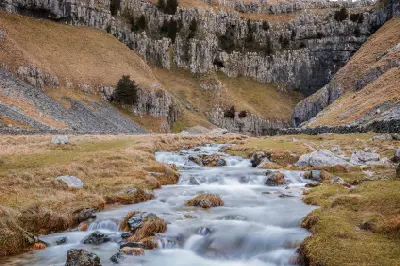
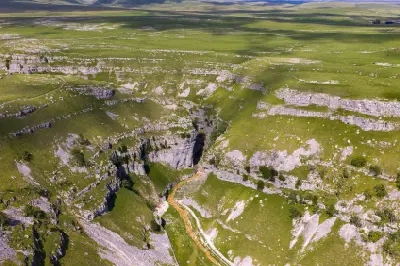
Waterfalls cascade between towering limestone cliffs within the narrow gorge of Gordale Scar in Yorkshire Dales National Park, England.
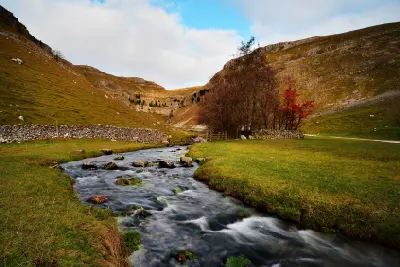
Gordale Scar is a narrow limestone gorge near Malham in the Yorkshire Dales National Park, enclosed by towering rock walls shaped by water erosion. Gordale Beck flows through the gorge, forming cascades and waterfalls beneath steep, irregular limestone cliffs. The confined setting, layered rock formations and moving water provide distinctive opportunities for geological and landscape photography.
54.07266, -2.13057
Gallery
Quick Facts
Access
Short Walk
15–45 min
Elevation Gain
20 m
Best Light
Soft, diffused light reduces contrast between the shaded gorge walls and brighter openings, preserving detail in limestone textures and flowing water.
Why This Light
Season
Seasonally Distinct
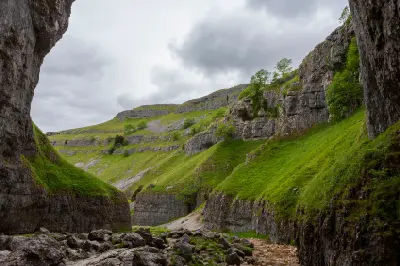
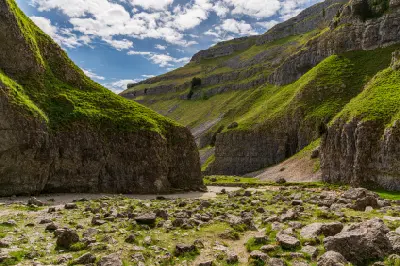
Summer brings green vegetation along the gorge walls, with flowing water contrasting against the pale limestone. Winter exposes more of the rock structure, with occasional frost, ice and increased waterfall flow following prolonged rainfall.
Crowds
Often Busy
Restrictions
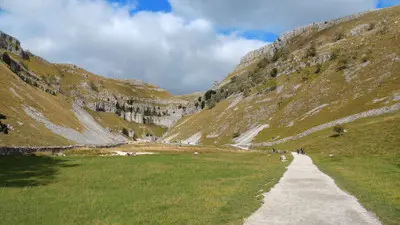
A relatively gentle path leads from the nearby road and campsite area into the lower gorge. Reaching the upper waterfall and continuing beyond it involves steep, slippery rock scrambling and should not be treated as part of the standard visitor approach. Water levels can rise after heavy rain, making rocks hazardous and restricting access within the gorge. Visitors should remain alert to falling stones beneath the cliffs.