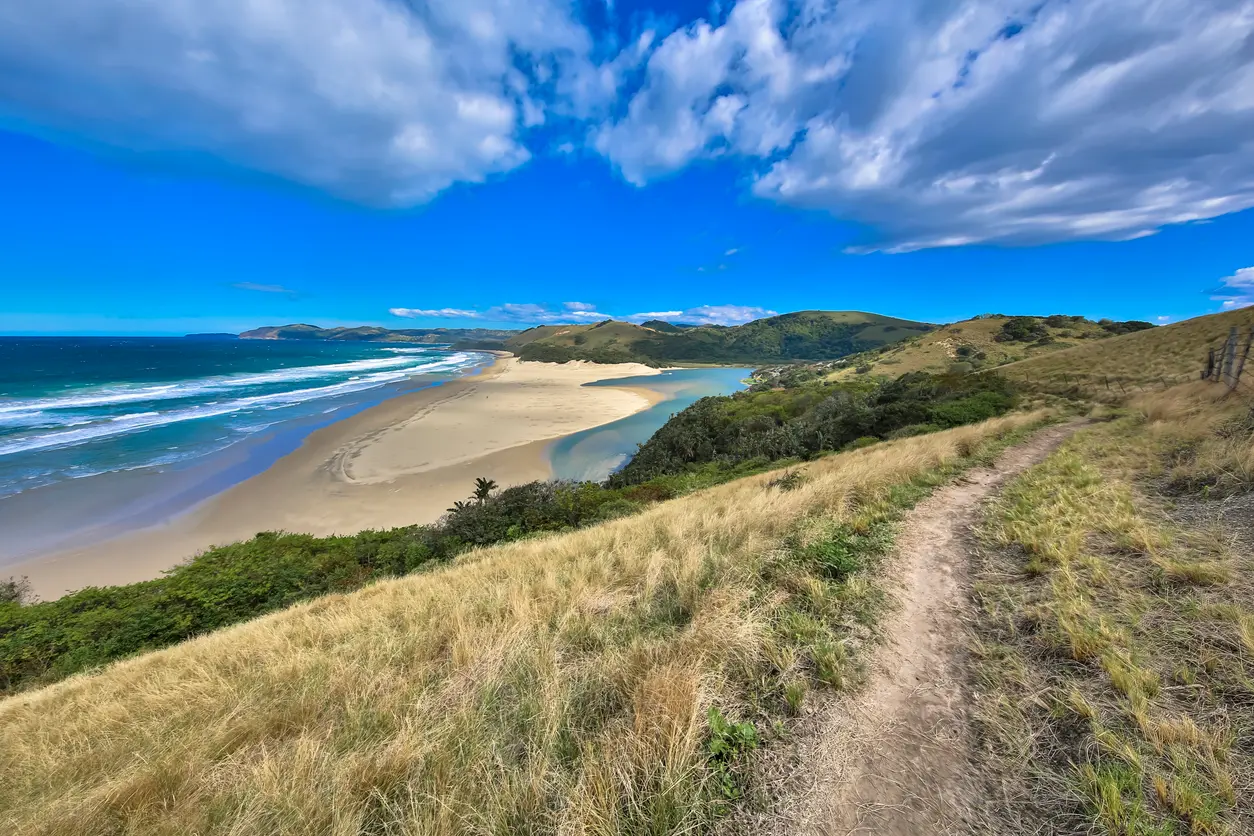
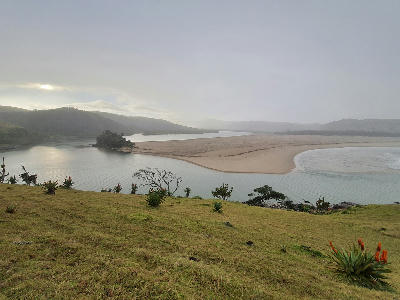
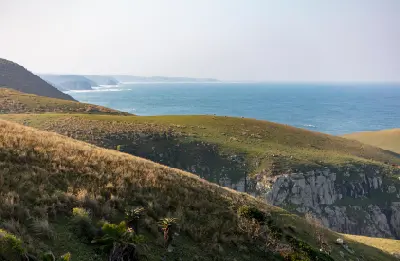
Mbotyi River Mouth curves through a broad estuary and dune system before meeting the Indian Ocean on the Wild Coast. The elevated viewpoint reveals one of the Eastern Cape's most scenic combinations of beach, lagoon and coastal hills.
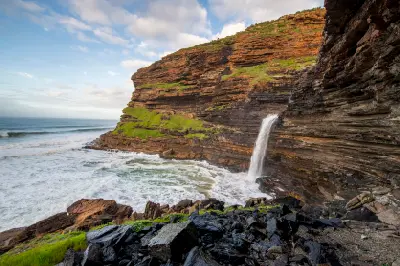
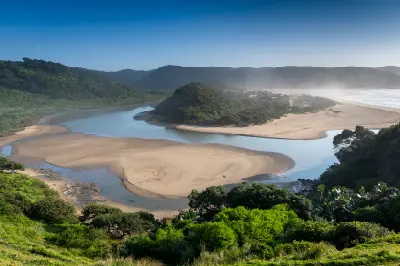
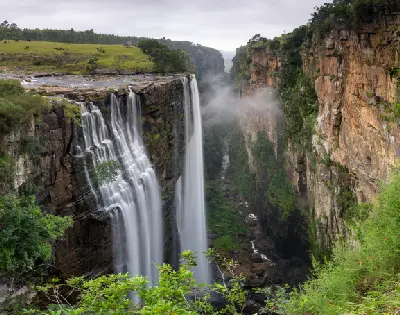
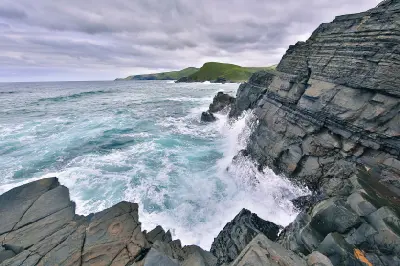
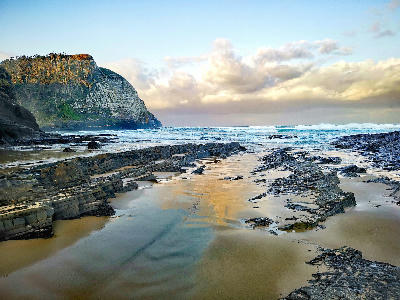
The Wild Coast is a rugged coastal landscape stretching along South Africa's eastern shoreline between the Great Kei River and the Mtamvuna River. The region includes dramatic river mouths, remote beaches, towering sea cliffs, traditional Xhosa villages, and one of the country's least-developed coastal environments, where rolling grasslands descend directly to the Indian Ocean. The terrain is shaped by deeply incised river valleys, elevated coastal plateaus, rocky headlands, waterfalls, estuaries, and broad sandy beaches. Rivers flowing from the inland escarpment cut through the landscape before entering the ocean, creating a succession of natural landmarks including Hole in the Wall, Mzimvubu River Mouth, Mapuzi, Coffee Bay, and numerous sheltered bays and coastal cliffs. Seasonal variation influences river flow, grassland colour, ocean conditions, and atmospheric clarity throughout the year. Ocean mist, changing weather systems, dramatic surf, and shifting coastal light combine to produce constantly changing photographic opportunities across one of South Africa's most spectacular natural coastlines.
Gallery
Key POIs in Wild Coast
Coffee Bay
beach — 140.2 km
Hole in the Wall
landmark — 147.2 km
Magwa Falls
water feature — 65.4 km
Mapuzi Cliffs
landmark — 137.6 km
Mapuzi River Mouth
water feature — 137.6 km
Mngazi River Mouth
water feature — 95.2 km
Mthatha River Mouth
water feature — 135.2 km
Mzimvubu River & Gates of St Johns
landmark — 84.5 km
Mzimvubu River Mouth
landmark — 85.3 km
Waterfall Bluff
water feature — 51.8 km
Overview
The Wild Coast is structured around a sequence of deeply dissected river catchments separated by elevated coastal ridges extending along the Eastern Cape shoreline. Large rivers, estuaries, waterfalls, cliffs, and remote beaches create a landscape where freshwater and marine environments continually intersect. Unlike the protected wilderness systems of Addo or Baviaanskloof, the Wild Coast remains a living cultural landscape where traditional villages occupy the high ground above an exceptionally rugged coastline. Each valley possesses its own distinct character. Wide estuaries, dramatic cliff systems, isolated beaches, waterfalls, offshore rock formations, and rolling coastal grasslands create remarkable geographic variety within a relatively compact stretch of coastline. River mouths such as the Mzimvubu, Mthatha, Mapuzi and Mngazi provide natural focal points, while coastal landmarks including Hole in the Wall and Magwa Falls contribute additional geological diversity. The visual structure of the region is defined by the constant interaction between land and ocean. Steep cliffs, elevated viewpoints, winding estuaries, powerful surf, and expansive coastal panoramas create layered compositions throughout the coastline. Light is continually influenced by ocean weather systems, sea mist, cloud movement, and changing tides, producing dramatic conditions from sunrise through sunset across one of South Africa's premier coastal landscape destinations.
Key photography subjects
- Rugged sea cliffs and elevated coastal viewpoints
- River mouths, estuaries, and tidal lagoons
- Remote beaches and dramatic shoreline formations
- Rolling coastal grasslands and traditional villages
- Waterfalls, river gorges, and inland escarpments
- Powerful surf, ocean textures, and rocky headlands
- Atmospheric coastal light, mist, and changing weather
Workshops in Wild Coast
No upcoming workshops scheduled for Wild Coast at this time.
Check back soon or explore other destinations.