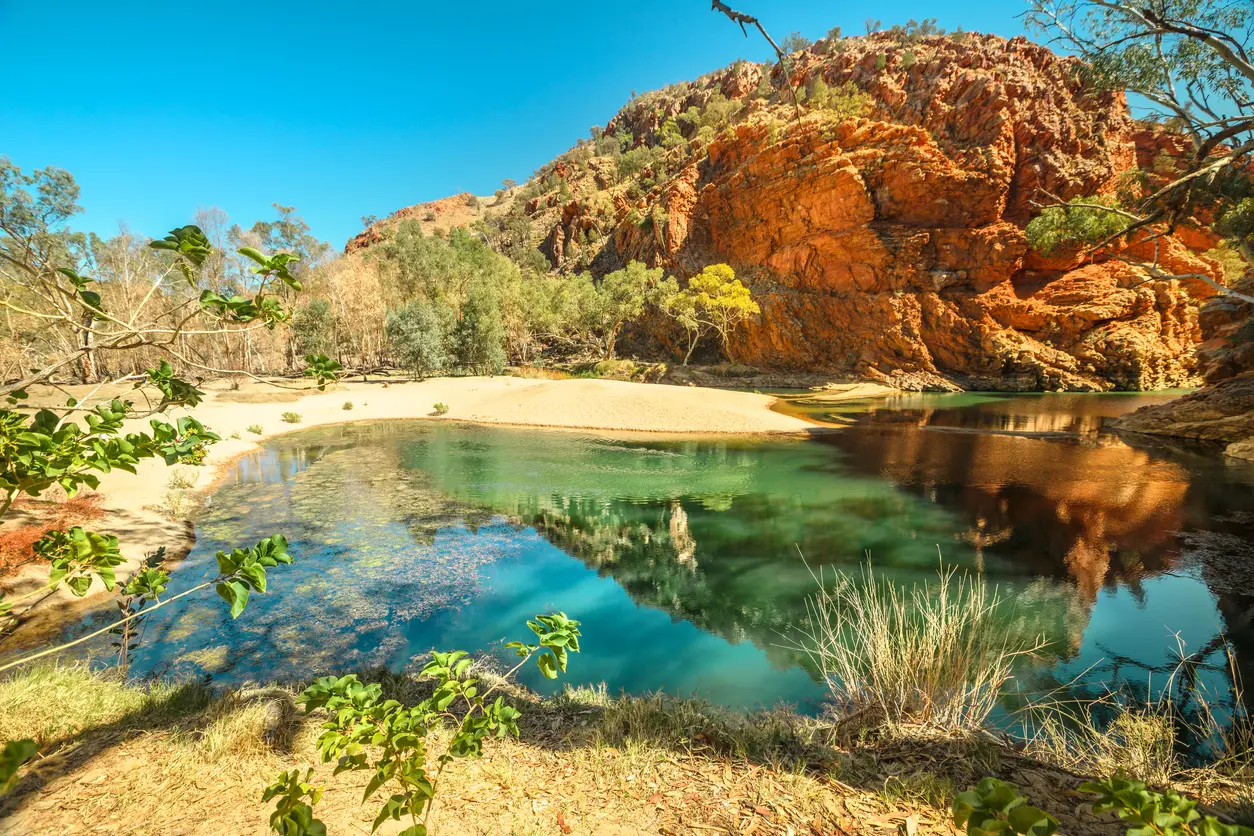
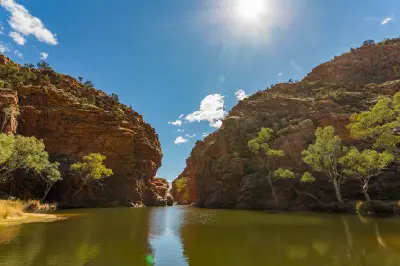
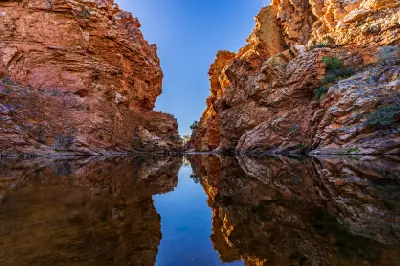
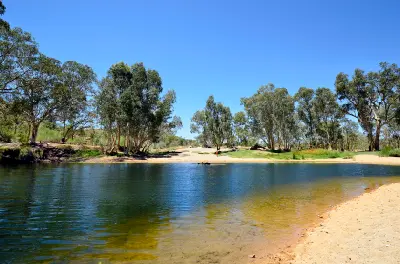
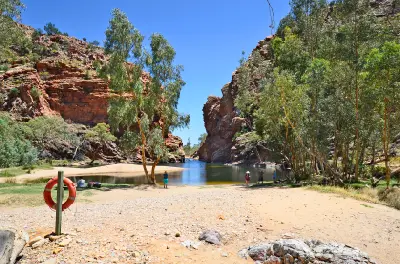
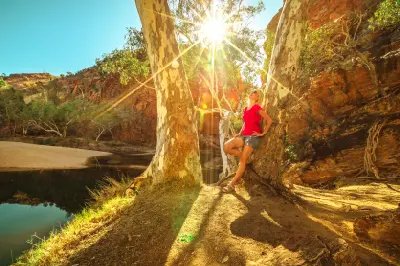
Ellery Creek Big Hole in the West MacDonnell Ranges, Northern Territory, Australia.
Ellery Creek Big Hole is a permanent waterhole carved into a gorge in the West MacDonnell Ranges of Tjoritja / West MacDonnell National Park, about 80km west of Alice Springs. The main pool lies below steep rocky walls and is reached by a short walk from the car park, with surrounding tracks providing views of the creek and range landscape. The combination of deep water, rock walls, reflections, and desert vegetation provide varied landscape compositions.
-23.77684, 133.07341
Gallery
Quick Facts
Access
Short Walk
5–15 min
Elevation Gain
5 m
Best Light
Low-angle light brings out texture in the gorge walls, while reflected light from the water adds detail beneath the darker rock faces.
Why This Light
Season
Seasonally Distinct
Summer can bring stronger green vegetation around the permanent waterhole, with storm clouds and changes in water conditions following rainfall. Winter brings drier surrounding vegetation, clearer skies, and stronger definition in the exposed rock formations.
Crowds
Busy Midday
Restrictions
Access is via Larapinta and Namatjira Drives, with the final 2km unsealed. The main waterhole is approximately a five-minute walk from the car park. Roads can become temporarily impassable after heavy rain. An NT Parks Visitor Pass is required for Tjoritja / West MacDonnell National Park; camping at the designated campground requires advance online booking and payment. Current park status should be checked before travel.