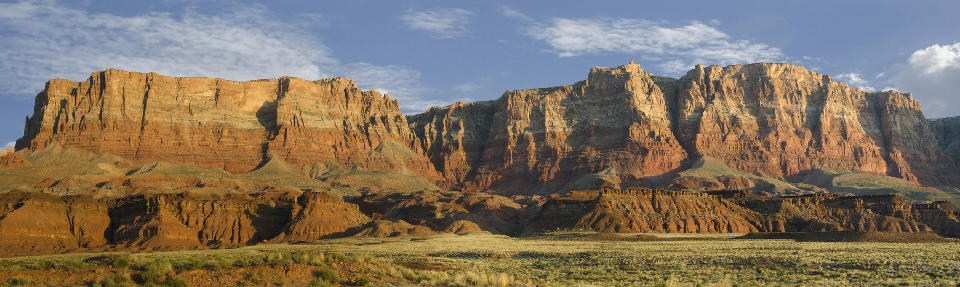
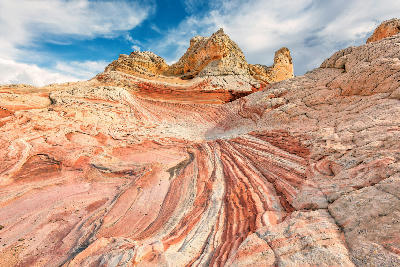
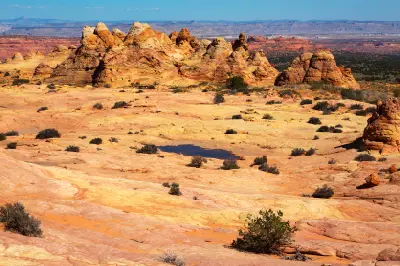
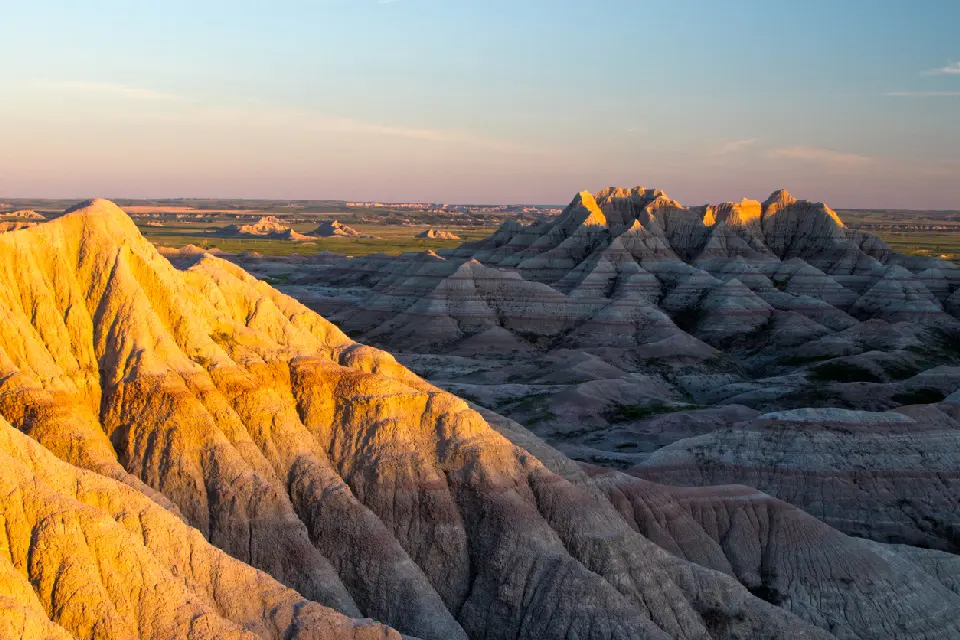
Layered cliffs of the Vermilion Cliffs rise above the desert plateau in northern Arizona.
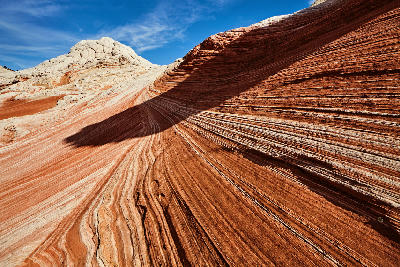
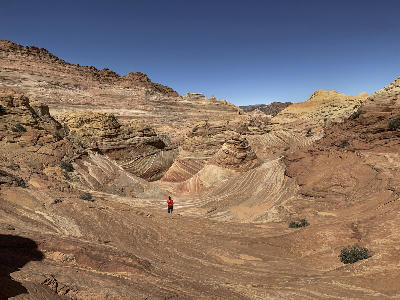
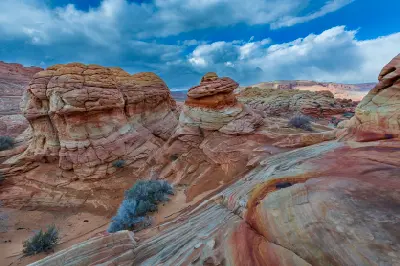
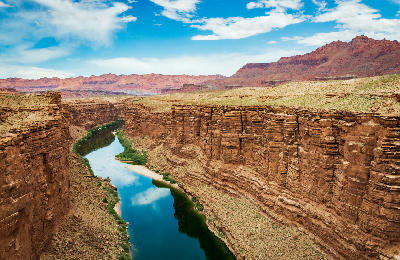
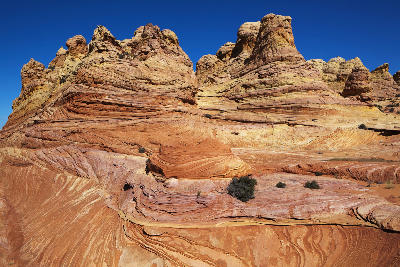
The Vermilion Cliffs and Paria Plateau is a desert landscape on the Arizona–Utah border defined by exposed sandstone surfaces, eroded rock formations, and large areas of undeveloped terrain shaped by wind and water. The region sits within the Colorado Plateau, where sedimentary rock has been sculpted into domes, ridges, and flowing surfaces rather than steep vertical structures. Its spatial identity is defined by surface form and abstraction. The terrain transitions between sandstone plateaus, low domes, shallow basins, and open desert expanses. Elevation changes are subtle, with variation expressed through erosion patterns and surface geometry rather than large-scale vertical relief. Seasonal conditions influence colour saturation, texture visibility, and surface contrast. Light interacts closely with sandstone surfaces, emphasising curves, lines, and tonal variation across the terrain.
Gallery
Key POIs in Vermilion Cliffs & Paria Plateau
Nearby Places
View all on mapWahweap Overlook
landmark — 44.2 km
Arizona
Horseshoe Bend
water feature — 44.9 km
Arizona
Glen Canyon Dam Overlook
water feature — 46.6 km
Arizona
Page & Colorado River
area district — 48.7 km
Arizona
Lower Antelope Canyon
landmark — 52.9 km
Arizona
Alstrom Point
landmark — 56.4 km
Arizona
Grand Staircase-Escalante
area district — 57.0 km
Utah National Parks
Upper Antelope Canyon
landmark — 57.1 km
Arizona
Overview
This region is structured as a continuous sandstone landscape where erosion has shaped surfaces into flowing forms rather than isolated formations or canyon systems. The terrain is expansive and relatively open, with few dominant vertical features. Unlike Monument Valley or the Grand Canyon, compositions are not built around scale or subject separation. Instead, the landscape operates at a finer visual level, where patterns, textures, and surface geometry define the scene. The visual structure is defined by abstraction. Rock surfaces form continuous patterns across the terrain, allowing compositions to focus on detail, flow, and repetition rather than traditional foreground-background relationships.
Key photography subjects
- Flowing sandstone patterns across exposed surfaces
- Curved rock lines shaped by erosion and sediment layers
- Abstract textures within low sandstone formations
- Colour variation across layered rock surfaces
- Undulating terrain without dominant vertical subjects
- Close-range compositions emphasising pattern and form
- Light revealing texture across patterned sandstone
Workshops in Vermilion Cliffs & Paria Plateau
Colorado Fall Color Photography Art Retreat

Autumn in Eastern Sierra

Oregon Coast Adventure Photography Workshop
Autumn in Utah Badlands