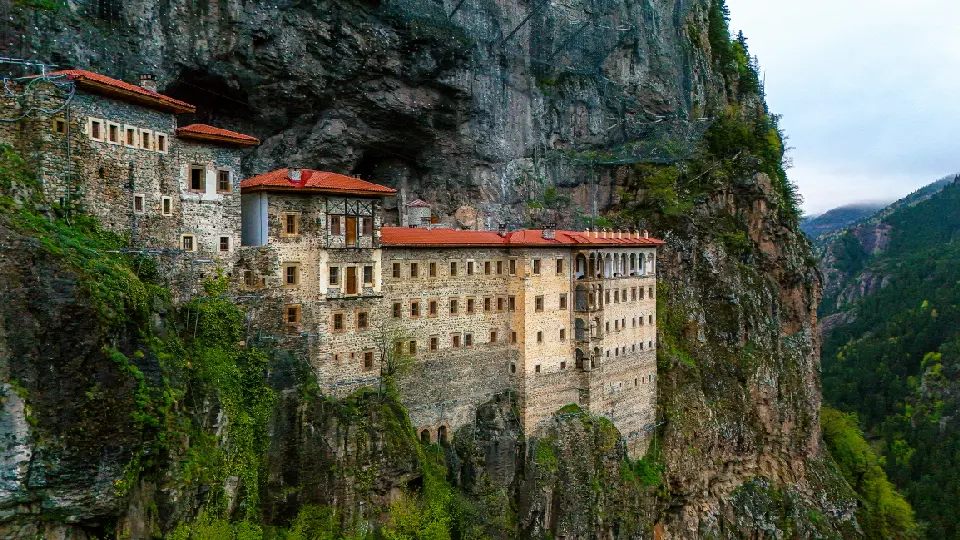
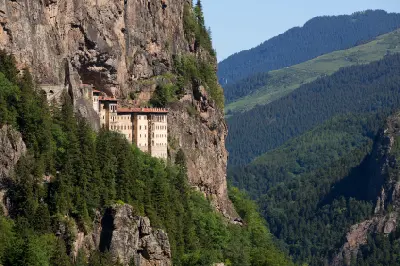
Sümela Monastery clinging to a sheer cliff above the forested Altındere Valley near Trabzon, Turkey.
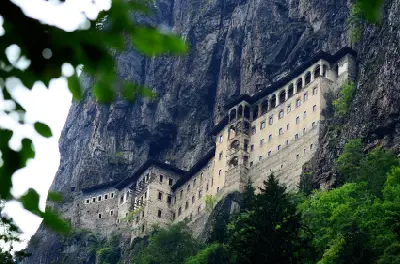
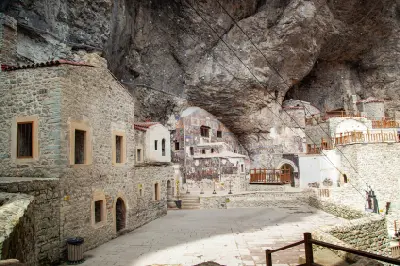
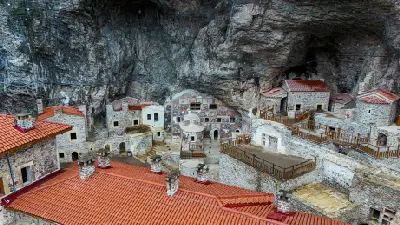
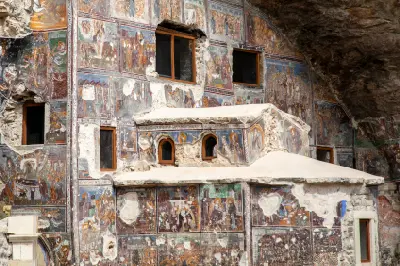
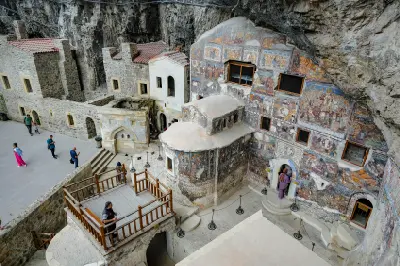
Sümela Monastery is a historic Greek Orthodox monastery built into a sheer cliff face above the Altındere Valley in Turkey's Trabzon Province. Founded in the Byzantine period and expanded over many centuries, the complex occupies a dramatic position hundreds of metres above the forested valley floor. Chapels, living quarters, courtyards and rock-cut structures are clustered beneath the overhanging cliff, while surviving frescoes cover sections of the Rock Church. The surrounding mountains and dense forest are integral to the monastery's setting.
40.69009, 39.65837
Gallery
Quick Facts
Access
Visitor Access
15–45 min
Elevation Gain
100 m
Best Light
Soft light preserves detail across the dark cliff and monastery façades, while broken directional light creates depth across the surrounding forested valley.
Why This Light
Season
Seasonally Distinct
Spring and summer bring dense green forest around the monastery, while autumn introduces strong yellow and orange colour across the valley. Winter can bring snow to the surrounding mountains and may affect access.
Crowds
Often Busy
Restrictions
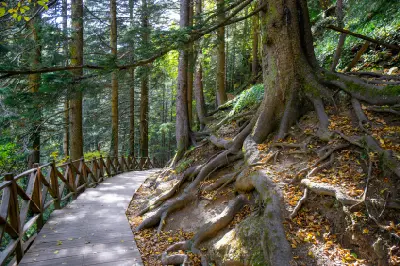
Sümela lies within Altındere Valley National Park and is reached via managed visitor transport followed by an uphill approach to the monastery. The final route includes paths and steps on steep mountain terrain. Weather, maintenance or winter conditions can occasionally affect access.