





01
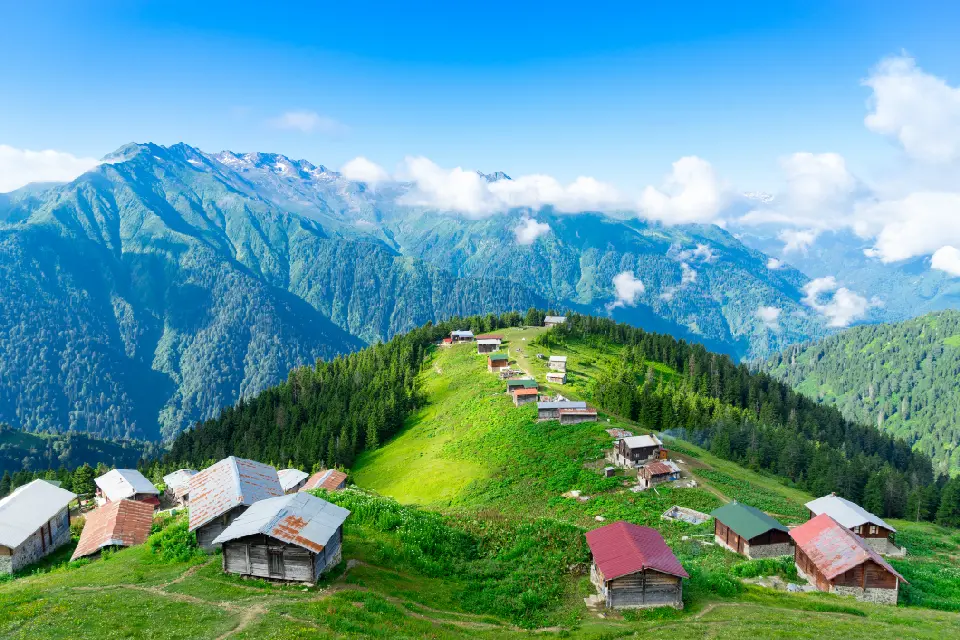
Traditional highland houses scattered across the green slopes of Pokut Plateau, backed by the rugged Kaçkar Mountains near Çamlıhemşin, Rize, Turkey.
Black Sea Mountains
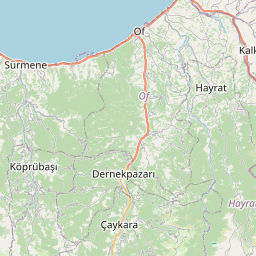
The Black Sea Mountains form one of Turkey’s most dramatic mountain landscapes, where densely forested valleys rise towards high alpine ridges, glacial lakes, waterfalls, and remote plateaus. Stretching across the humid northeastern corner of the country, the region contrasts strongly with the drier landscapes of central Anatolia and the Mediterranean coast.
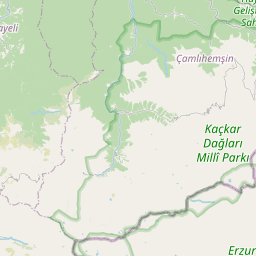
The landscape is dominated by the Kaçkar Mountains, whose rugged summits rise above deep valleys and traditional yayla highland settlements. Ayder Plateau provides one of the best-known gateways into the mountains, while farther west Uzungöl occupies a steep-sided forested valley surrounded by villages, mountain slopes, and cultivated tea country.
High rainfall and proximity to the Black Sea create exceptionally lush vegetation, with dense temperate forests covering the lower slopes and alpine meadows spreading across higher elevations. Snow, cloud, mist, seasonal wildflowers, and changing autumn colour continually transform the appearance of the mountains throughout the year.
Geographic discovery
Explore Black Sea Mountains by Area
Choose a part of the Black Sea Mountains to discover its landscapes, photographic character, and locations.
Explore Areas in Black Sea Mountains
Kaçkar Mountains
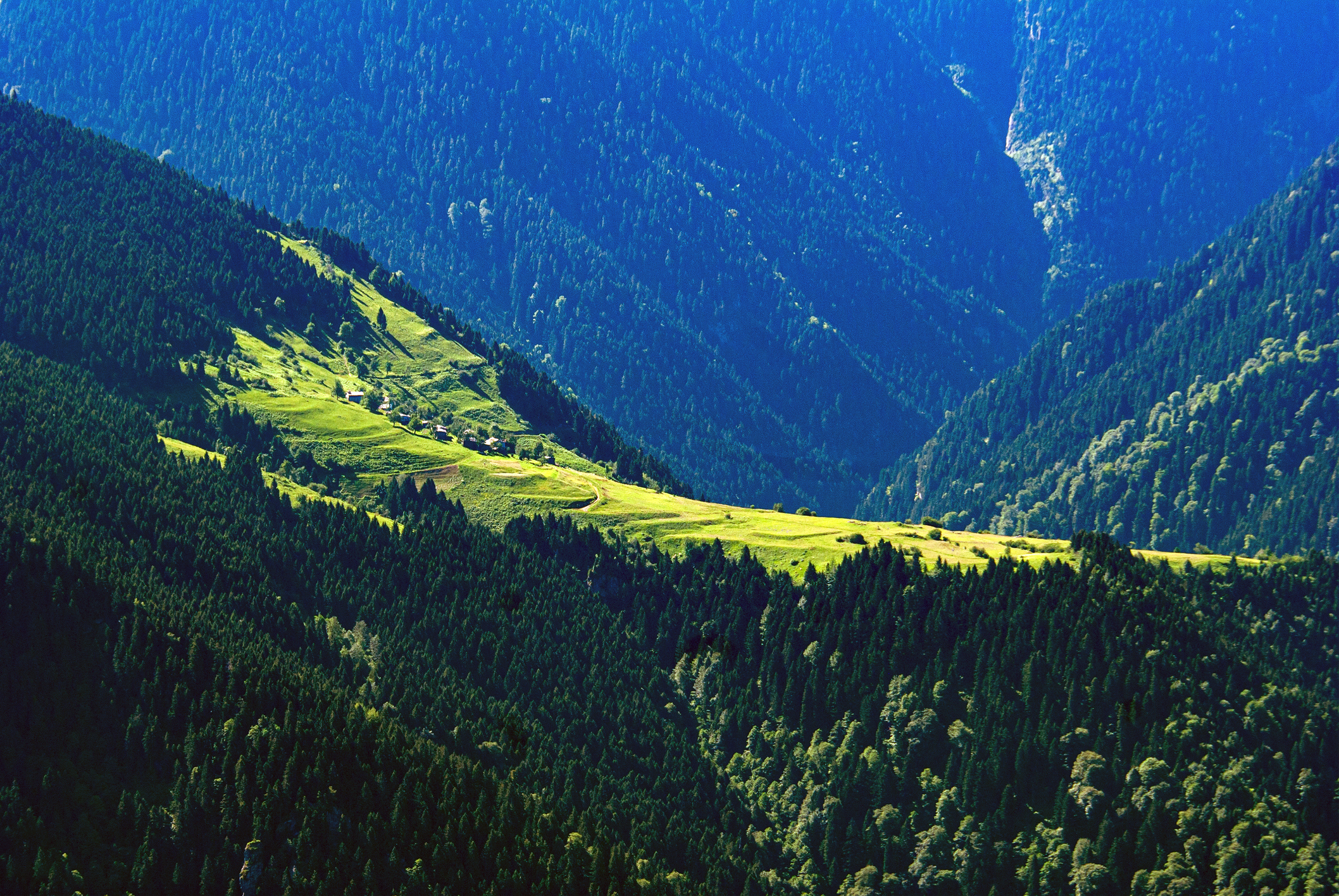
The Kaçkar range forms the highest section of the eastern Pontic Mountains, with rugged summits rising above deeply incised valleys extending inland from the Black Sea. Past glaciation has shaped much of the high terrain, leaving cirques, U-shaped valleys, rocky ridges, alpine lakes, and steep mountain basins. Abundant precipitation supports dense forests at lower elevations, while the landscape becomes progressively more open and alpine towards the highest peaks. Vegetation and settlement change markedly with altitude. Forested valleys of spruce, fir, and broadleaf species transition into subalpine meadows and high summer pastures, where seasonal yayla settlements and scattered traditional houses occupy open mountain basins. Water is a constant element throughout the range, with mountain streams, cascades, and waterfalls descending from the high country into the deeply cut valleys below. Photographically, the Kaçkar Mountains are defined by elevation, weather, and dramatic transitions in landscape character. Forested valleys provide layered compositions beneath exposed peaks, while alpine lakes, rocky ridges, waterfalls, and flower-filled meadows create strong foreground subjects at higher elevations. Mist and low cloud can isolate ridgelines and settlements, while clearing conditions reveal successive mountain layers and expansive views across one of Turkey’s most distinctive alpine environments.
Rize & Tea Country
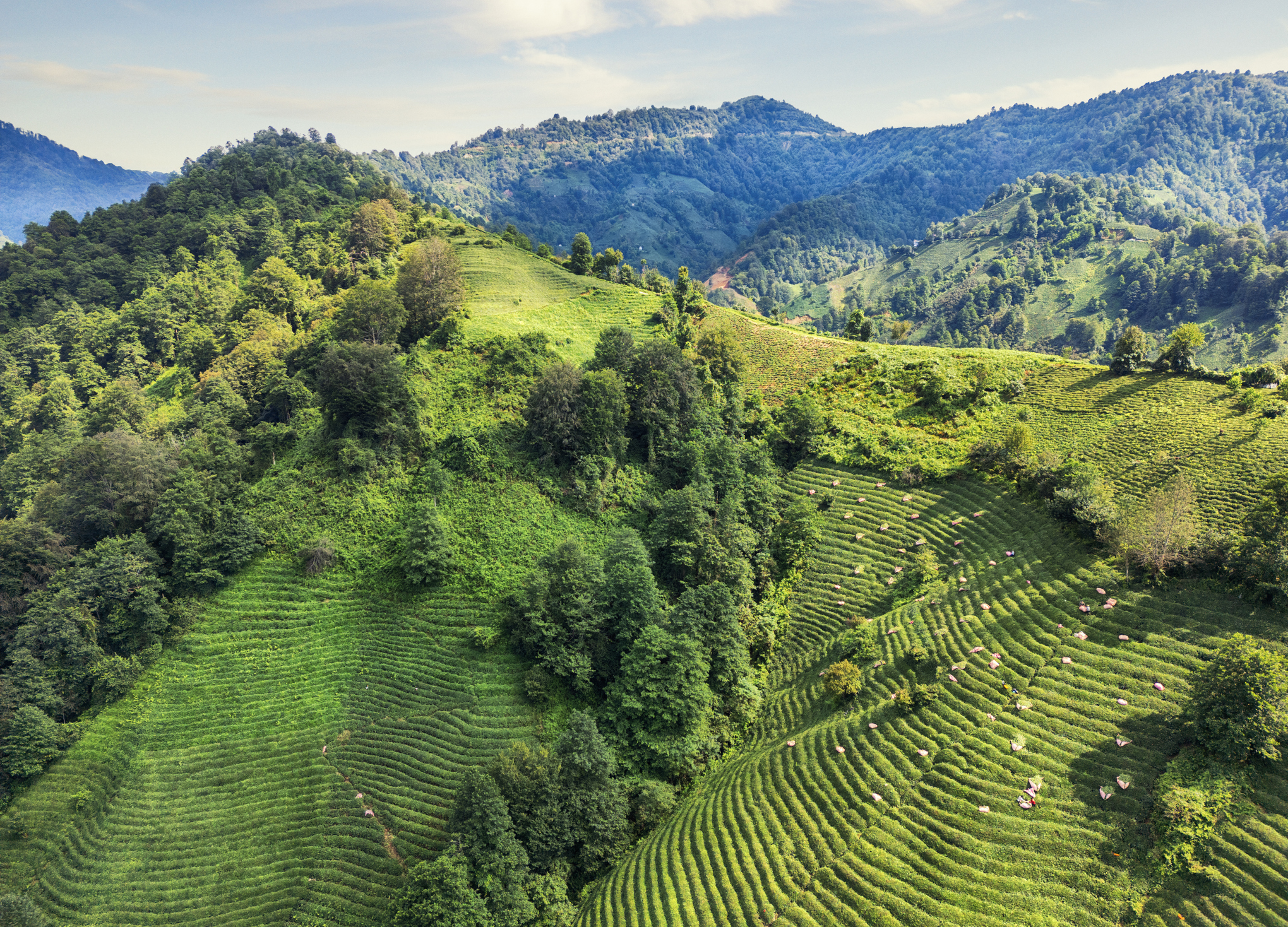
The landscape around Rize is shaped by the exceptionally wet climate of Turkey’s eastern Black Sea coast, where mountains rise rapidly behind a narrow coastal plain. Warm, humid conditions and abundant rainfall provide an ideal environment for tea cultivation, which has transformed large areas of the lower mountain slopes into a distinctive patchwork of plantations, villages, forest, and deeply incised river valleys. Tea fields follow the contours of the terrain rather than forming broad level plantations. Rows of closely planted bushes curve around hillsides, climb steep slopes, and surround scattered houses and rural roads. Beyond the cultivated zone, dense forests and increasingly rugged valleys lead towards the higher Kaçkar Mountains, creating a strong transition from agricultural landscape to mountain wilderness. Photographically, the region is defined by pattern, colour, atmosphere, and the relationship between people and cultivated land. Repeating rows of tea bushes create strong graphic compositions, particularly from elevated viewpoints, while harvesting activity adds a human and documentary element. Mist, rain, low cloud, and intermittent sunlight frequently transform the valleys, softening distant ridges and producing layers of green that are among the defining visual characteristics of the eastern Black Sea.
Trabzon Highlands
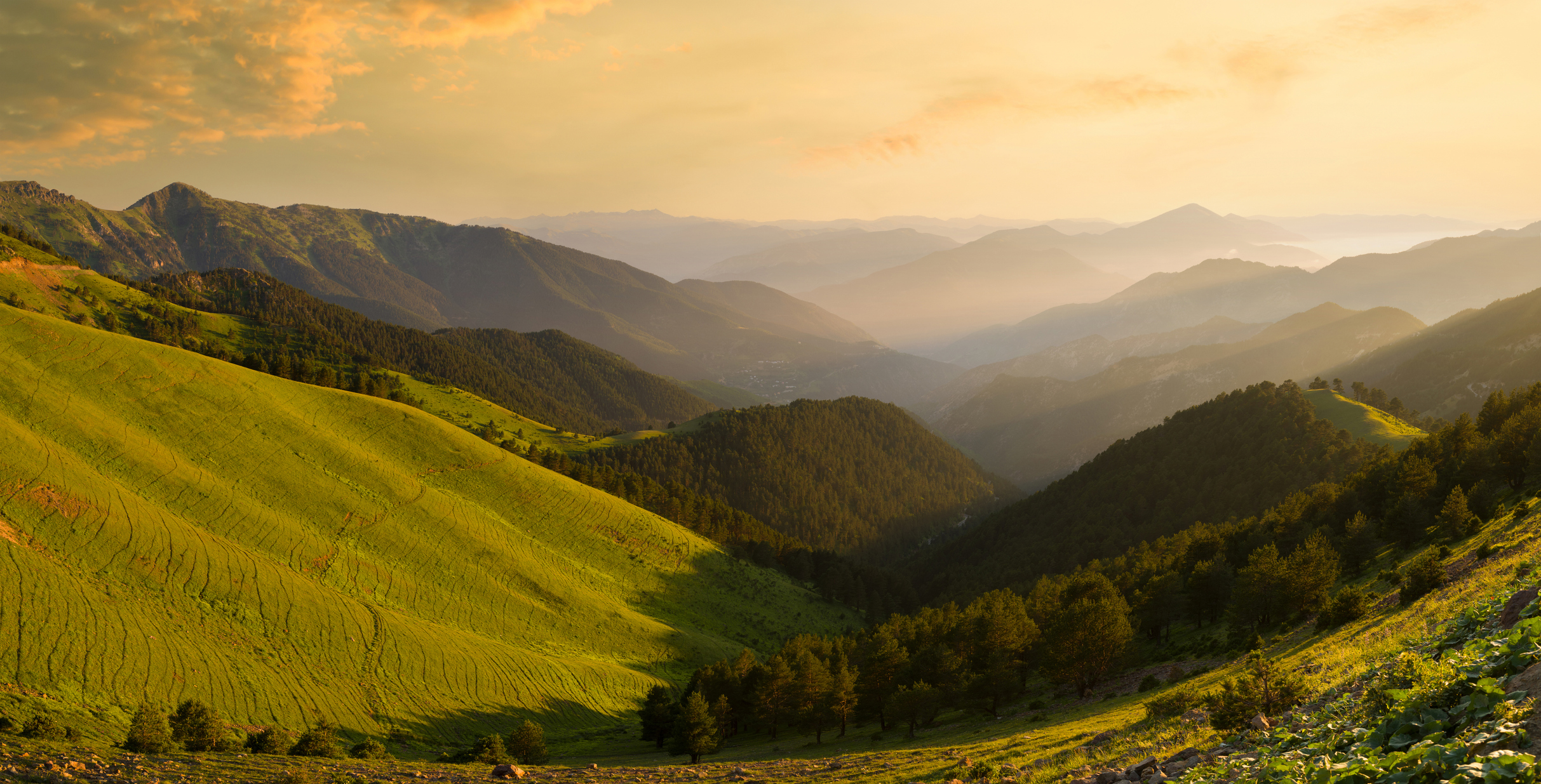
The Trabzon Highlands are structured around the northern slopes of the Pontic Mountains, which rise sharply inland from the Black Sea. Deep river valleys cut through the range and historically provided routes between the coast and the Anatolian interior. The Zigana Mountains form one of the most prominent sections of this landscape, combining high passes, forested slopes, open grasslands, and broad views across successive mountain ridges. Human settlement is concentrated along valleys and seasonal highland pastures. Traditional yayla villages, scattered farmhouses, mountain roads, and small agricultural clearings create a cultural landscape embedded within the surrounding forests. Sümela Monastery adds an exceptional architectural element, occupying a dramatic cliff face above the Altındere Valley and illustrating the long history of human occupation within these mountains. Photographically, the region is defined by elevation, atmospheric depth, and the contrast between settlement and wilderness. Layered ridgelines become especially pronounced in mist and low-angle light, while high pastures provide expansive foregrounds against distant peaks. Forest interiors, winding mountain roads, traditional villages, dramatic cliffs, and rapidly changing cloud conditions create subjects ranging from intimate landscape details to broad mountain panoramas.
Photographic journey
Black Sea Mountains Photography Route
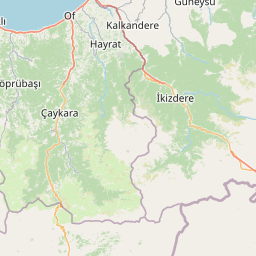
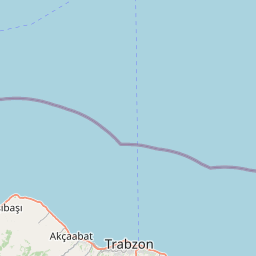
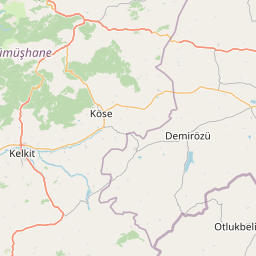
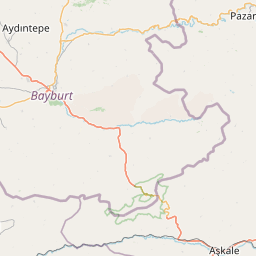
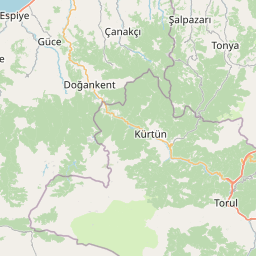
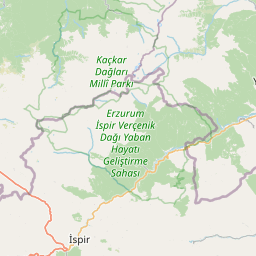
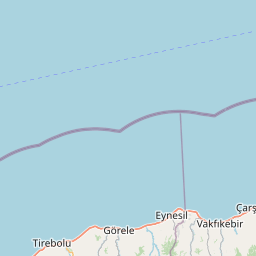
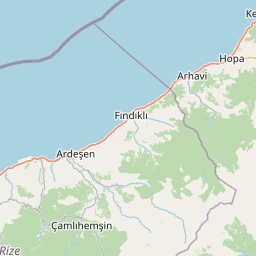
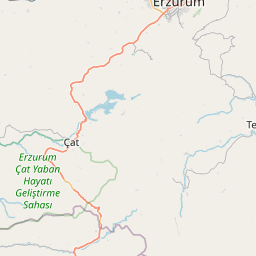
Black Sea Mountains Circuit · 12 stops



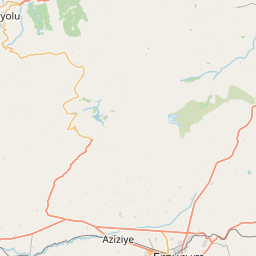


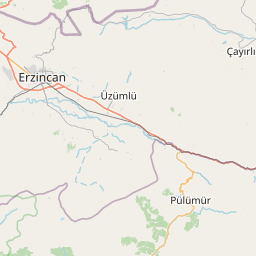
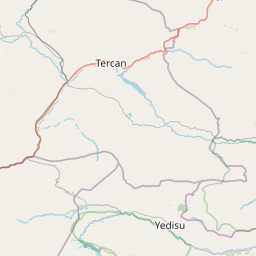


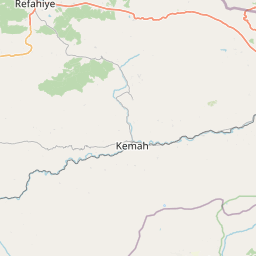
Overview
The region is structured around the eastern Black Sea mountain system, where steep ranges rise rapidly inland from Turkey’s northern coast. Deep river valleys cut through densely forested slopes before reaching alpine plateaus, rocky ridges, glacial basins, and high summits. The Kaçkar Mountains form the region’s highest and most rugged terrain, creating a landscape of pronounced vertical relief and frequently changing mountain weather.
Human settlement follows the valleys and high pastures. Traditional villages, wooden houses, stone bridges, tea plantations, and seasonal yayla settlements occupy narrow pockets of usable land between forested slopes and mountain ridges. Ayder Plateau and Uzungöl represent two of the region’s best-known landscapes, while extensive areas beyond them retain a much more remote mountain character.
Photographically, the Black Sea Mountains work through elevation, vegetation, atmosphere, and layered terrain. Forested valleys and tea-covered hillsides provide intricate patterns at lower elevations, while waterfalls, alpine meadows, glacial lakes, and rugged peaks dominate higher ground. Mist, low cloud, rain, snow, autumn colour, and shafts of changing light can dramatically alter visibility and mood, making atmospheric conditions an important part of the region’s visual identity.
Key Photography Subjects
- Kaçkar Mountain peaks, ridges, and alpine landscapes
- Glacial lakes, waterfalls, rivers, and mountain streams
- Ayder Plateau and traditional highland settlements
- Uzungöl and steep forested mountain valleys
- Tea plantations and patterned hillsides of the Black Sea region
- Alpine meadows, wildflowers, forests, and seasonal colour
- Mist, cloud, snow, rain, and dramatic mountain light
Gallery
Workshops in Black Sea Mountains
No upcoming workshops scheduled for Black Sea Mountains at this time.
Check back soon or explore other destinations.