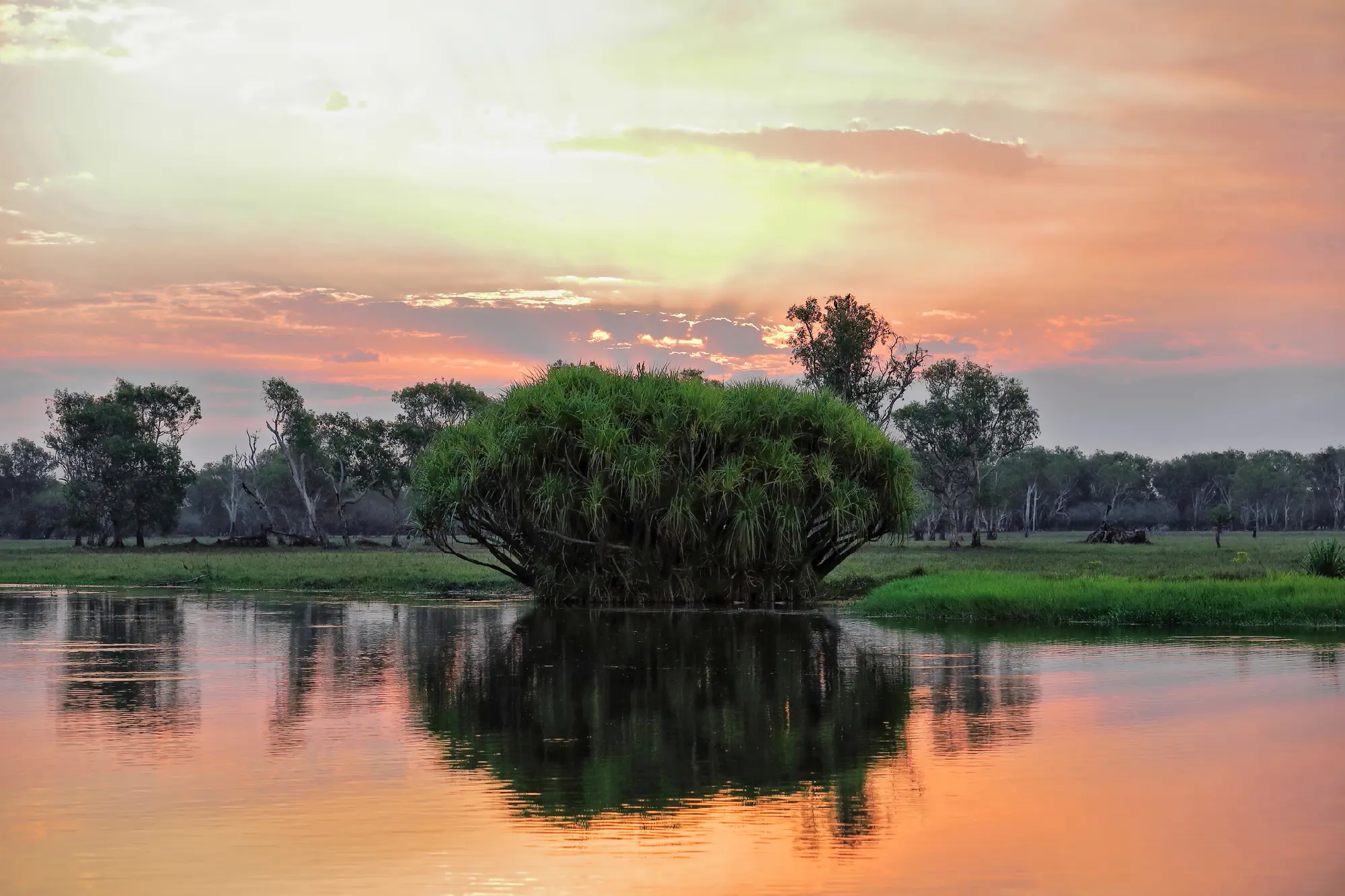
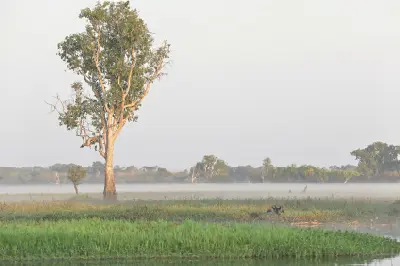
Sunset colours spread across Yellow Water Billabong (Ngurrungurrudjba), where pandanus vegetation and surrounding floodplain trees reflect in the still waters of Kakadu National Park.
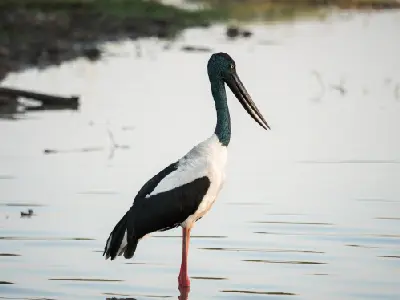
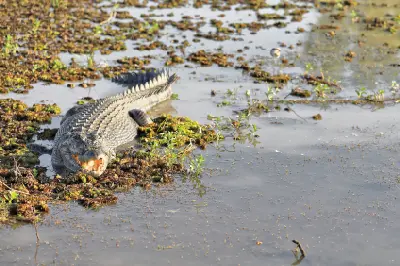
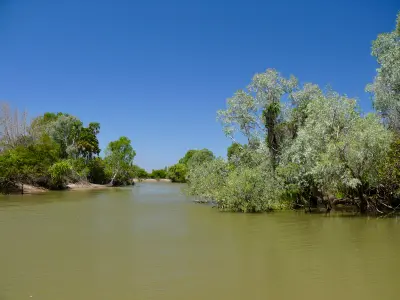
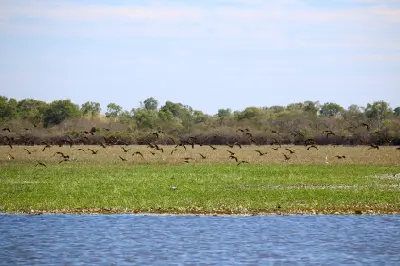
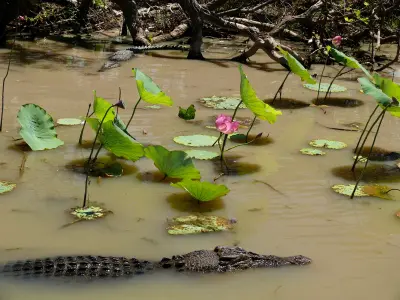
Yellow Water Billabong, also known as Ngurrungurrudjba, is a freshwater wetland within the South Alligator River floodplain in Kakadu National Park, Northern Territory. The billabong contains open water, paperbark woodland, aquatic vegetation and extensive bird habitat, with boat cruises providing access to its waterways and wildlife. The reflective wetlands, abundant birdlife, crocodiles and seasonal floodplain landscapes provide opportunities for wildlife, landscape and nature photography.
-12.89429, 132.51838
Gallery
Quick Facts
Access
Roadside / Step-out
0–5 min
Elevation Gain
0 m
Best Light
Low-angle sunlight illuminates birds and wetland vegetation, while calm water reflects paperbark trees, cloud formations and the surrounding floodplain.
Why This Light
Season
Seasonally Distinct
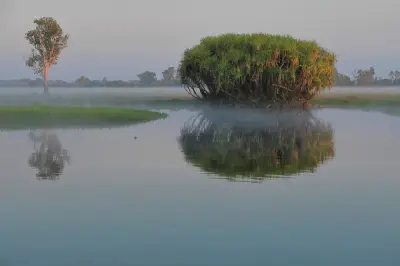
Summer brings monsoon flooding, extensive open water and lush green wetland vegetation, with dramatic cloud formations and submerged floodplain margins. Winter brings receding water, exposed banks and concentrated birdlife around remaining waterways, with golden grasses and increasingly open wetland views.
Crowds
Often Busy
Restrictions
Yellow Water Billabong is reached by sealed road via Cooinda within Kakadu National Park. Guided boat cruises provide the principal means of exploring the waterways, while a boardwalk and viewing platform offer land-based access when conditions permit. A Kakadu park pass generally applies, and boat cruises are separately charged. Seasonal flooding can affect boardwalk access and cruise routes. Saltwater crocodiles inhabit the wetlands, and visitors must remain within designated safe areas and follow operator instructions.