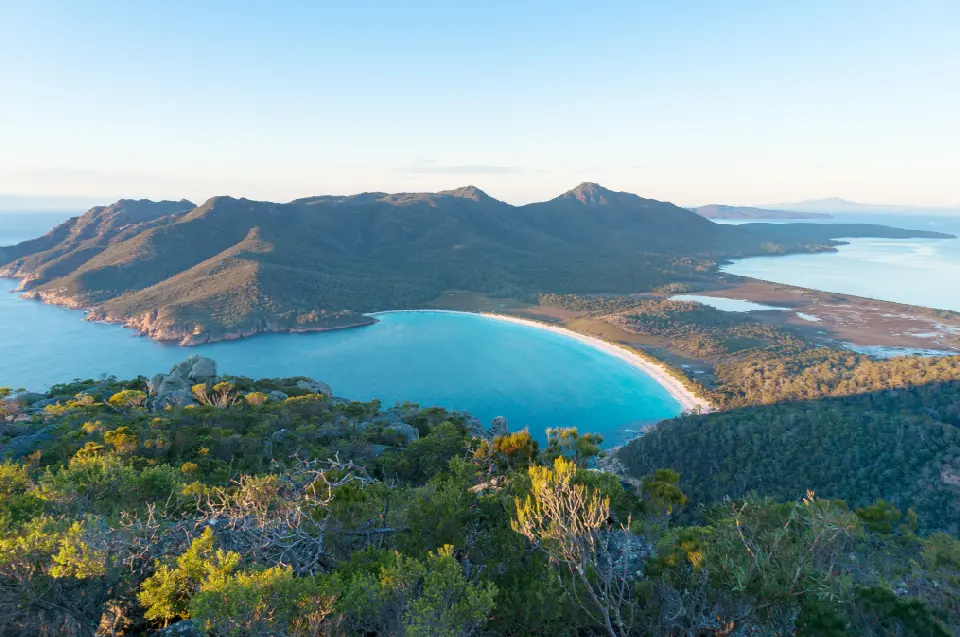
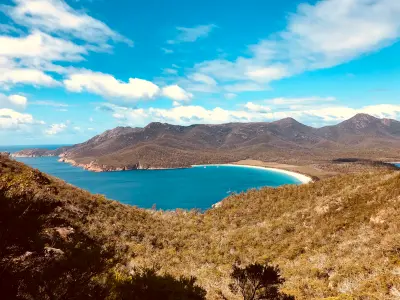
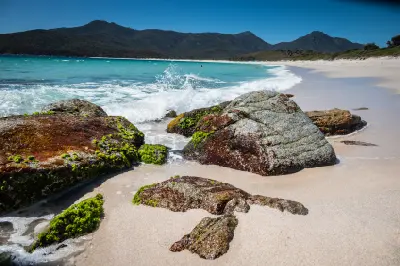
Wineglass Bay curves beneath the rugged mountains of Freycinet National Park, Tasmania.
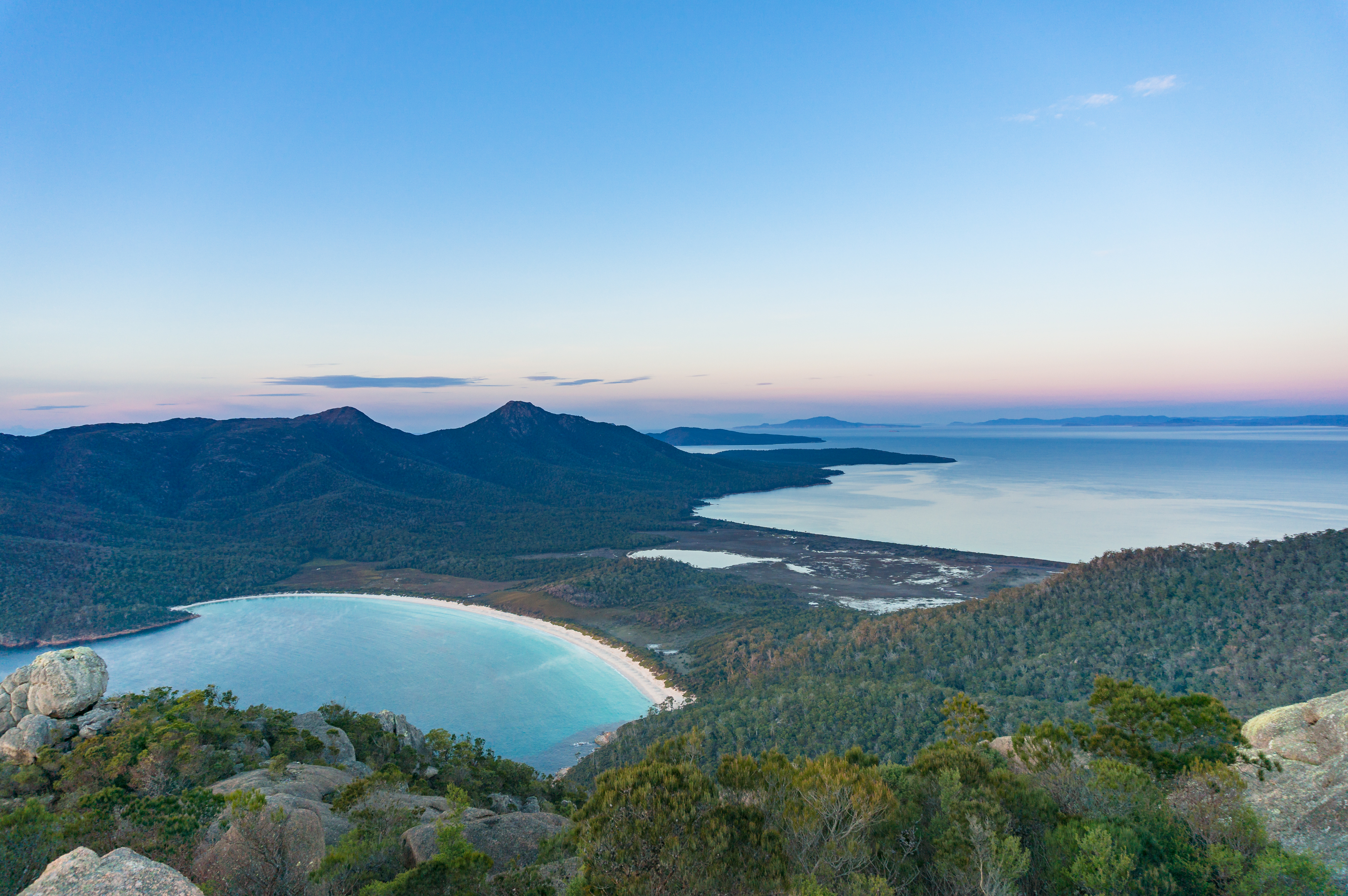
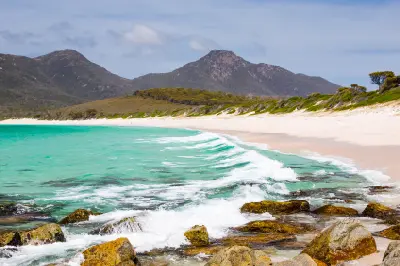
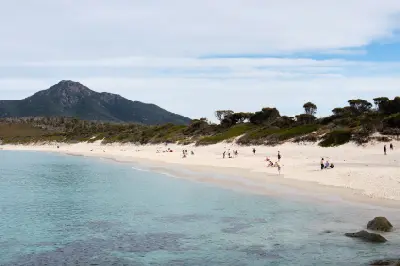
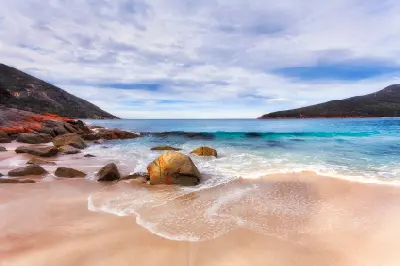
Wineglass Bay is a sweeping crescent of white sand and clear turquoise water enclosed by granite mountains on Tasmania's Freycinet Peninsula. The beach curves beneath the pink-grey peaks of the Hazards, creating one of Tasmania's most recognisable coastal landscapes. Elevated viewpoints reveal the distinctive shape of the bay, while the shoreline provides more intimate views of granite headlands, forest and open water.
-42.16811, 148.30501
Gallery
Quick Facts
Access
Moderate Hike
45–90 min
Elevation Gain
150 m
Best Light
Morning light illuminates the bay and granite slopes, while low-angle light adds depth and texture across the surrounding Hazards.
Why This Light
Season
Seasonally Distinct
Summer brings warmer conditions and vivid coastal colour but the highest visitor numbers. Autumn and spring provide cooler walking conditions and variable weather, while winter can bring clearer air, quieter trails and more dramatic coastal conditions.
Crowds
Often Busy
Restrictions
Wineglass Bay lies within Freycinet National Park and requires a valid Tasmania Parks Pass. The classic elevated view is reached by a sustained uphill walk from the main trailhead to Wineglass Bay Lookout. Continuing down to the beach requires a longer and steeper walk, with additional time needed for the return climb.