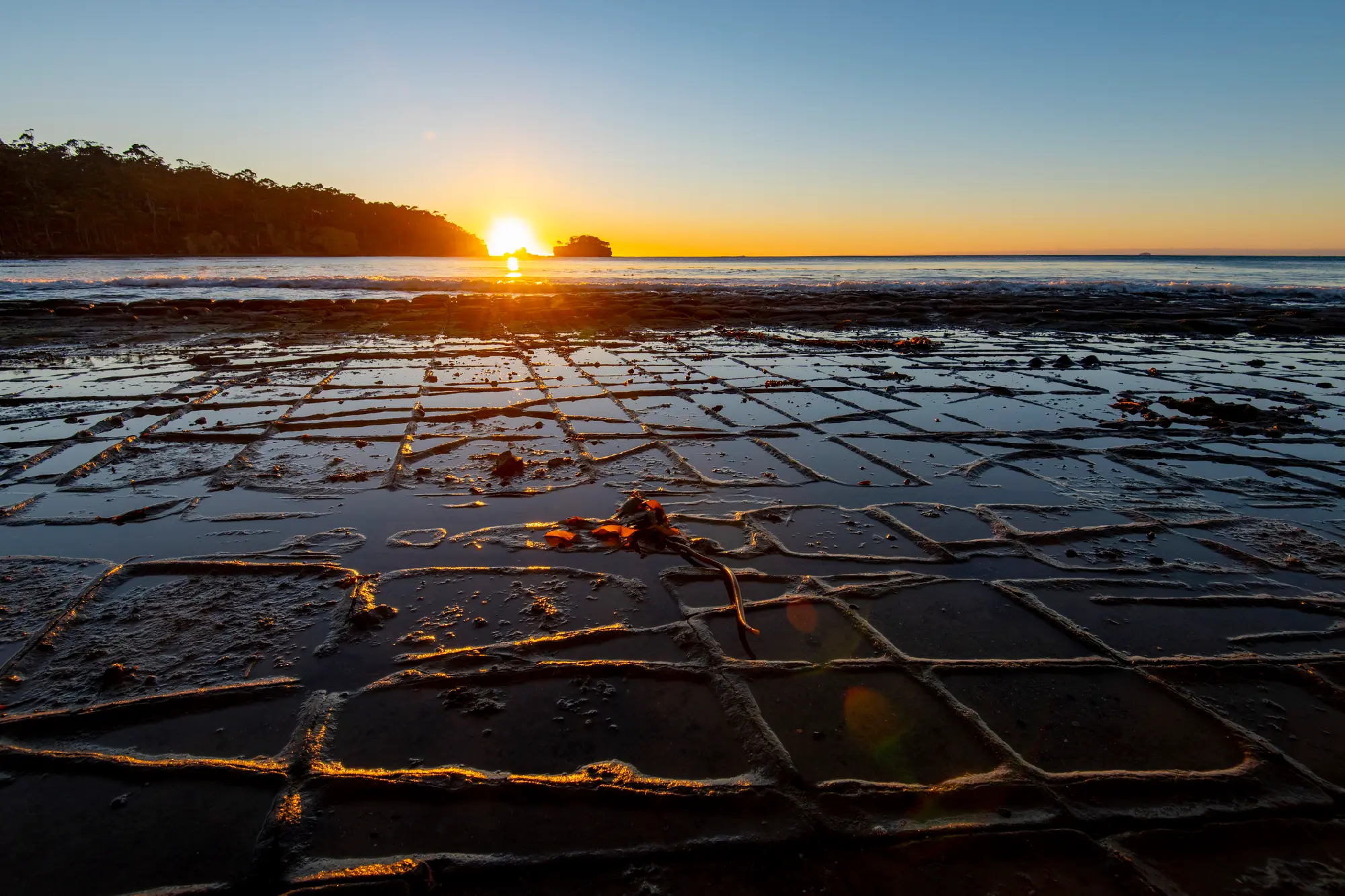
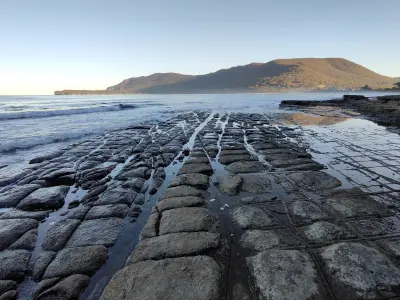
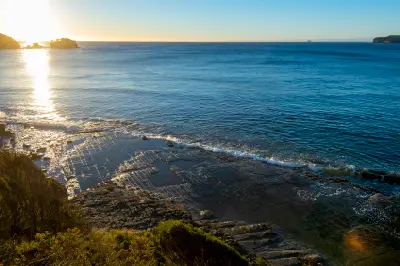
Low golden light traces the geometric joints of Tessellated Pavement on Tasmania’s Tasman Peninsula.
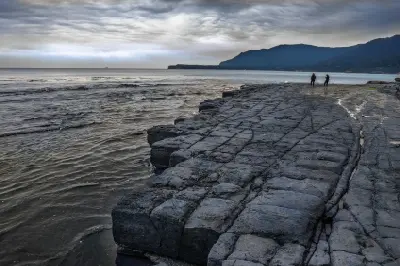
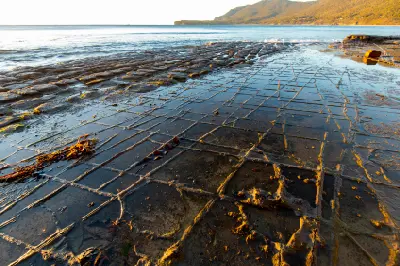
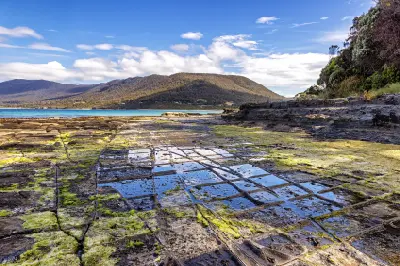
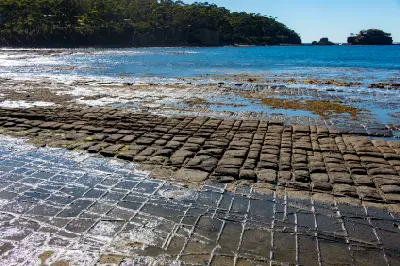
Tessellated Pavement is a naturally fractured rock platform on the northern Tasman Peninsula, where intersecting joints divide the coastal rock into striking rectangular patterns. Repeated weathering and erosion have created formations resembling tiles, with shallow pools collecting across parts of the platform at low tide. The geometric rock patterns, reflections and surrounding coastline make it one of Tasmania's most distinctive geological photography locations.
-43.00926, 147.93175
Gallery
Quick Facts
Access
Short Walk
5–15 min
Elevation Gain
20 m
Best Light
Low-angle light reveals the geometric rock patterns, while water trapped across the platform can reflect colour and cloud from the surrounding sky.
Why This Light
Season
Seasonally Distinct
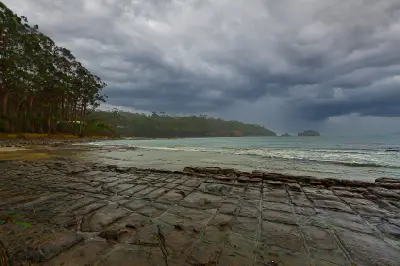
Summer brings longer daylight and generally easier coastal conditions, while autumn and spring provide more variable skies and changing seas. Winter can bring stronger swell, wet rock and dramatic weather, with conditions around the exposed platform requiring greater care.
Crowds
Often Busy
Restrictions
Tessellated Pavement is reached by a short established path from the parking area at Eaglehawk Neck. The main rock platform is easily accessible, but wet surfaces can be extremely slippery and waves can reach exposed sections during rough conditions. Tide and swell strongly affect how much of the pavement can be safely explored.