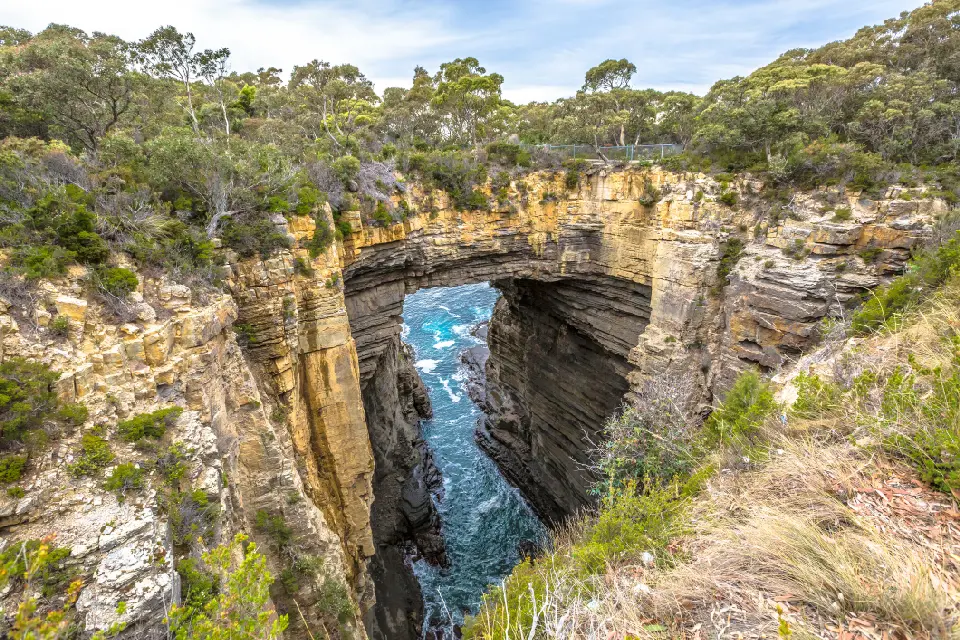
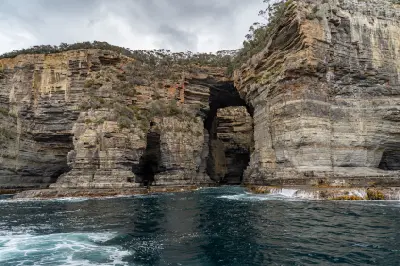
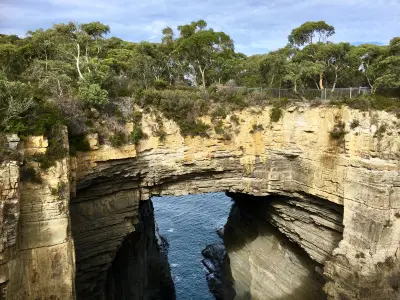
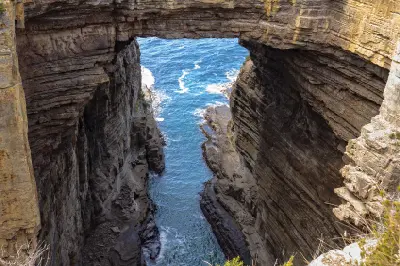
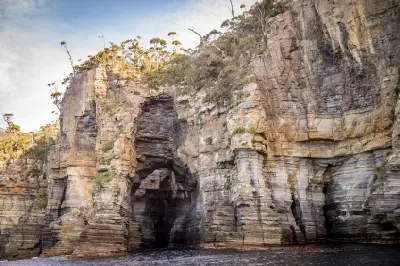
Tasman Arch spans a deep ocean channel carved through the layered coastal cliffs of Tasmania’s Tasman Peninsula.
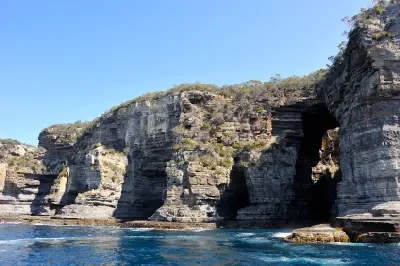
Tasman Arch is a massive natural rock arch carved into the coastal cliffs of the Tasman Peninsula by prolonged marine erosion. The opening cuts through towering dolerite cliffs above the Southern Ocean, revealing turbulent water and rugged coastline beyond. Its combination of monumental geology, dark rock and powerful ocean conditions makes it one of the peninsula's most distinctive and accessible coastal formations.
-43.04213, 147.95094
Gallery
Quick Facts
Access
Roadside / Step-out
0–5 min
Elevation Gain
5 m
Best Light
Soft light controls contrast inside the dark arch, while low-angle light reveals texture and separation across the surrounding cliffs and coastline.
Why This Light
Season
Seasonally Distinct
Summer brings longer daylight and generally calmer conditions around the exposed coastline. Autumn and spring produce variable skies and changing seas, while winter can bring stronger swell, dramatic weather and powerful wave action beneath the arch.
Crowds
Often Busy
Restrictions
Tasman Arch is reached directly from the road within Tasman National Park, with parking close to established viewing areas around the formation. Little walking is required for the principal views, although surrounding coastal paths provide additional perspectives. Barriers protect the exposed cliff edges and should not be crossed.