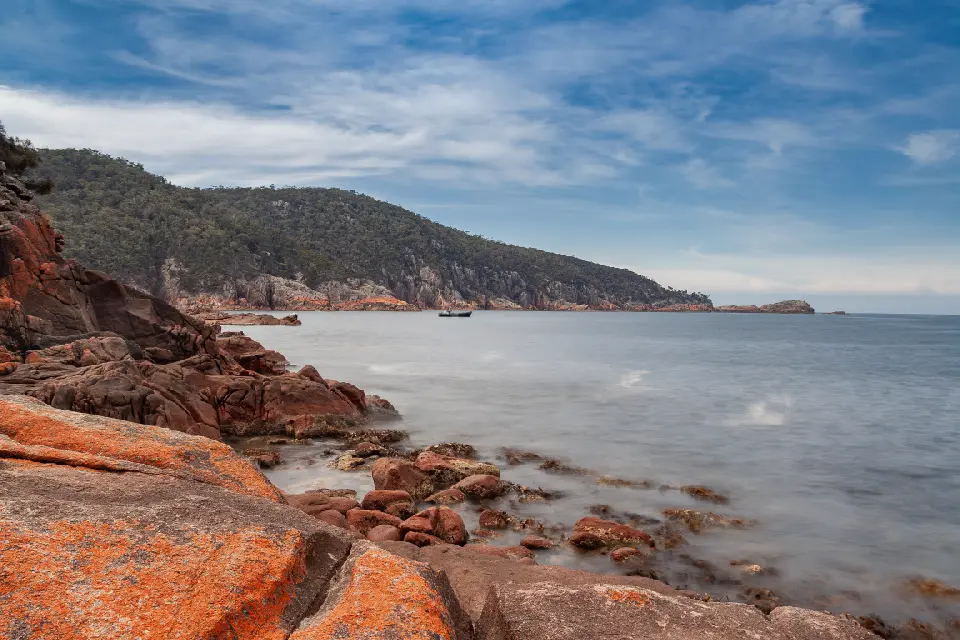
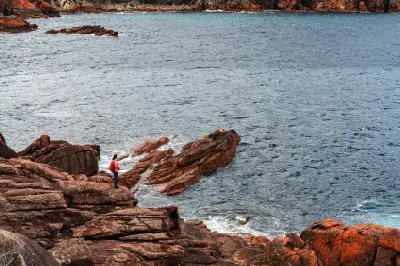
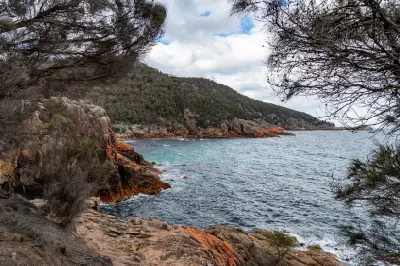
Orange-lichen granite frames the sheltered waters and rugged coastline of Sleepy Bay in Freycinet National Park.
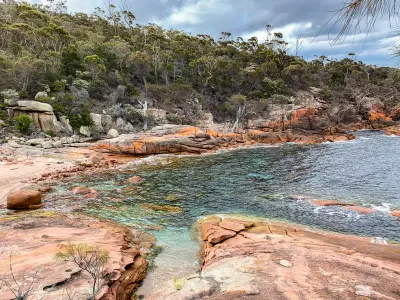
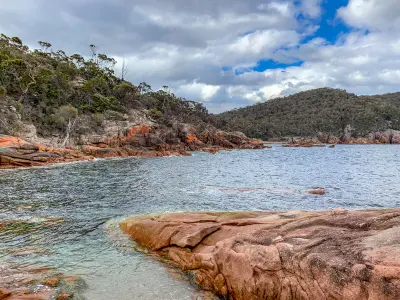
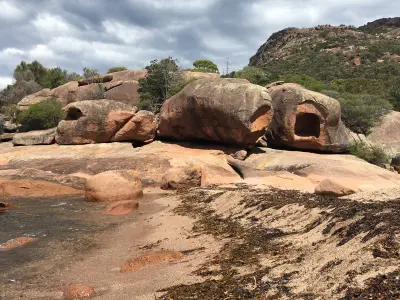
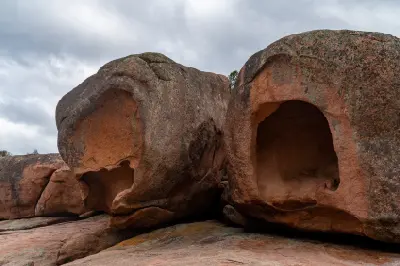
Sleepy Bay is a small rocky cove on the eastern side of Freycinet National Park, surrounded by pink granite headlands and exposed coastal vegetation. Unlike Freycinet's broad sandy beaches, the bay has a rugged character shaped by boulders, weathered rock and the open Tasman Sea. Its compact scale and distinctive granite formations make it particularly useful for intimate coastal landscapes and detailed studies of rock, water and changing light.
-42.13560, 148.32543
Gallery

Quick Facts
Access
Short Walk
5–15 min
Elevation Gain
30 m
Best Light
Low-angle light reveals colour and texture across the granite, while overcast conditions soften contrast between pale rock, vegetation and moving water.
Why This Light
Season
Seasonally Distinct
Summer brings brighter coastal colour and generally calmer conditions, while autumn and spring produce more variable skies and changing seas. Winter can bring stronger swell, cooler light and more dramatic conditions along the exposed coastline.
Crowds
Usually Quiet
Restrictions
Sleepy Bay lies within Freycinet National Park and is reached by a short walking track from roadside parking. The trail descends towards the rocky shoreline, where uneven and potentially slippery granite requires care. A valid Tasmania Parks Pass is required for park entry.