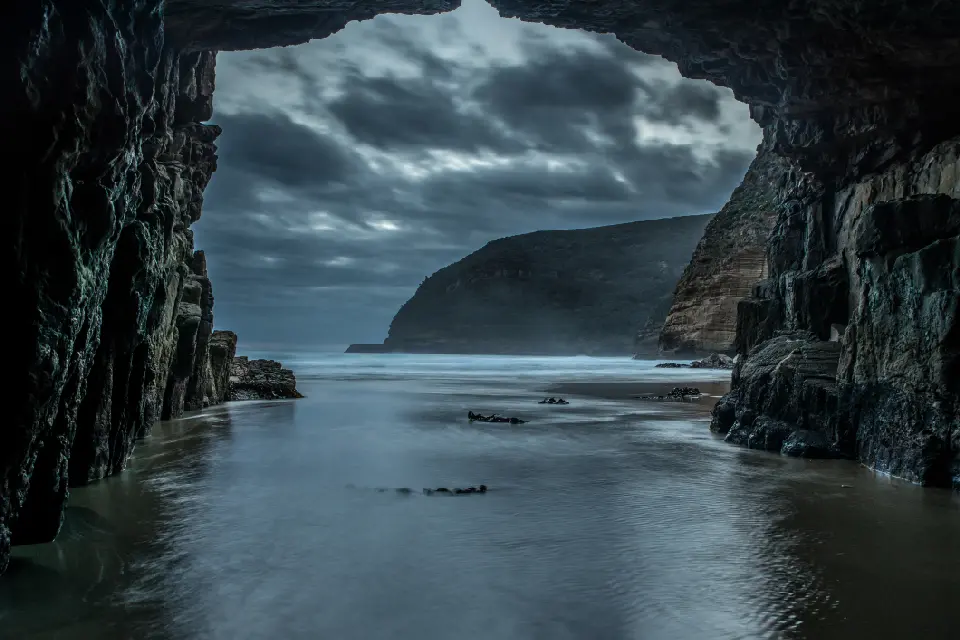
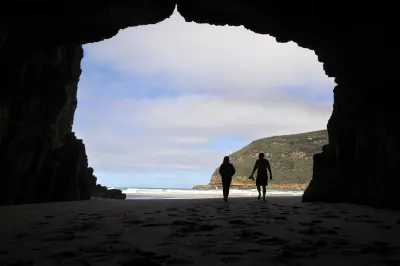
The coast of the Tasman Peninsula framed by the entrance of Remarkable Cave after sunset.
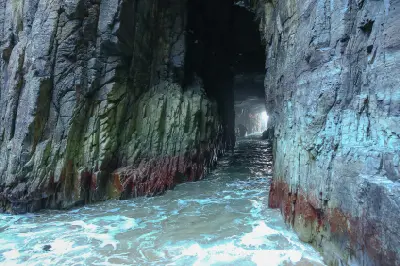
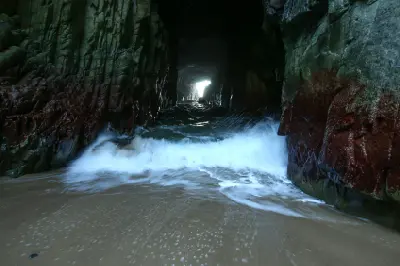
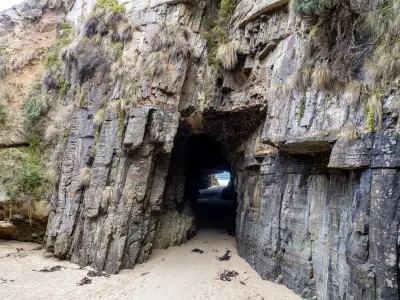
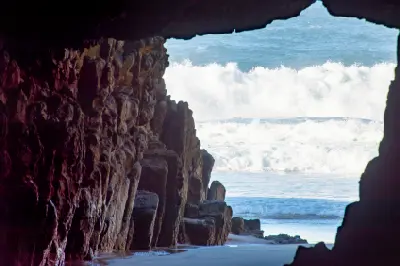
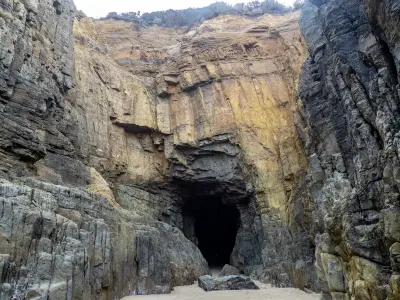
Remarkable Cave is a sea-carved tunnel beneath the cliffs near the southern end of the Tasman Peninsula. Waves have eroded passages through the sandstone and dolerite coastline, creating a dark natural opening that frames the ocean and rocky shore beyond. The contrast between the cave interior, reflective water and changing light outside makes it one of the peninsula's most distinctive coastal photography locations.
-43.18723, 147.84418
Gallery
Quick Facts
Access
Short Walk
5–15 min
Elevation Gain
40 m
Best Light
Soft light balances the dark cave interior with the brighter opening, while wet rock and shallow water can reflect light entering from the coast.
Why This Light
Season
Seasonally Distinct
Summer brings longer daylight and generally calmer coastal conditions. Autumn and spring produce variable skies and changing seas, while winter can bring stronger swell and dramatic wave action that may restrict safe access around the cave.
Crowds
Often Busy
Restrictions
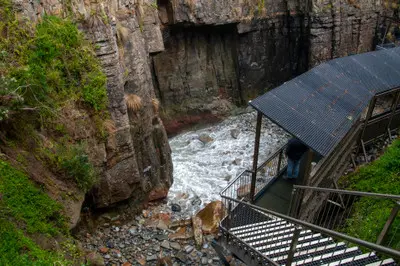
Remarkable Cave is reached from the Maingon Bay parking area by a short path and a long flight of steps descending towards the coast. The principal cave view is accessible from the established viewing area, while conditions closer to the water vary with tide and swell. Wet rock can be slippery and rough seas can make lower sections unsafe.