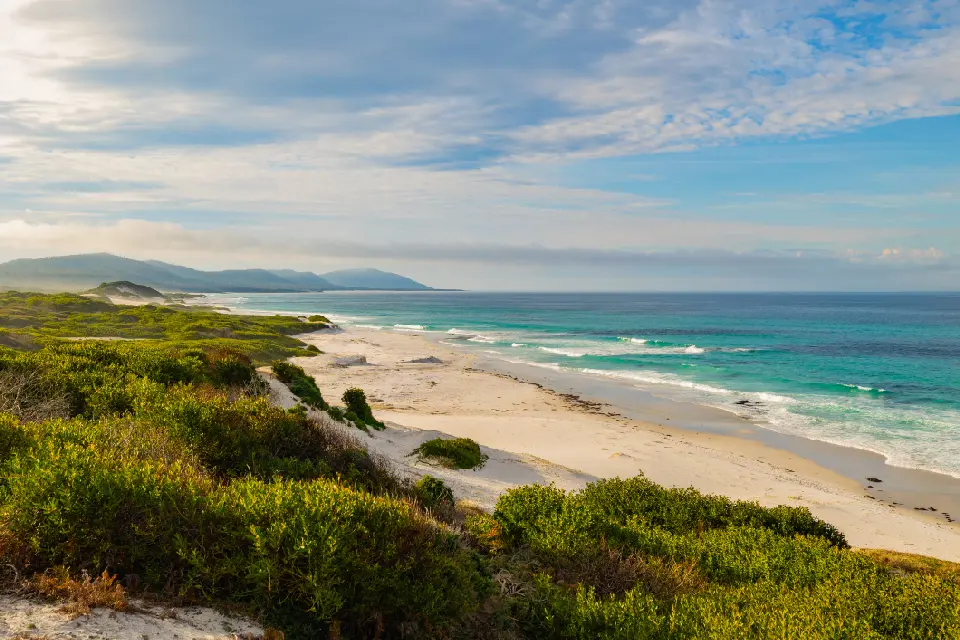
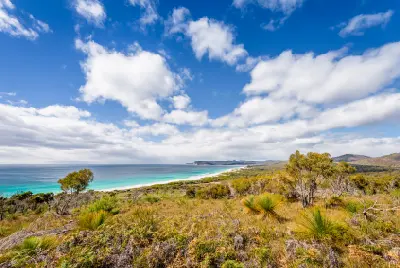
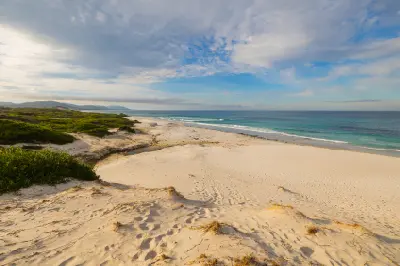
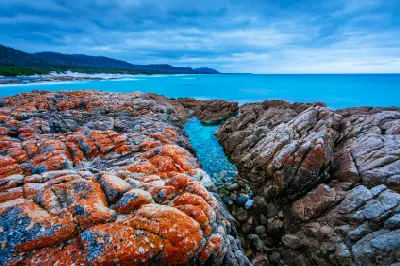
White sand and turquoise water stretch along Friendly Beaches on Tasmania’s east coast.
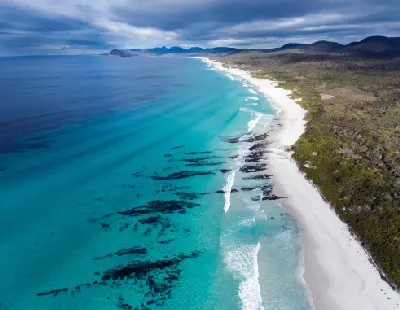
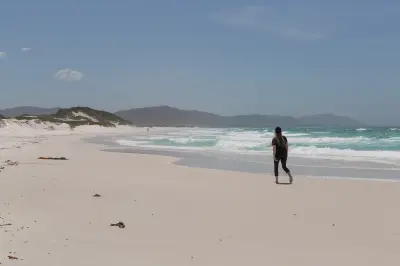
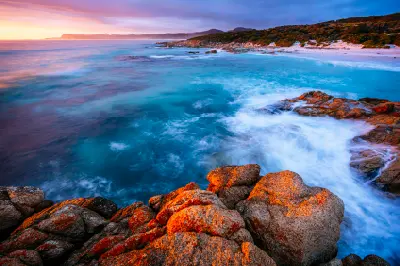
Friendly Beaches is a long stretch of white sand and open coastline on the eastern side of Tasmania's Freycinet Peninsula. The exposed shore faces directly into the Tasman Sea, with clear blue water, sweeping beaches and granite headlands creating a much broader landscape than Freycinet's sheltered western bays. Its scale, relatively undeveloped setting and changing ocean conditions make it particularly strong for expansive coastal photography.
-41.98735, 148.28726
Gallery
Quick Facts
Access
Roadside / Step-out
0–5 min
Elevation Gain
5 m
Best Light
Sunrise brings direct light across the east-facing coast, while low-angle light reveals patterns in the sand, surf and granite along the shoreline.
Why This Light
Season
Seasonally Distinct
Summer brings warmer conditions, brighter water and longer periods of usable light. Winter is cooler and often more dramatic, while autumn and spring can combine quieter beaches with rapidly changing coastal weather.
Crowds
Usually Quiet
Restrictions
Friendly Beaches lies within Freycinet National Park and is reached by road with several access points leading directly to the coastline. Little walking is required to reach the beach, although longer sections can be explored on foot. A valid Tasmania Parks Pass is required for park entry.