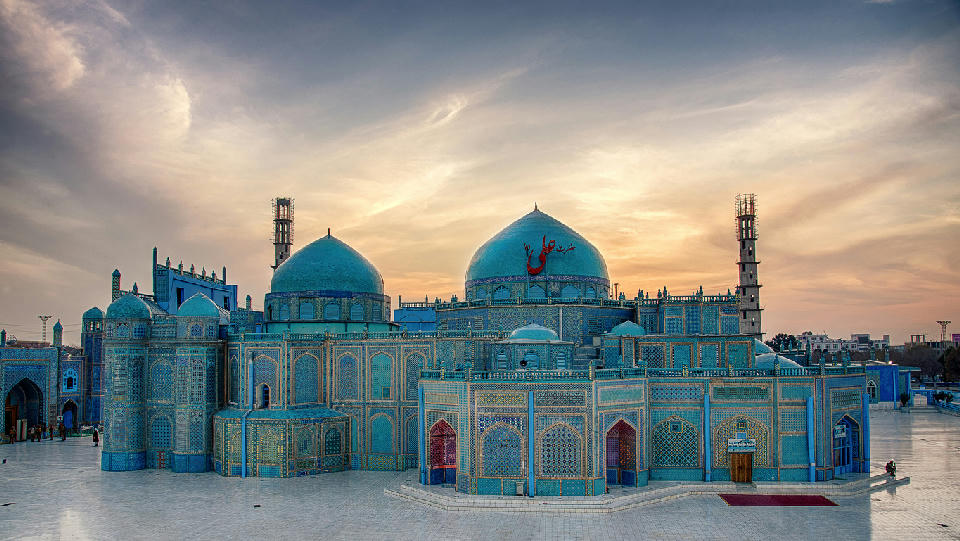
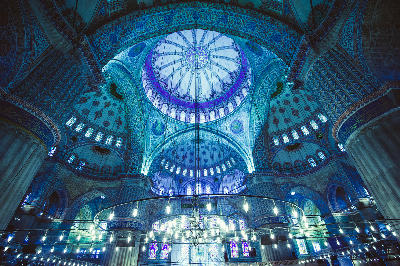
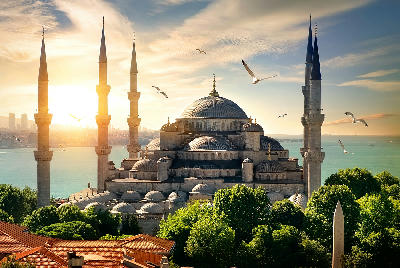
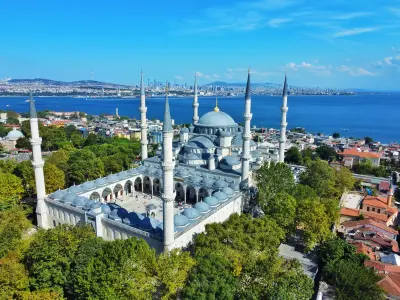
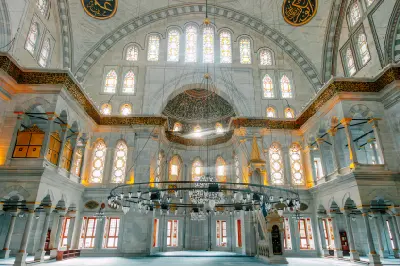
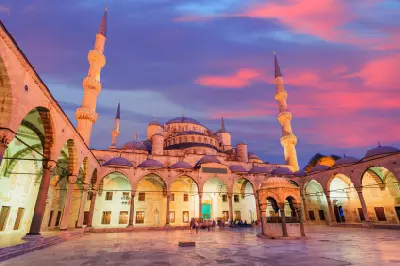
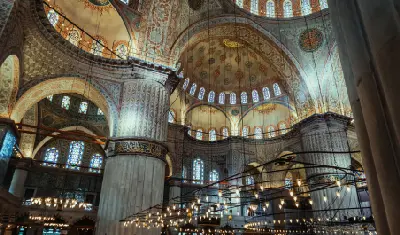
The Blue Mosque, officially the Sultan Ahmed Mosque, is a monumental 17th-century Ottoman mosque dominating the southern side of Sultanahmet Square. Its architecture is defined by a cascading arrangement of domes, six slender minarets and a large arcaded courtyard built around a central fountain. Inside, thousands of predominantly blue İznik tiles decorate the walls beneath the main dome, giving the mosque its popular name. Together with neighbouring Hagia Sophia, it forms one of the defining architectural ensembles of Istanbul's historic peninsula.
41.00540, 28.97680
Gallery
Quick Facts
Access
Visitor Access
15–45 min
Elevation Gain
10 m
Best Light
Low-angle light defines the domes and minarets, while blue hour balances the illuminated mosque against the remaining colour in the evening sky.
Why This Light
Season
Year-Round Stable
The mosque can be photographed throughout the year, with seasonal changes primarily affecting skies, vegetation and visitor numbers. Winter can bring softer atmospheric conditions and occasional snow, while summer provides longer daylight hours but generally heavier crowds.
Crowds
Often Busy
Restrictions
The Blue Mosque is located directly beside Sultanahmet Square and is easily reached on foot or by public transport. As an active mosque, visitor access is restricted during prayer periods and appropriate clothing is required. Photography should be discreet and must not interfere with worshippers.