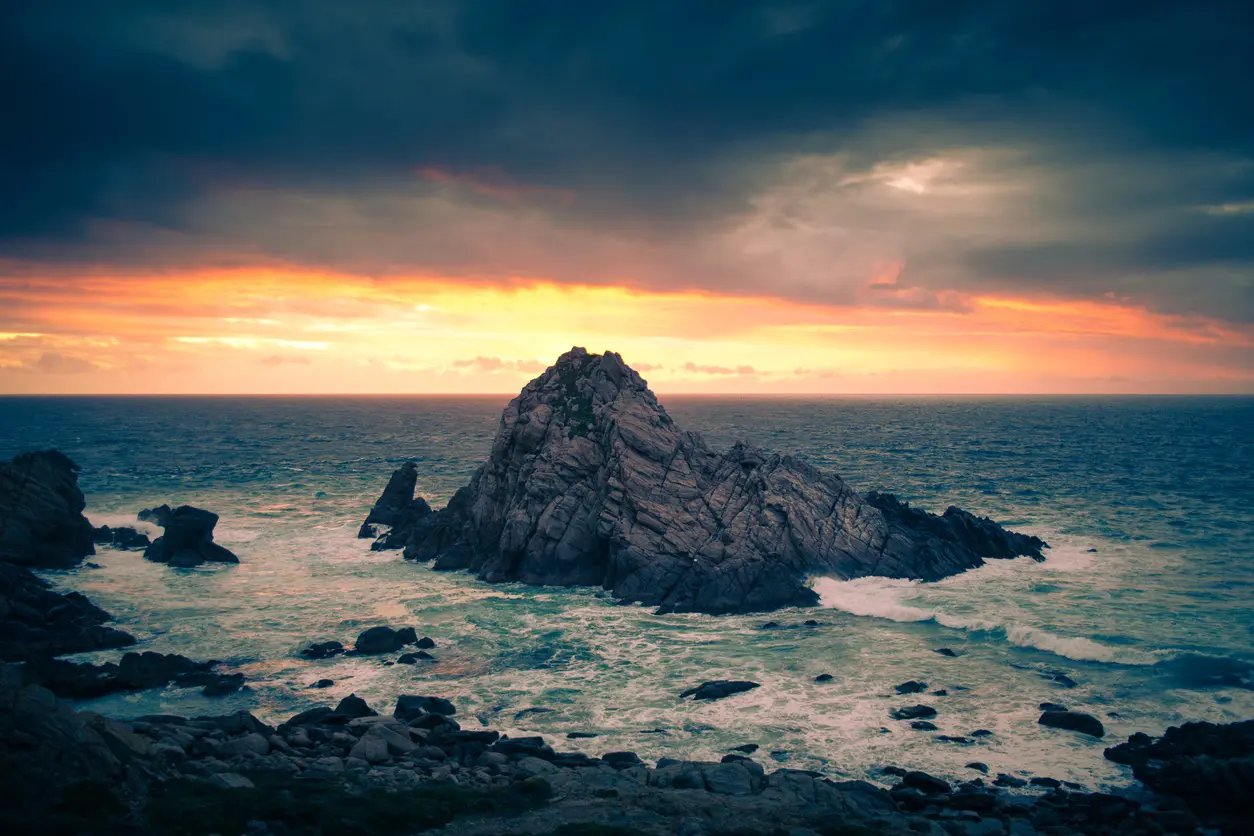
Sugarloaf Rock rises dramatically from the surf off Western Australia’s Margaret River coast, its jagged granite form silhouetted against fiery sunset light and a heavy storm-filled sky.
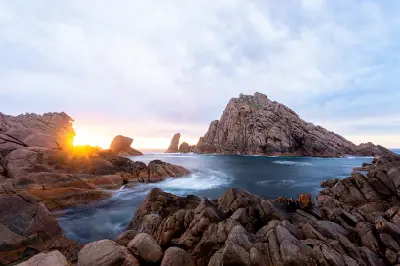
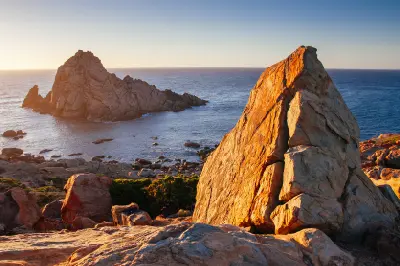
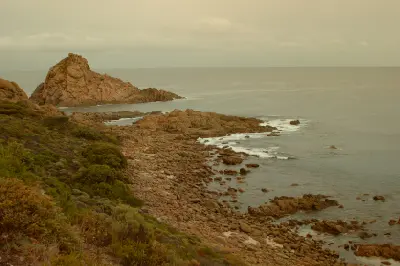
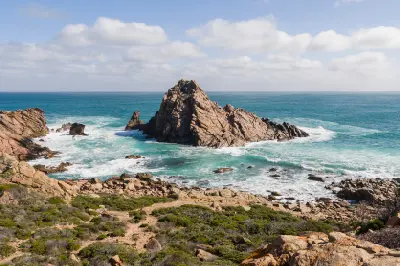
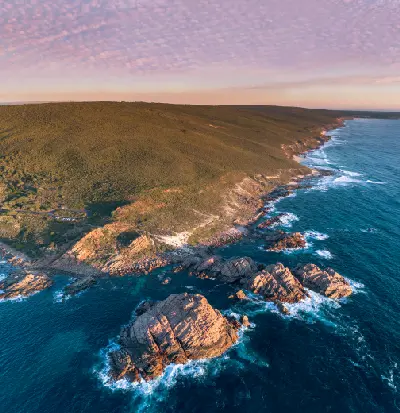
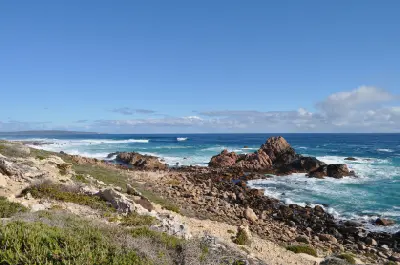
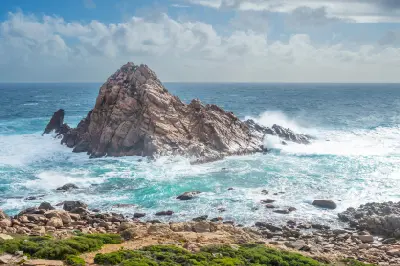
Sugarloaf Rock is a large granite sea stack off Cape Naturaliste on Western Australia's southwest coast. The steep-sided formation rises from exposed reef and open ocean, with rocky shoreline and low coastal vegetation providing elevated views toward the stack. Its isolated form, breaking waves and exposed maritime setting provide opportunities for coastal, geological and long-exposure photography.
-33.55936, 115.00515
Gallery
Quick Facts
Access
Short Walk
0–5 min
Elevation Gain
5 m
Best Light
Low-angle light defines the granite formation and surrounding reef, while late light adds texture and separation between the rock and open ocean.
Why This Light
Season
Seasonally Distinct
Summer brings drier coastal vegetation, clearer skies and brighter blue tones across the surrounding ocean. Winter brings greener vegetation, larger swells and more changeable skies, creating a more dramatic setting around the exposed granite formation.
Crowds
Often Busy
Restrictions
Sugarloaf Rock is reached by sealed road from the Cape Naturaliste area, with parking close to the established lookout and only a short walk required. The coastline is exposed to strong winds, large swells and slippery rock surfaces, and visitors should remain within designated viewing areas and avoid approaching exposed shoreline during rough conditions.