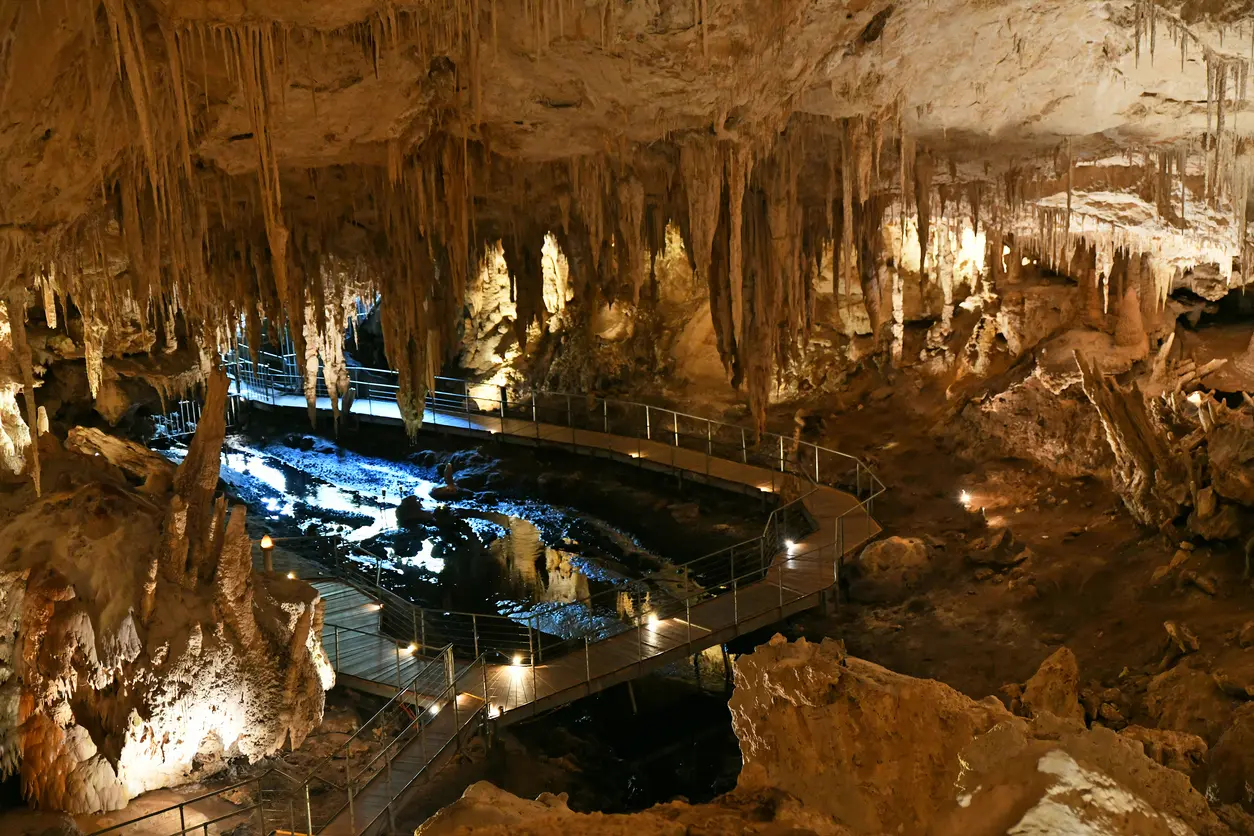
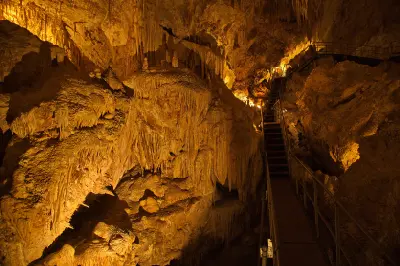
Illuminated limestone formations and visitor walkways inside Mammoth Cave, Western Australia.
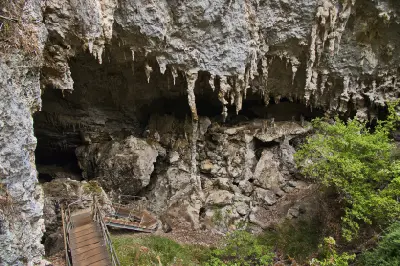
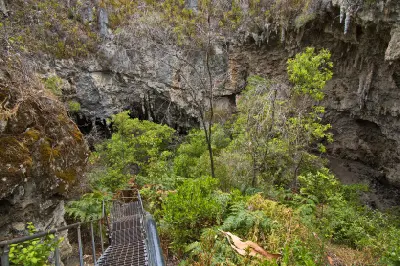
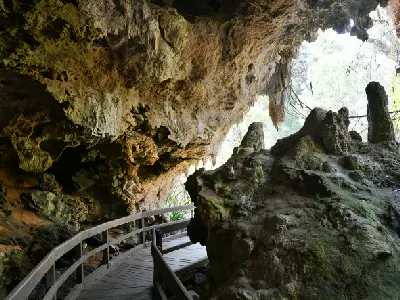
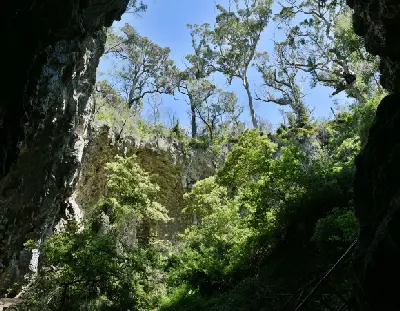
Mammoth Cave is a large limestone cave within the Leeuwin-Naturaliste cave system south of Margaret River. A self-guided route descends through substantial chambers containing stalactites, stalagmites and other limestone formations before emerging into the surrounding karri forest. The scale of the chambers, intricate formations and contrast between illuminated rock and darkness provide opportunities for geological, detail and low-light photography.
-34.05872, 115.02972
Gallery
Quick Facts
Access
Short Walk
45–90 min
Elevation Gain
50 m
Season
Year-Round Stable
Summer brings drier conditions in the surrounding forest, while the cave interior retains its cool, enclosed appearance and limestone formations. Winter brings greener vegetation around the cave entrance and wetter surface conditions, while the underground chambers remain visually consistent.
Crowds
Often Busy
Restrictions
Mammoth Cave is accessed from Caves Road and requires paid admission, with visitors following a designated self-guided route through the cave. The route includes boardwalks, stairs, uneven surfaces and a substantial climb from the lower cave exit back toward the visitor facilities. Photography should remain within designated visitor areas, and current rules regarding tripods, flash and other equipment should be checked before visiting.