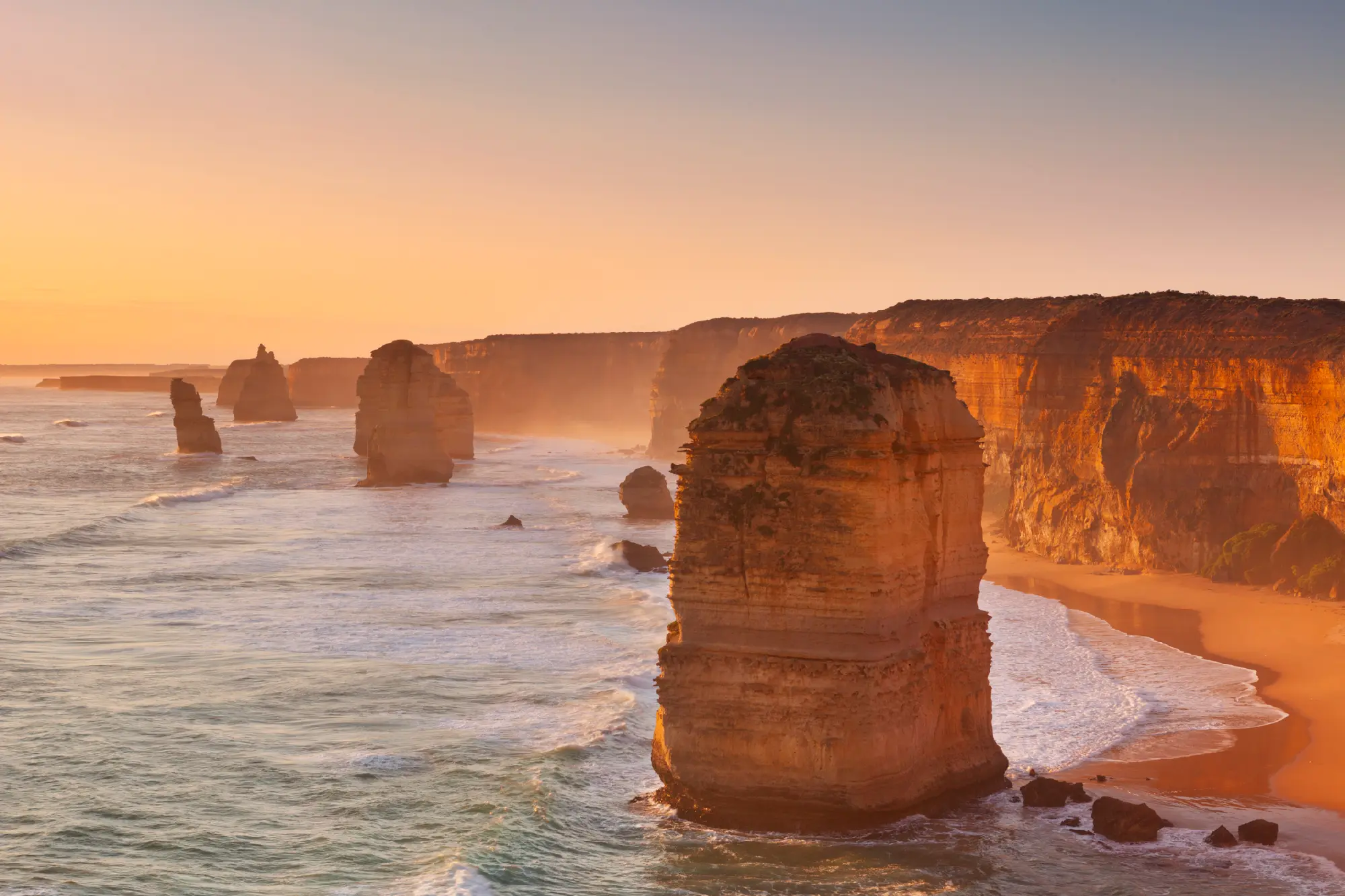
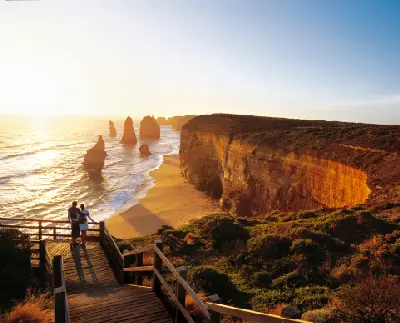
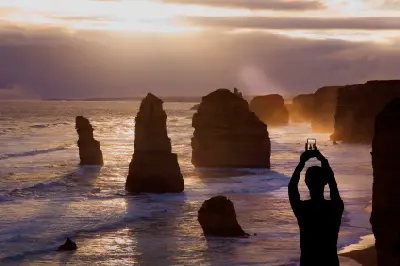
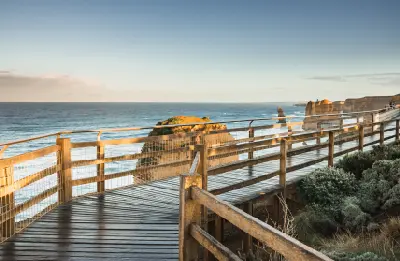
The Twelve Apostles illuminated by sunset along Victoria’s Great Ocean Road.
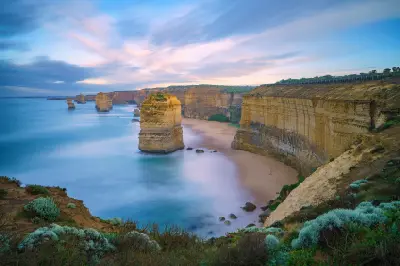
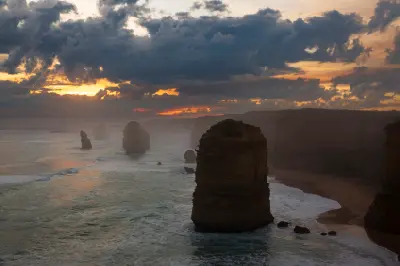
The Twelve Apostles are a group of towering limestone sea stacks rising from the Southern Ocean along Victoria's Great Ocean Road. Formed as waves progressively eroded the surrounding cliffs into caves, arches and isolated pillars, the stacks stand beneath an immense limestone escarpment near Port Campbell. Their scale, changing ocean conditions and dramatic relationship with the coastline make them one of Australia's most recognisable coastal landscapes.
-38.66028, 143.09336
Gallery
Quick Facts
Access
Short Walk
15–45 min
Elevation Gain
10 m
Best Light
Low-angle light reveals texture across the limestone stacks and cliffs, while warm light can intensify their golden and orange tones against the ocean.
Why This Light
Season
Seasonally Distinct
Summer brings longer daylight and generally clearer conditions but the largest crowds. Winter produces rougher seas, dramatic skies and frequent rain, while autumn and spring often combine changing weather with quieter conditions.
Crowds
Often Busy
Restrictions
The Twelve Apostles are reached directly from the Great Ocean Road, with a large visitor area and established walking paths leading to several cliff-top viewpoints. The principal views require only a short walk and minimal climbing. Visitors must remain behind barriers because the limestone cliffs are unstable and exposed to erosion.