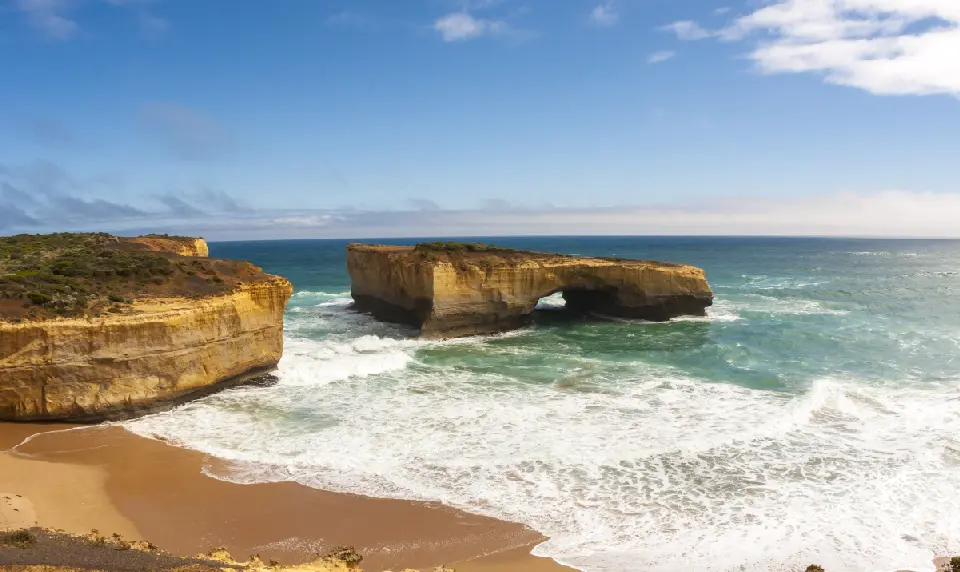
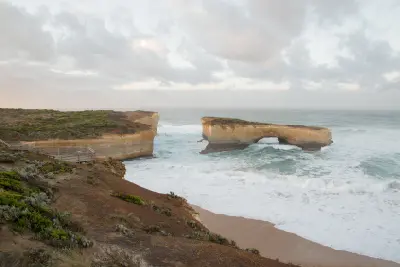
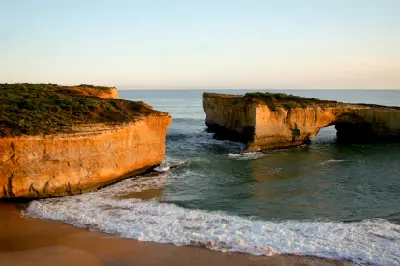
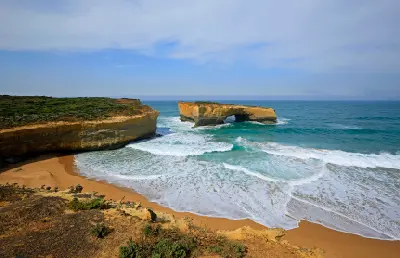
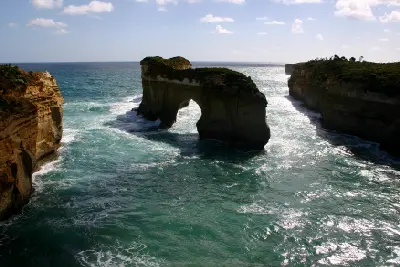
London Arch rising above the Southern Ocean in Port Campbell National Park.
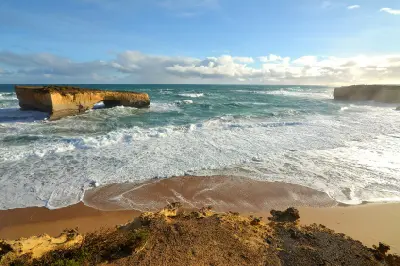
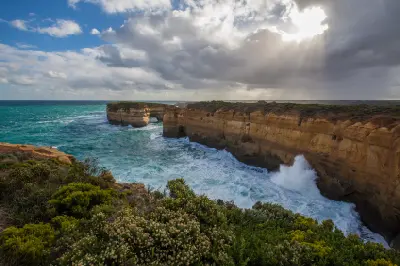
London Bridge is a large offshore limestone formation on Victoria's Shipwreck Coast, shaped by the relentless erosion of the Southern Ocean. Once connected to the mainland by two natural arches, part of the formation collapsed in 1990, leaving a single arch isolated from the cliffs. Its monumental shape, exposed position and surrounding limestone coastline make it one of the Great Ocean Road's most distinctive geological landmarks.
-38.62239, 142.93185
Gallery
Quick Facts
Access
Short Walk
5–15 min
Elevation Gain
10 m
Best Light
Low-angle light reveals texture across the limestone arch and cliffs, while warm evening light strengthens their golden tones against the Southern Ocean.
Why This Light
Season
Seasonally Distinct
Summer brings longer daylight and generally clearer coastal conditions, while winter produces stronger seas, dramatic skies and frequent rain. Autumn and spring often combine variable weather with quieter conditions and rapidly changing light.
Crowds
Often Busy
Restrictions
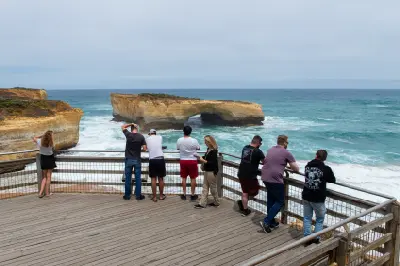
London Bridge is reached directly from the Great Ocean Road, with parking close to established cliff-top paths and viewing platforms. The principal viewpoints require only a short, mostly easy walk. The formation itself is offshore and inaccessible, and visitors must remain behind barriers along the unstable limestone cliffs.