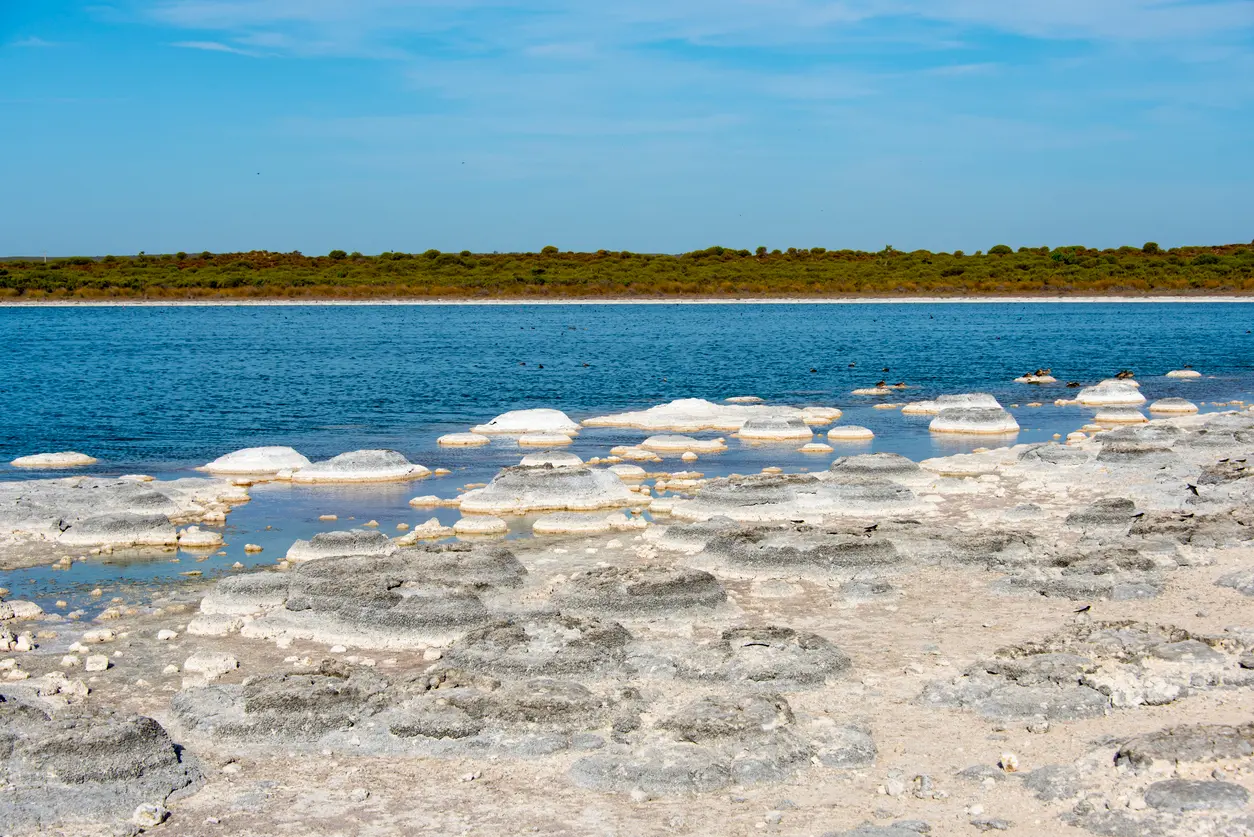
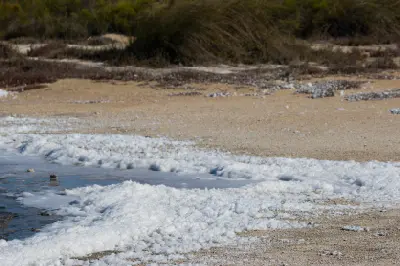
Thrombolite formations at Lake Thetis near Cervantes, Western Australia.
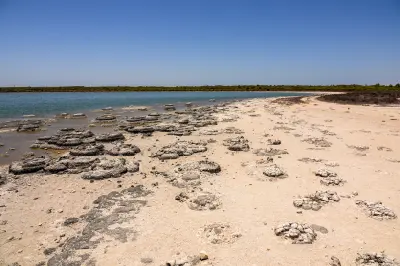
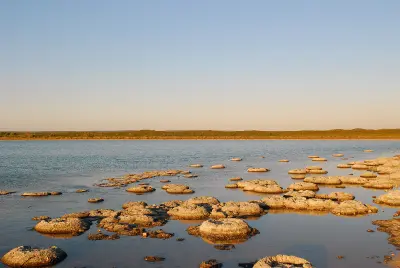
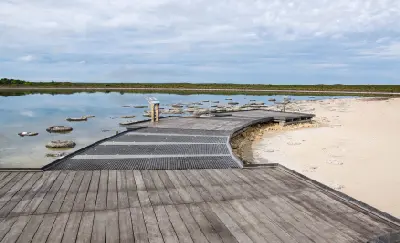
Lake Thetis is a small saline lake near Cervantes on Western Australia's Coral Coast, known for its living thrombolites formed by microbial communities. A walking trail and boardwalk provide views across the shallow lake, where low rounded microbial structures occur around the shoreline. The repeating formations, reflective water and sparse surrounding landscape provide opportunities for geological, documentary and abstract photography.
-30.50710, 115.08140
Gallery
Quick Facts
Access
Short Walk
5–15 min
Elevation Gain
5 m
Best Light
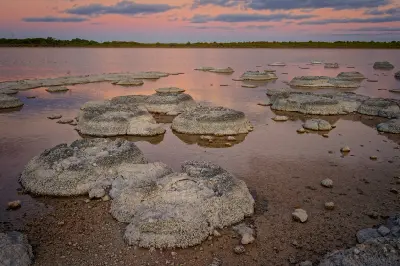
Low-angle light reveals the texture of the thrombolites, while calm water can produce reflections and separation around individual formations.
Why This Light
Season
Seasonally Distinct
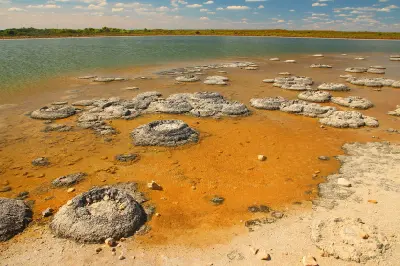
Summer brings lower water levels, dry surrounding vegetation and greater exposure of thrombolite formations around the lake margins. Winter brings higher water levels, greener vegetation and more water surrounding the microbial structures.
Crowds
Usually Quiet
Restrictions
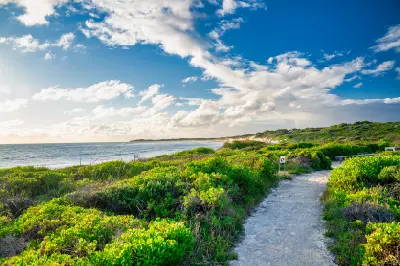
Lake Thetis is reached by road from Cervantes, with a short walk from the parking area to the lake and viewing boardwalk. Visitors should remain on designated paths and viewing areas to avoid damaging the fragile thrombolites and surrounding microbial communities. The walking trail continues around the lake for visitors wanting broader views of the landscape.