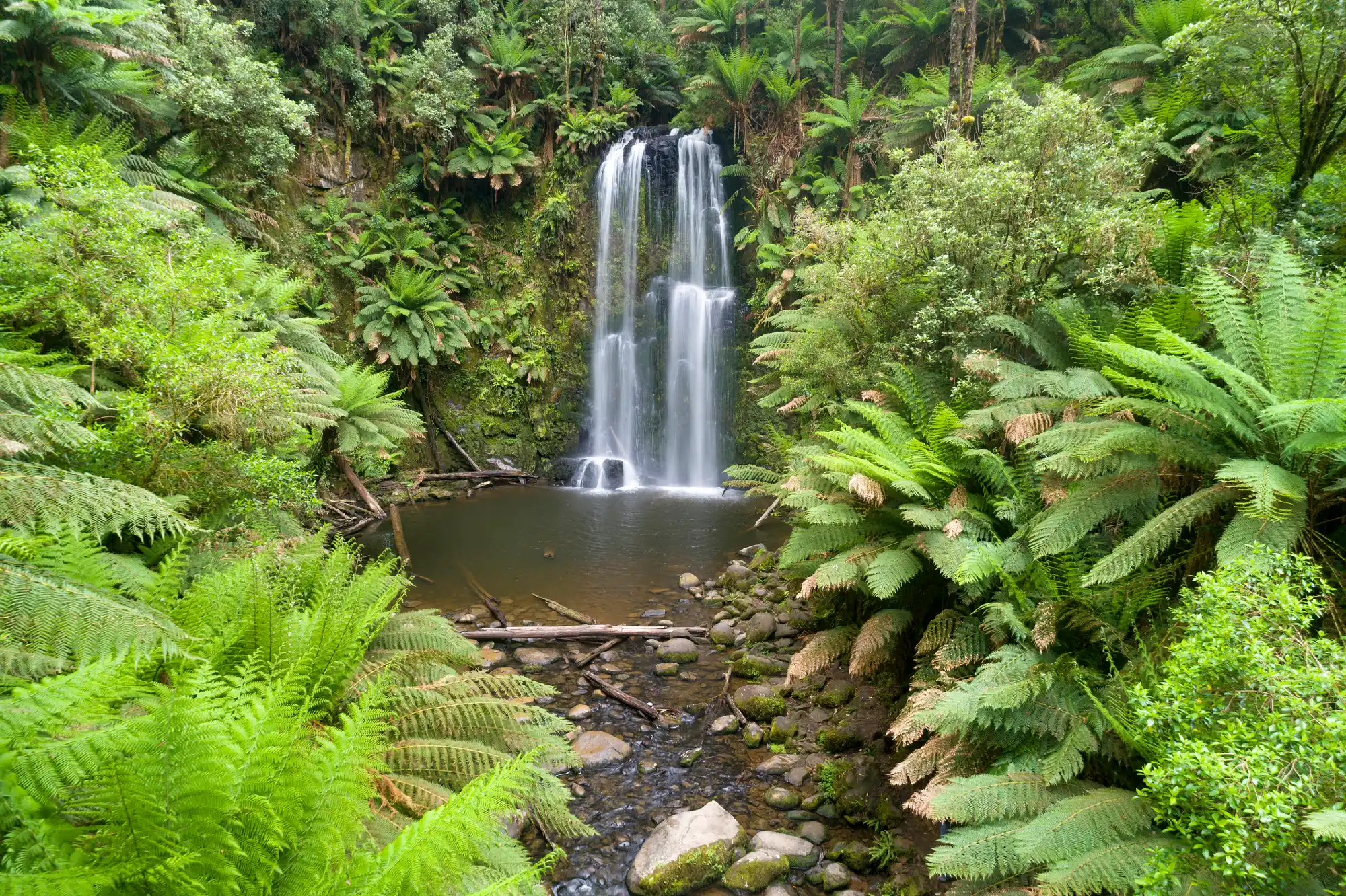
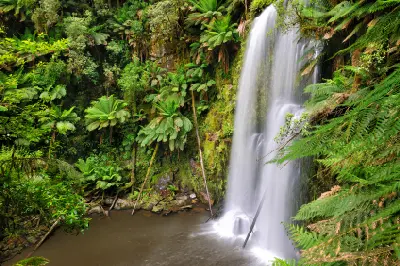
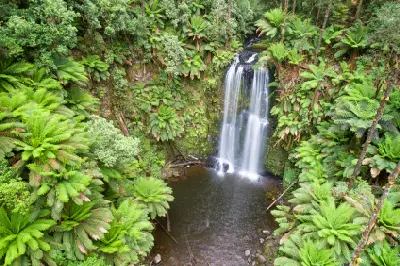
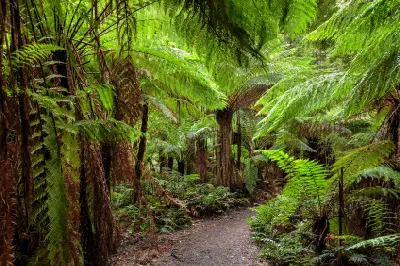
Beauchamp Falls surrounded by lush tree ferns near Beech Forest in the Otways.
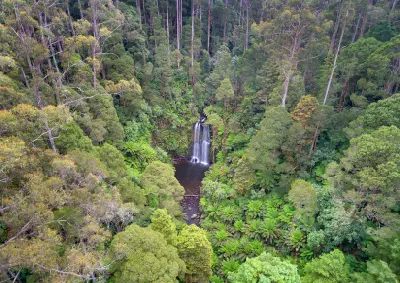
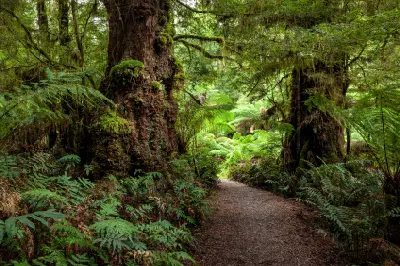
Beauchamp Falls is a tall waterfall in the Great Otway National Park, dropping over a dark rock face within dense temperate rainforest. The approach passes through towering mountain ash, tree ferns and lush forest before descending towards the falls. Its enclosed setting, textured rock and surrounding vegetation make it one of the Otways' strongest rainforest photography locations.
-38.64930, 143.61182
Gallery
Quick Facts
Access
Moderate Hike
45–90 min
Elevation Gain
150 m
Best Light
Diffuse light controls contrast between the bright waterfall and dark forest, while revealing detail in wet rock, tree ferns and surrounding vegetation.
Why This Light
Season
Seasonally Distinct
Winter and spring generally bring stronger water flow and lush rainforest conditions. Summer can produce lower flows and greater contrast beneath the canopy, while autumn often combines good vegetation with quieter trails.
Crowds
Usually Quiet
Restrictions
Beauchamp Falls is reached by a forest walking track from the Beauchamp Falls parking and camping area. The route descends through rainforest and includes steep sections and numerous steps, making the return climb more demanding. Mud, wet roots and slippery surfaces are common after rain, and forest-road conditions can deteriorate during severe weather.