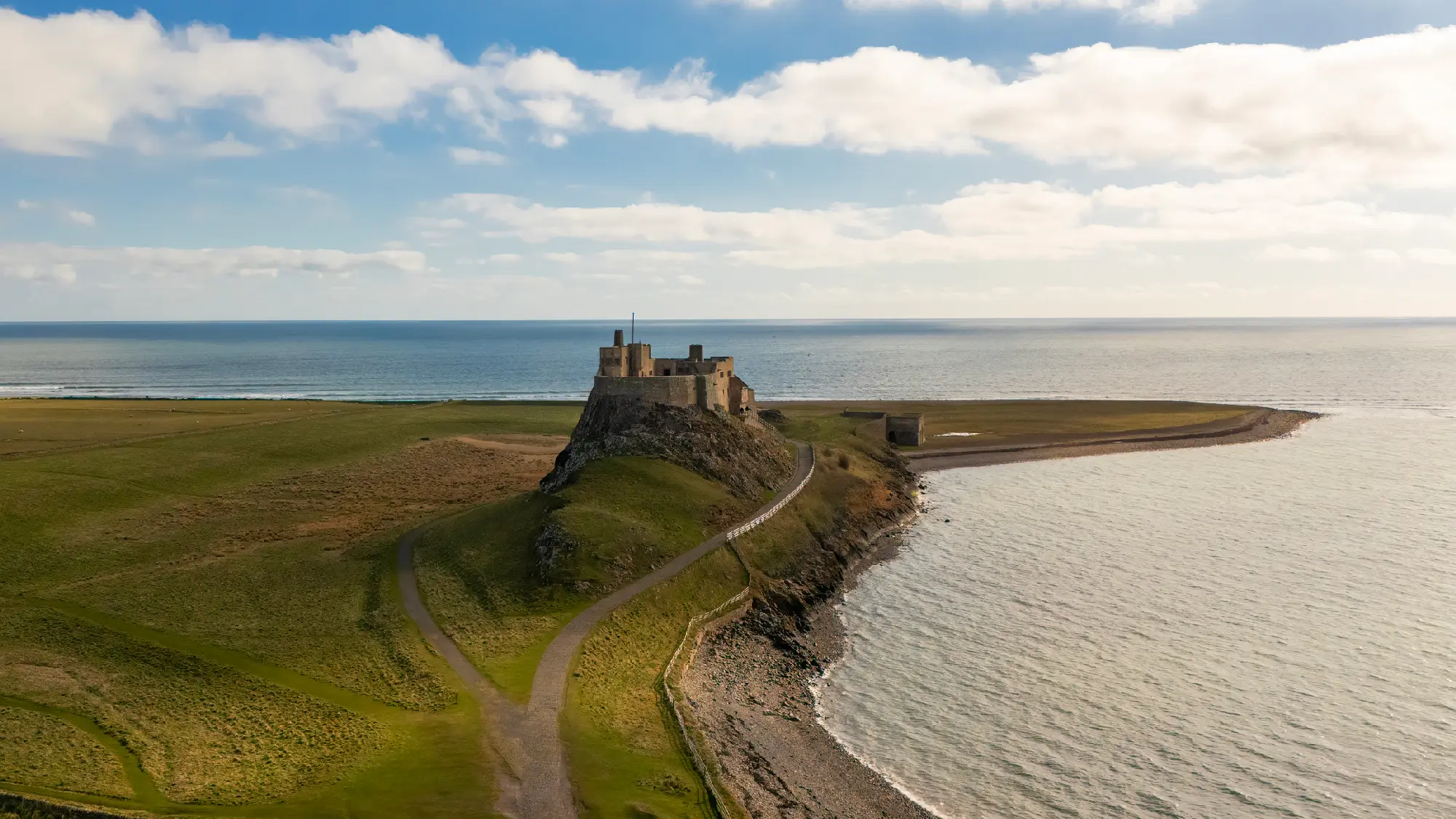
An aerial view of Lindisfarne Castle reveals its dramatic position on a rocky outcrop overlooking the tidal coastline of Holy Island in Northumberland, England.
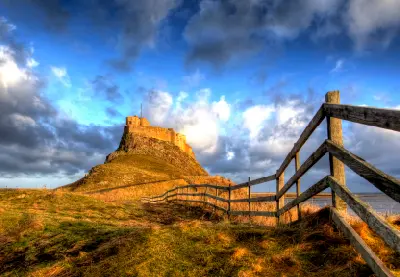
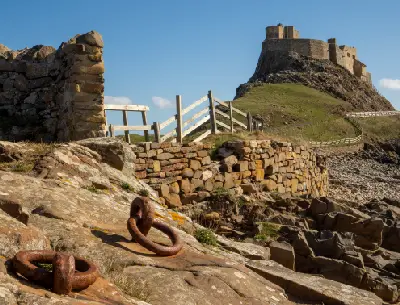
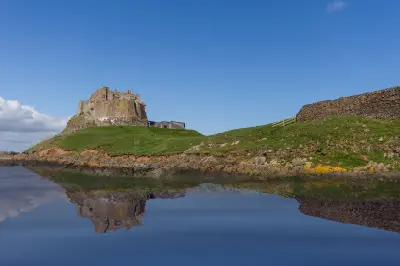
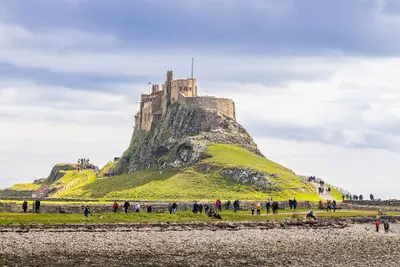
Lindisfarne Castle is a 16th-century fortification converted into an Edwardian country house, standing on a prominent volcanic rock outcrop on Holy Island off the Northumberland coast. Its compact stone towers and walls overlook tidal flats, rocky shoreline and the sheltered waters of Lindisfarne Harbour. The isolated setting, distinctive castle silhouette and changing tidal landscape provide opportunities for architectural and coastal photography.
55.66906, -1.78485
Gallery



Quick Facts
Access
Short Walk
15–45 min
Elevation Gain
30 m
Best Light
Low-angle sunlight reveals texture in the castle walls and volcanic rock, while calm tidal pools reflect the fortress and surrounding sky.
Why This Light
Season
Seasonally Distinct
Summer brings green coastal grassland, flowering vegetation around the castle and exposed tidal flats during low water. Winter reveals muted coastal colours, quieter shorelines and occasional frost, with changing cloud and sea conditions around the rocky outcrop.
Crowds
Busy Midday
Restrictions
Holy Island is reached by a tidal causeway that becomes submerged at high tide, making it essential to check official safe crossing times before travelling. The castle is managed by the National Trust, with admission charges and seasonal opening arrangements. Access from the village involves a walk along the harbour road followed by an uphill approach over uneven surfaces and steps. Coastal paths and rocks may be slippery, and drone flying requires permission from the site operator.