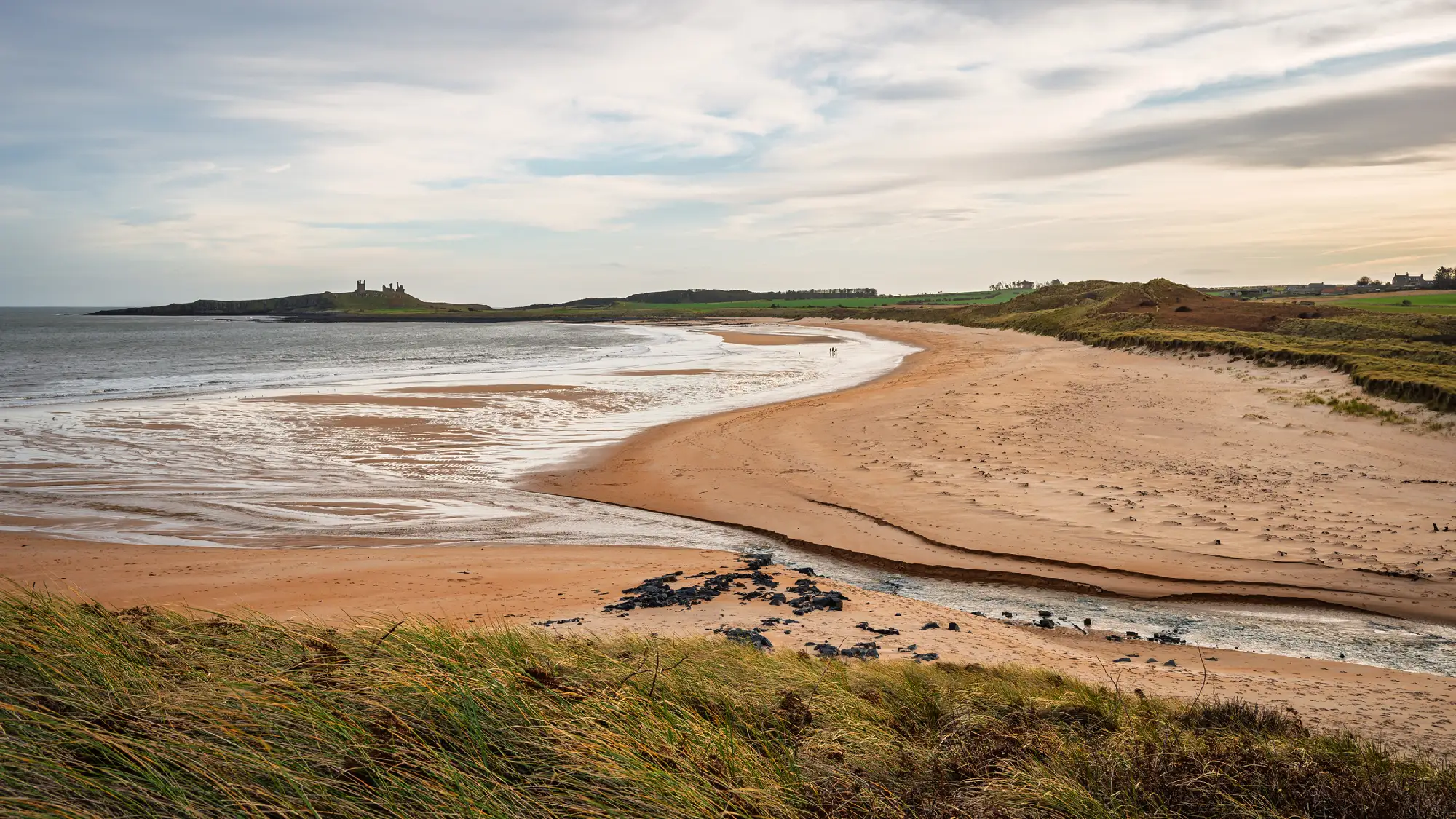
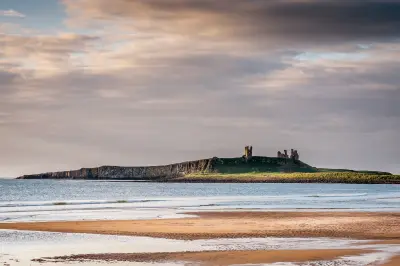
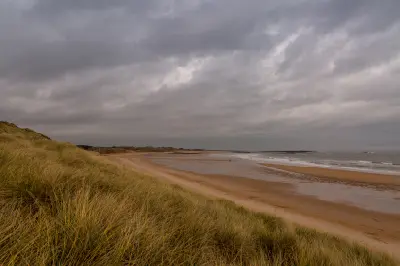
Embleton Bay curves towards the distant ruins of Dunstanburgh Castle, with Embleton Burn crossing the golden sands beneath grassy coastal dunes.
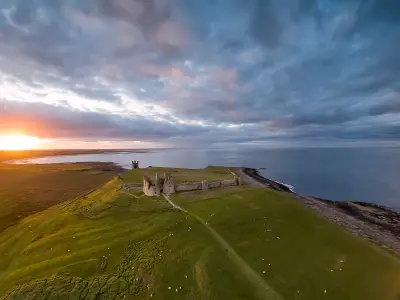
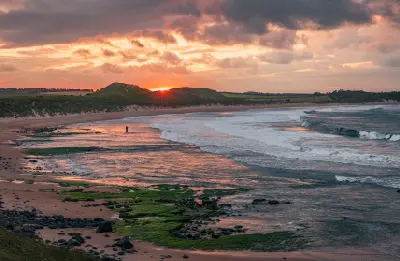
Embleton Bay is a broad, crescent-shaped sandy beach on the Northumberland coast, stretching between the dunes near Low Newton-by-the-Sea and the ruined Dunstanburgh Castle to the south. Its open shoreline, grassy dunes and rocky headlands create an expansive coastal landscape, with the castle forming a distinctive landmark above the southern end of the bay. The combination of sweeping beach contours, changing tides and distant medieval architecture provides opportunities for coastal landscape photography.
55.50014, -1.60667
Gallery
Quick Facts
Access
Short Walk
5–15 min
Elevation Gain
10 m
Best Light
Low-angle sunlight reveals the curved shoreline and dune contours, while wet sand reflects the sky and distant castle during calm conditions.
Why This Light
Season
Seasonally Distinct
Summer brings green marram grass across the dunes, beach visitors and long daylight over the broad sandy shoreline. Winter reveals muted dune vegetation, quieter beaches and changing wave patterns, with occasional sea mist and storm-driven surf.
Crowds
Often Busy
Restrictions
The beach can be reached from Low Newton-by-the-Sea via established paths through the dunes, with additional approaches along the Northumberland Coast Path. Parking is available in designated areas near the village, followed by a short walk to the shoreline. Soft sand and uneven dune paths may limit accessibility. The exposed beach is affected by changing tides, strong winds and occasional rough surf, while rocky sections near Dunstanburgh Castle can become slippery. Dune vegetation and coastal wildlife habitats should be protected by remaining on established access routes.