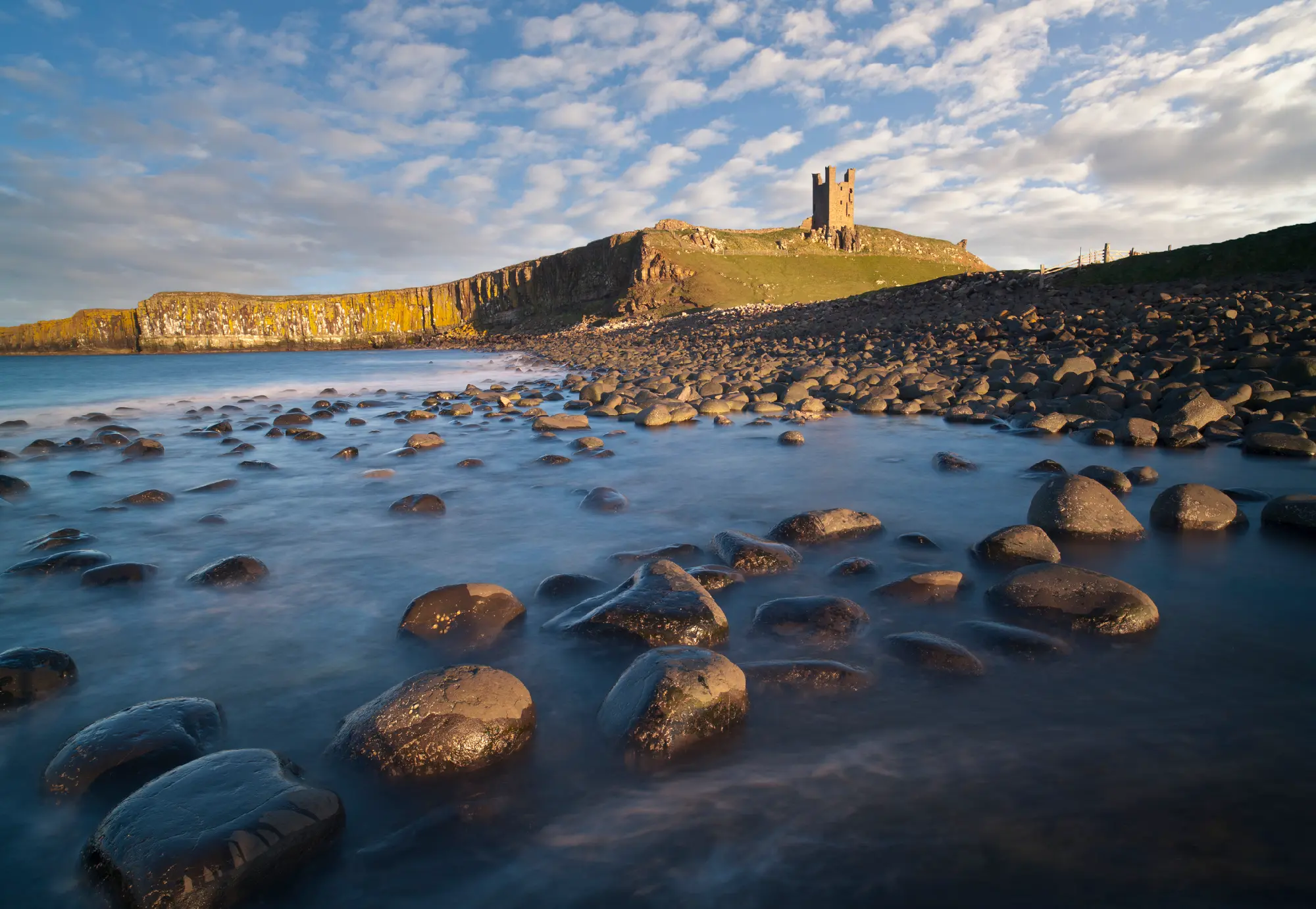
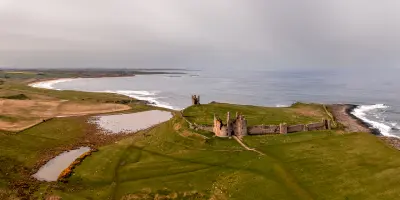
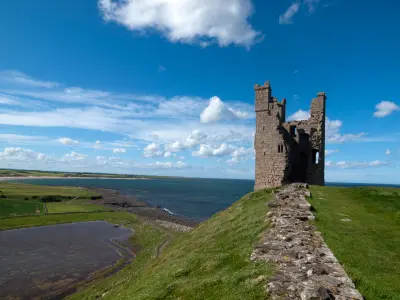
Late-afternoon sunlight illuminates the ruined towers of Dunstanburgh Castle above the rugged Northumberland coast, where smooth tidal waters flow around rounded shoreline boulders.
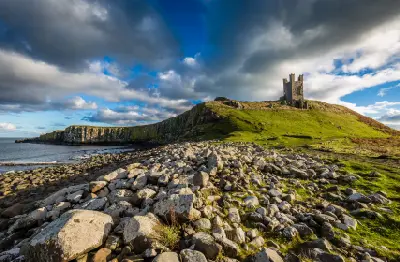
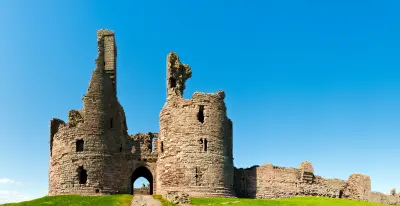
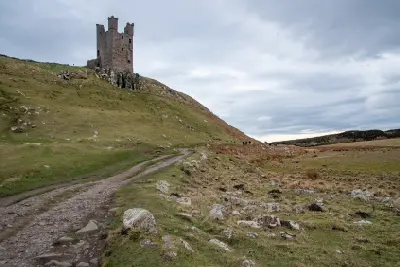
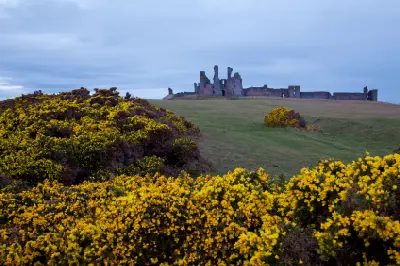
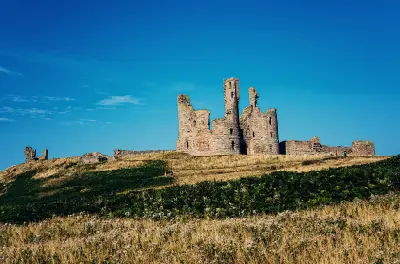
Dunstanburgh Castle is a ruined 14th-century fortress standing on an exposed headland along the Northumberland coast, between Craster and Embleton Bay. Its surviving gatehouse towers, fragmented curtain walls and prominent Lilburn Tower rise above volcanic rock formations and open grassland overlooking the North Sea. The isolated coastal setting provides opportunities to photograph medieval architecture against rugged cliffs, rocky shorelines and changing maritime skies.
55.49038, -1.59460
Gallery
Quick Facts
Access
Short Walk
15–45 min
Elevation Gain
30 m
Best Light
Low-angle sunlight reveals texture in the ruined towers and basalt cliffs, while overcast conditions soften contrast across the exposed stonework.
Why This Light
Season
Seasonally Distinct
Summer brings green coastal grassland, flowering vegetation and seabird activity around the cliffs and surrounding shoreline. Winter reveals muted vegetation, exposed rock formations and more frequent rough sea conditions beneath the castle's weathered walls.
Crowds
Often Busy
Restrictions
The castle is reached on foot along an exposed coastal path, most commonly from Craster, approximately 2 km away. Admission charges and seasonal opening hours apply within the English Heritage-managed ruins, while the surrounding public coastal paths provide external viewpoints without admission. The approach crosses uneven grassland, and the castle grounds include rough surfaces and unprotected drops near the cliffs. Strong winds and wet conditions can make exposed sections hazardous. Drone use over the managed site requires permission, and additional restrictions may apply around protected coastal wildlife.