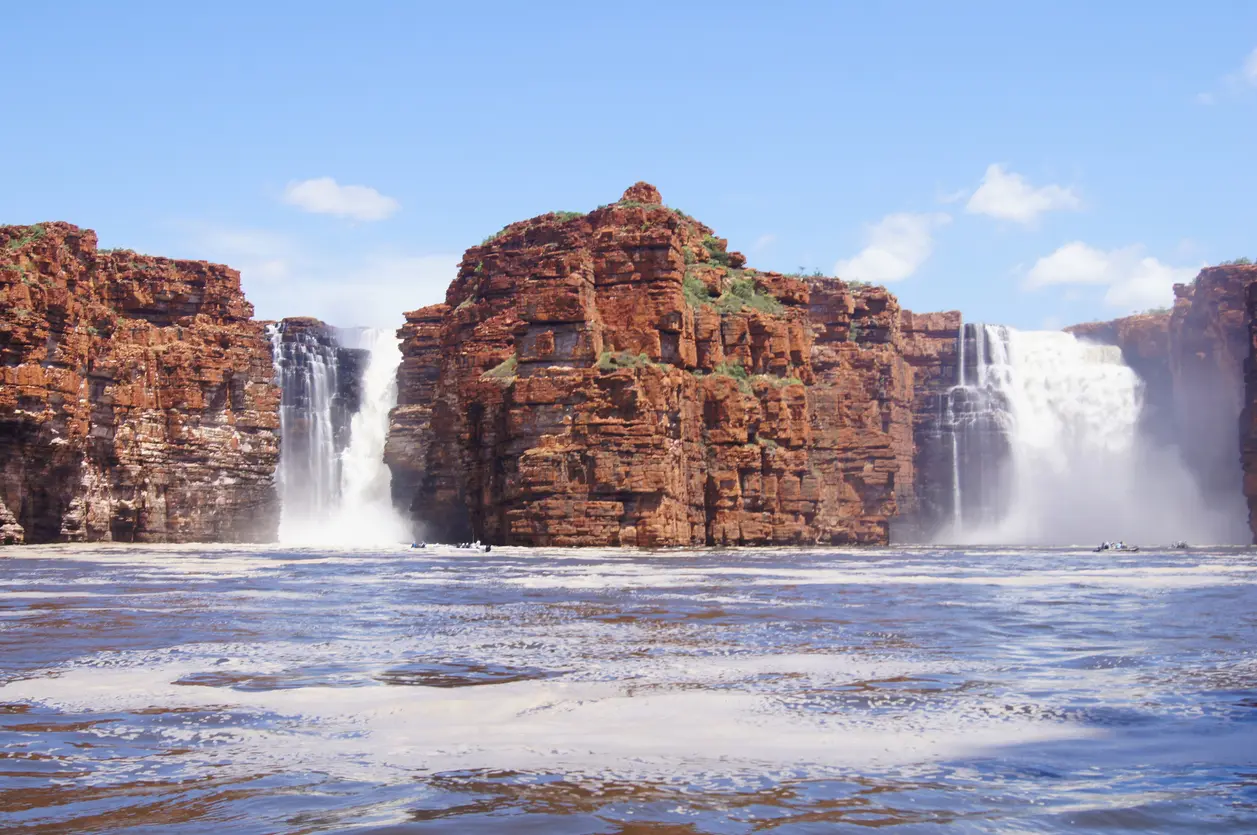
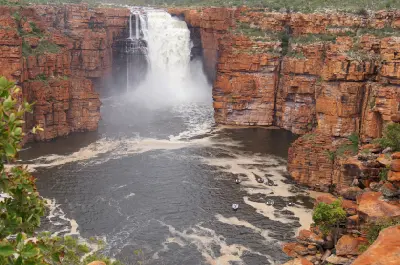
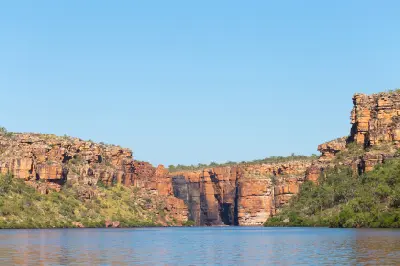
King George Falls plunging into the King George River, Kimberley, Western Australia.
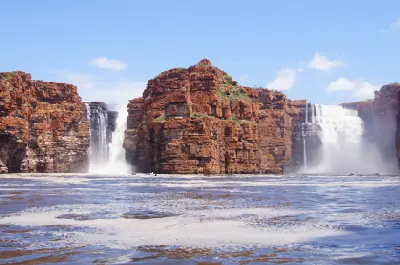
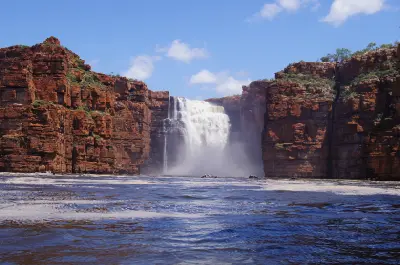
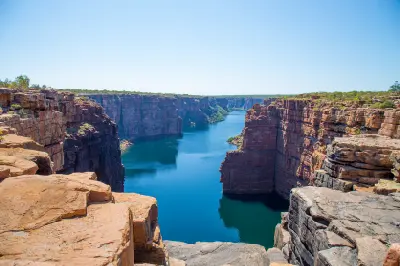
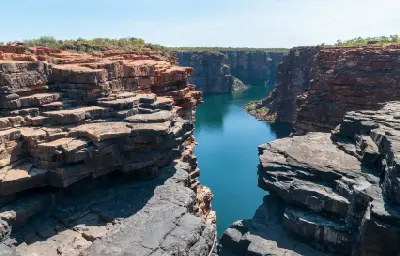
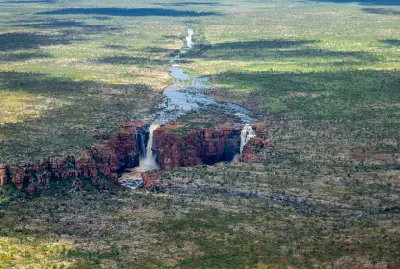
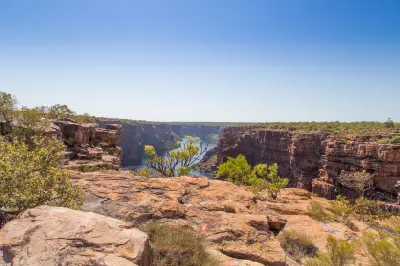
King George Falls is a pair of waterfalls on the King George River in the remote northern Kimberley, where the river drops from a sandstone plateau into a tidal gorge. Two major cascades descend over high red cliffs, with boats approaching through the enclosed river corridor below. The twin falls, vertical sandstone walls and broad gorge provide opportunities for large-scale landscape and aerial photography.
-14.04309, 127.32096
Gallery
Quick Facts
Access
Roadside / Step-out
0–5 min
Elevation Gain
0 m
Best Light
Low-angle light reveals texture in the high sandstone walls while creating separation between the waterfalls, gorge and surrounding plateau.
Why This Light
Season
Seasonally Distinct
Summer brings stronger river flow, greener vegetation and storm conditions across the surrounding plateau during the Kimberley wet season. Winter brings progressively lower waterfall flow, drier vegetation and stronger red and ochre tones across the exposed sandstone cliffs.
Crowds
Usually Quiet
Restrictions
King George Falls is extremely remote and has no conventional road access, with visits generally made by expedition boat along the Kimberley coast or by scenic aircraft. Boats approach the falls through the King George River gorge, while waterfall flow and navigation conditions vary through the season. Access may be affected by weather, tides and seasonal water levels, so current operator and local access conditions should be checked before travel.