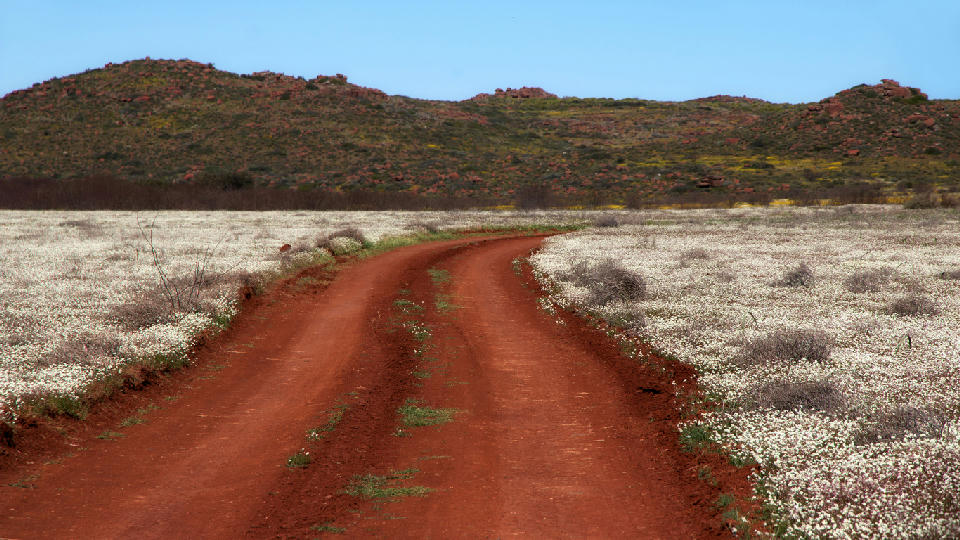
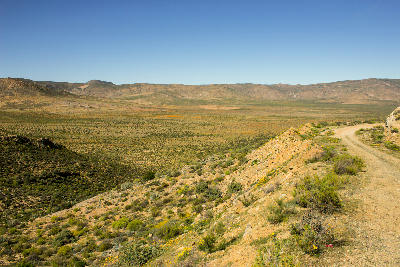
Spring wildflowers line a winding red dirt road through the granite landscapes of Namaqualand, Northern Cape, South Africa.
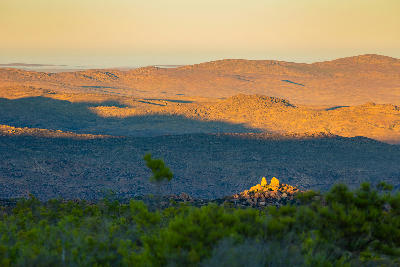
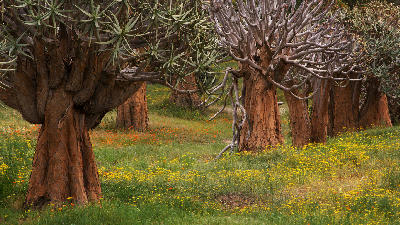
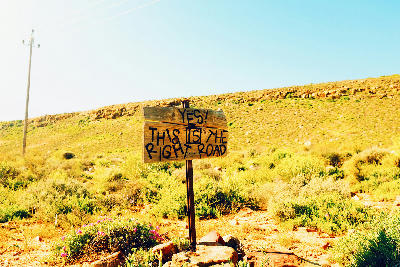
Namaqualand & Wildflower Landscapes form one of the world's most celebrated seasonal flowering regions, where vast semi-desert plains are transformed by spectacular displays of wildflowers across the Northern Cape. The region is defined by expansive flower fields, granite mountain ranges, rolling uplands, and open landscapes that undergo one of the most dramatic seasonal transformations in southern Africa. Stretching from the Atlantic-influenced plains of western Namaqualand to the elevated valleys and granite hills of the interior, the region combines arid wilderness with extraordinary seasonal colour. For much of the year the landscape remains dry and sparsely vegetated, yet winter rainfall can trigger an explosion of flowering species that attracts photographers and nature enthusiasts from around the world. Unlike many landscape destinations where scenery remains relatively constant throughout the year, Namaqualand is defined by seasonal change. Wildflower displays, shifting vegetation patterns, and changing environmental conditions create a landscape that evolves dramatically between seasons while retaining its distinctive desert character and immense sense of space.
Gallery
Key POIs in Namaqualand & Wildflower Landscapes
Overview
The region is structured around a network of flowering plains, granite mountain systems, elevated valleys, and semi-arid basins extending across western Namaqualand. Areas such as Namaqua National Park, the Kamiesberg, Goegap Nature Reserve, and surrounding rural landscapes contribute different visual elements to the broader flower region. Rolling uplands, rocky outcrops, and distant mountain ranges provide structure and scale beneath the seasonal displays. Geology and climate combine to shape the character of the landscape. Ancient granite formations dominate much of the terrain, while winter rainfall patterns influence the intensity and distribution of annual flower blooms. During peak flowering periods, extensive fields of daisies and endemic flowering plants create striking contrasts against otherwise rugged desert landscapes, producing one of the most visually distinctive seasonal environments in Africa. Photographically, the region is defined by colour, contrast, and seasonal spectacle. Wildflower carpets create vibrant foregrounds across expansive landscapes, while granite mountains, rolling ridges, and open skies provide depth and visual balance. Early morning and late afternoon light enhance colour and texture throughout the flowering season, while changing weather conditions create continually evolving opportunities for both intimate flower studies and large-scale landscape compositions.
Key photography subjects
- Vast spring wildflower carpets across semi-desert plains
- Granite mountain backdrops framing flower landscapes
- Seasonal flower routes and colourful valley scenery
- Wildflower macro photography and floral detail studies
- Rolling fields of daisies and endemic flowering species
- Expansive landscapes combining flowers and distant mountains
- Golden-hour light and dramatic skies over blooming terrain
Workshops in Namaqualand & Wildflower Landscapes
No upcoming workshops scheduled for Namaqualand & Wildflower Landscapes at this time.
Check back soon or explore other destinations.