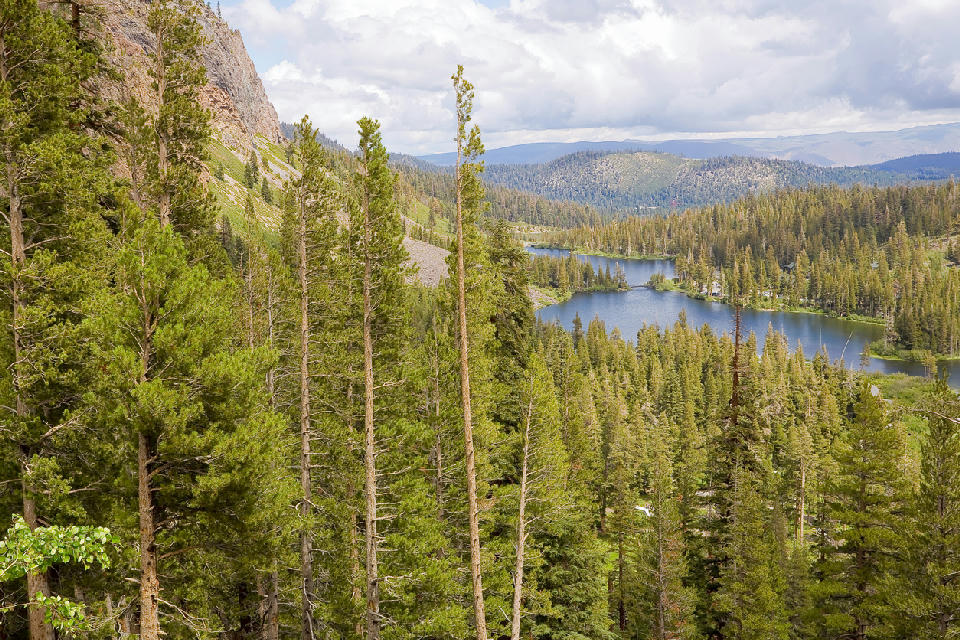
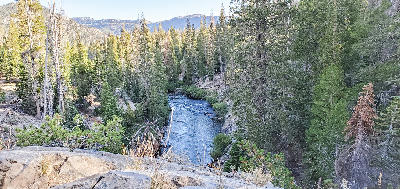
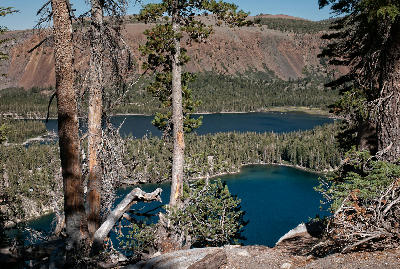
Layered alpine lakes within the Mammoth Lakes Basin, surrounded by dense pine forest and rolling granite terrain in the Sierra Nevada.
The alpine lakes of the Mammoth Lakes Basin sit within a compact high-elevation landscape in the eastern Sierra Nevada, defined by clustered lake systems, forested slopes, and surrounding volcanic and granite peaks. The basin forms a contained environment where multiple lakes are positioned within close proximity, creating a dense and accessible alpine setting. The terrain transitions between forested shorelines, open water surfaces, rocky slopes, and surrounding ridgelines. Elevation rises gradually around the basin rather than sharply, allowing continuous views across interconnected lake systems. Seasonal conditions influence water clarity, vegetation colour, and atmospheric visibility. Snowmelt feeds the lakes, while light interacts with water, trees, and terrain to shape contrast across the basin.
Gallery
Key POIs in Mammoth Lakes Basin
Nearby Places
View all on mapEdiza Lake
water feature — 19.5 km
Eastern Sierra Nevada
Thousand Island Lake
water feature — 22.0 km
Eastern Sierra Nevada
Ansel Adams Wilderness
area district — 24.4 km
Eastern Sierra Nevada
South Tufa
landmark — 31.1 km
Eastern Sierra Nevada
Mono Basin
area district — 33.2 km
Eastern Sierra Nevada
Mono Lake
water feature — 38.2 km
Eastern Sierra Nevada
Tioga Pass
landmark — 38.7 km
Yosemite National Park
Tuolumne Meadows & Tioga Pass
area district — 42.9 km
Yosemite National Park
Overview
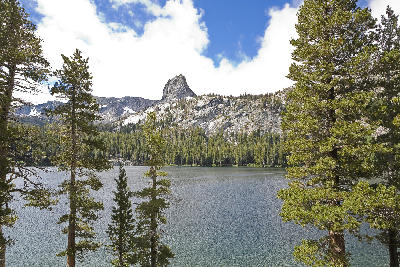
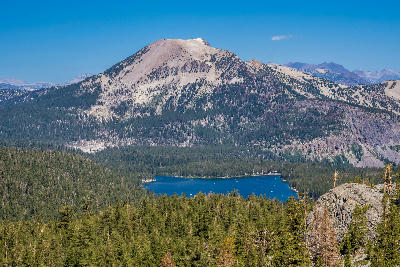
The Mammoth Lakes Basin is structured as a clustered alpine lake system, where multiple lakes are distributed within a relatively small geographic area. Unlike larger wilderness regions, the landscape here is compact, with short distances between key features. Lakes such as Lake Mary, Horseshoe Lake, and Convict Lake form a network of accessible foreground elements, each offering variations in composition. For photographers, the area functions through layered basin compositions. Water surfaces, forest edges, and surrounding peaks combine to create structured but flexible compositions within a contained environment. The visual structure is defined by proximity and layering. Multiple compositional elements—water, forest, and mountains—exist within a tight spatial frame, allowing for repeated variations without large-scale movement.
Key photography subjects
- Alpine lakes with reflective water surfaces
- Forest-lined shorelines framing lake compositions
- Surrounding peaks forming layered backdrops
- Multiple lakes within close geographic proximity
- Water, trees, and terrain combined in single compositions
- Subtle elevation changes across basin landscapes
- Light interacting across water and forest environments
Workshops in Mammoth Lakes Basin
Colorado Fall Color Photography Art Retreat

Autumn in Eastern Sierra

Oregon Coast Adventure Photography Workshop
Autumn in Utah Badlands