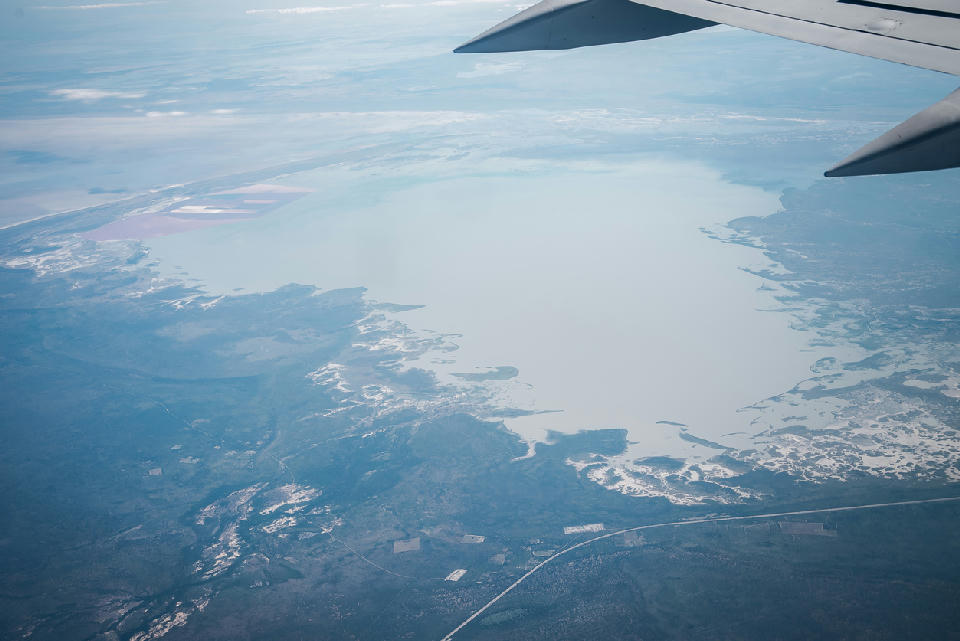
Aerial view of the Makgadikgadi Pans in Botswana, where vast white salt flats extend across the landscape, revealing the immense scale of one of the world's largest salt pan systems.
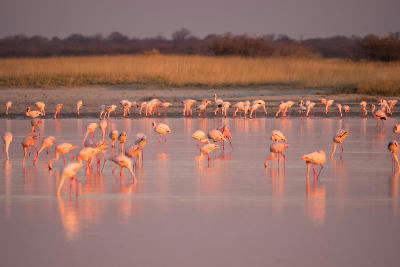
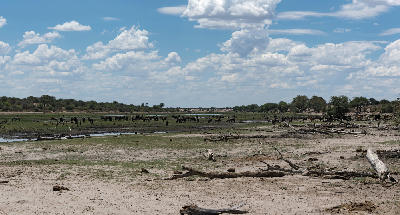
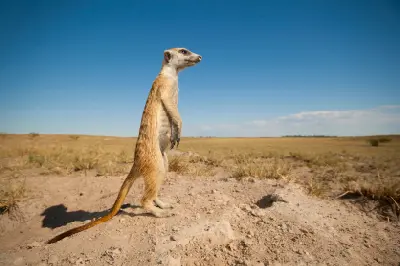
Makgadikgadi & Nxai Pan preserve one of the world's largest and most extraordinary salt pan systems, occupying a vast section of northeastern Botswana where ancient lakebeds, open grasslands and isolated rocky islands create landscapes unlike anywhere else in Africa. Formed from the remains of a prehistoric inland lake, the region combines immense white salt flats, seasonal wetlands, iconic baobab trees and sweeping desert horizons that define one of Botswana's most distinctive photographic destinations. The landscape is shaped by the remnants of ancient Lake Makgadikgadi, which once covered thousands of square kilometres before gradually drying and fragmenting into an immense network of salt pans. Today, fossil shorelines, scattered islands, grass-covered plains and shallow seasonal depressions dominate the region, while Nxai Pan preserves open savanna, ancient baobabs and wildlife-rich grasslands on the eastern margins of the pan system. Together these landscapes create an exceptional contrast between arid desert environments and seasonal wetland ecosystems. Seasonal variation transforms the appearance of the region throughout the year. Winter exposes endless white salt flats, exceptional atmospheric clarity and stark minimalist landscapes, while summer rainfall floods sections of the pans, attracting large numbers of flamingos, migratory birds, zebra migrations and lush grasslands that temporarily reshape the desert environment.
Gallery
Key POIs in Makgadikgadi & Nxai Pan
Overview
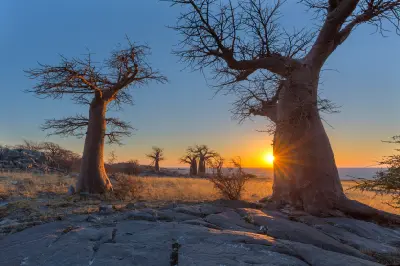
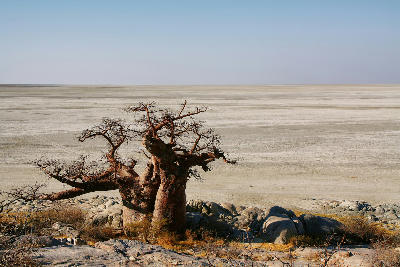
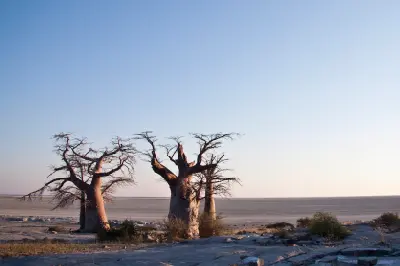
Makgadikgadi & Nxai Pan are structured around the immense remains of an ancient inland lake that once dominated much of northern Botswana. Over thousands of years, changing river systems and climatic shifts caused the lake to disappear, leaving behind one of the world's largest salt pan landscapes. Today the region consists of vast open pans, fossil beaches, isolated rocky islands and surrounding grasslands that preserve the geological history of this remarkable environment. Each landscape contributes a unique element to the region's identity. The Makgadikgadi Pans provide seemingly endless white horizons and dramatic minimalist scenery, while Nxai Pan combines seasonal grasslands, abundant wildlife and the iconic Baines' Baobabs. Kubu Island rises from the surrounding salt flats as an isolated granite outcrop covered with ancient baobabs, creating one of Botswana's most recognisable landscape landmarks. The visual structure of the region is defined by immense open space, geometric horizons and isolated natural features emerging from otherwise featureless terrain. White salt surfaces stretch toward distant horizons, solitary baobabs provide striking focal points and seasonal floodwaters introduce reflections, birdlife and changing textures across the landscape. Together these elements create one of Africa's most distinctive wilderness environments.
Key photography subjects
- Vast salt pans and ancient lakebed landscapes
- Endless horizons and minimalist desert compositions
- Baines' Baobabs and iconic isolated trees
- Kubu Island and granite outcrop landscapes
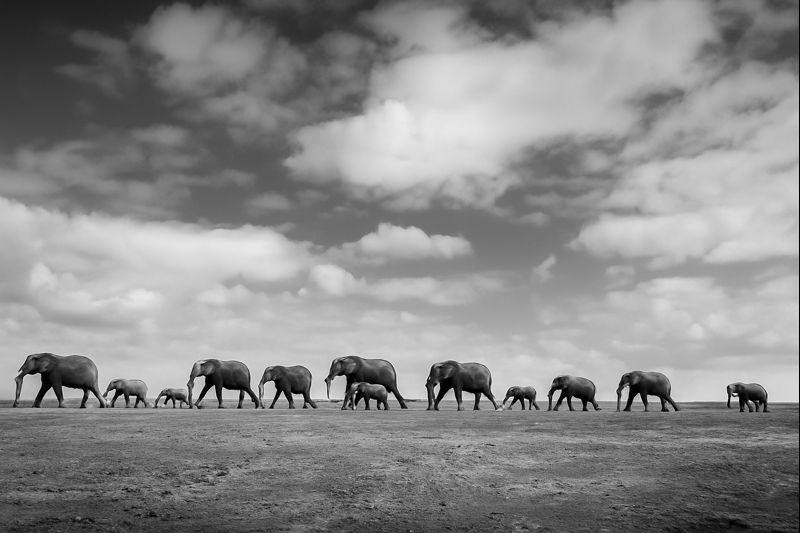
- Flamingos, zebra migrations and seasonal birdlife
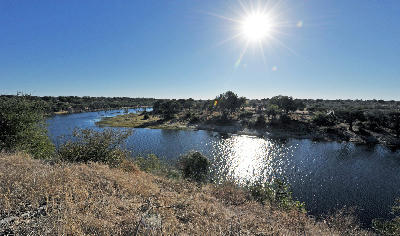
- Seasonal wetlands, reflections and dramatic skies
- Sunrise, sunset and atmospheric desert light