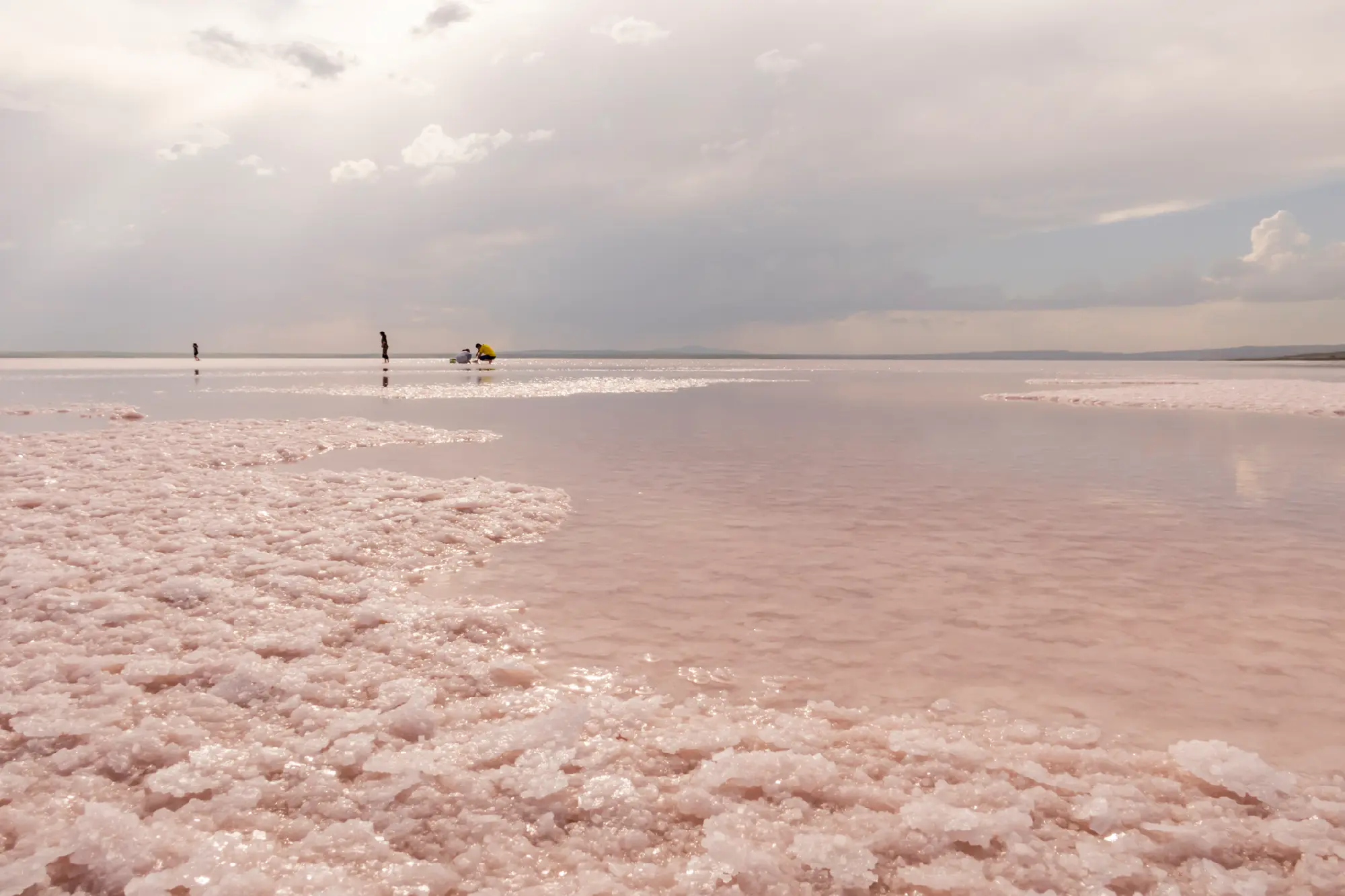
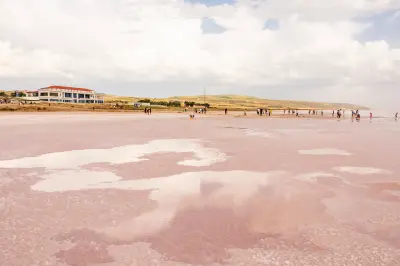
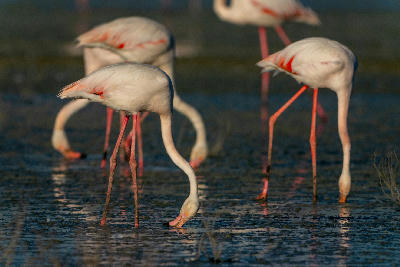
Pink-tinted shallow water and crystalline salt deposits spread across Lake Tuz in Central Anatolia, Turkey.
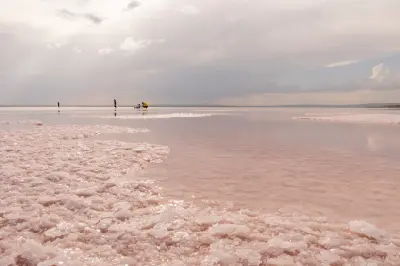
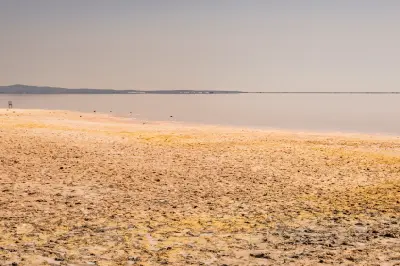
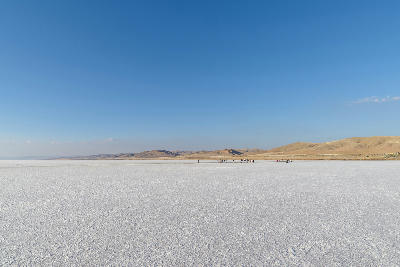
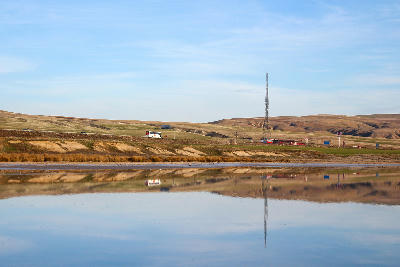
White salt flats and shallow reflective waters create wide, minimalistic landscapes at Lake Tuz. Seasonal changes produce mirror-like surfaces and strong graphic patterns, making it a distinctive subject for wide-angle and abstract photography.
38.85944, 33.29154
Gallery
Quick Facts
Access
Roadside / Step-out
0–5 min
Elevation Gain
0 m
Best Light
Low-angle light reveals salt textures and mineral colour, while shallow water can reflect the sky during wetter conditions.
Why This Light
Season
Seasonally Distinct
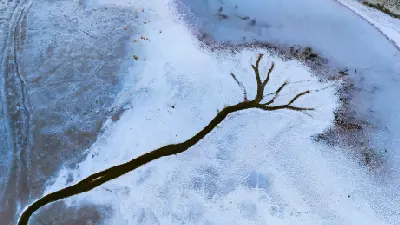
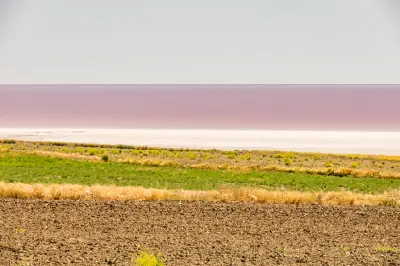
Summer evaporation exposes extensive white salt flats, cracked surfaces and concentrated mineral deposits across the lake bed. Wetter periods bring shallow water to parts of the lake, creating reflective surfaces and changing the colour and texture of the landscape.
Crowds
Usually Quiet
Restrictions
Lake Tuz can be reached from several roads and access points around its shoreline, but conditions vary considerably with seasonal water levels. Salt crusts and apparently dry surfaces can conceal soft or wet ground, so visitors should remain within established access areas and avoid disturbing sensitive sections of the lake.