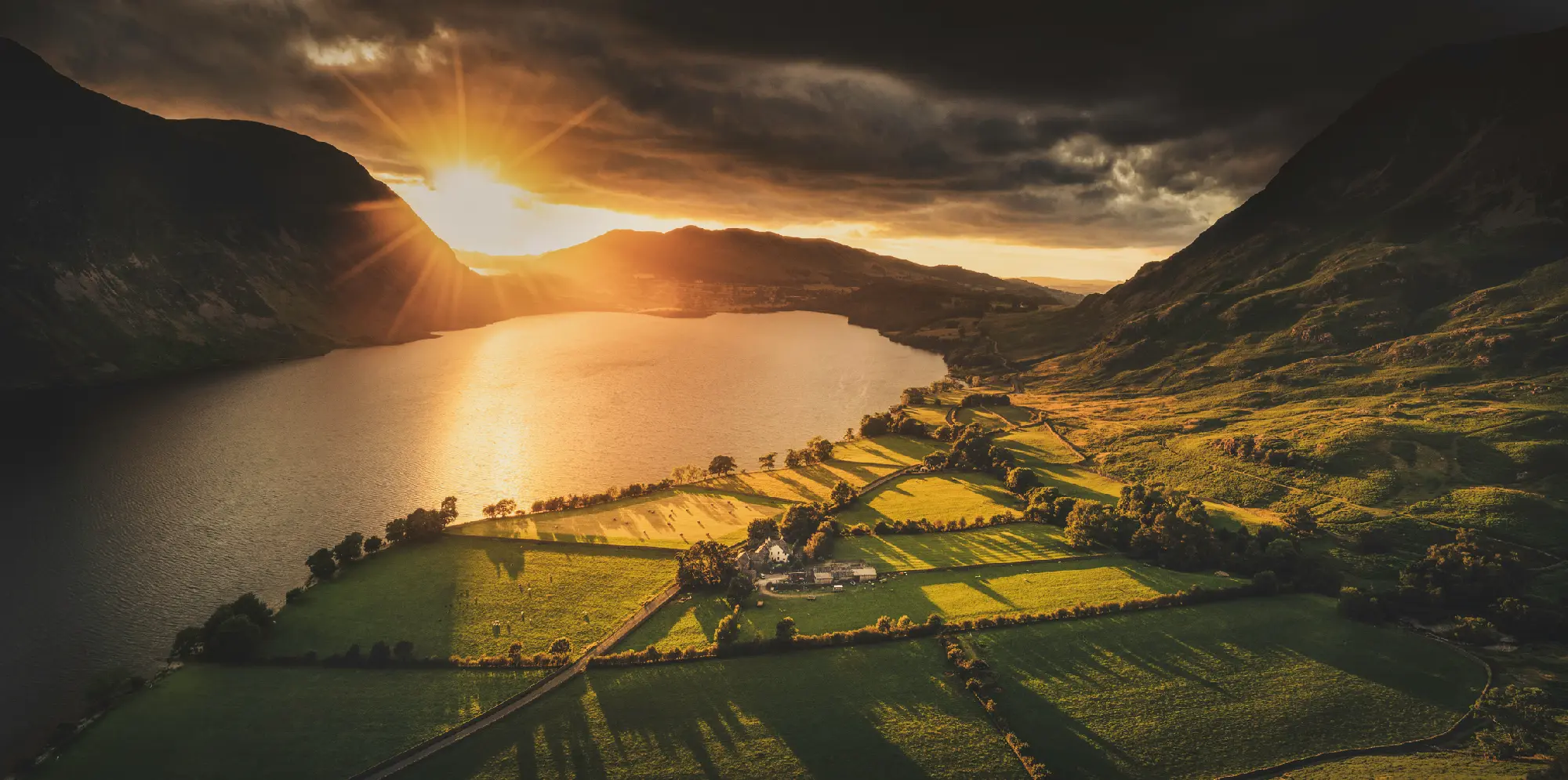
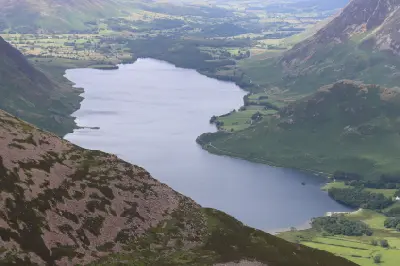
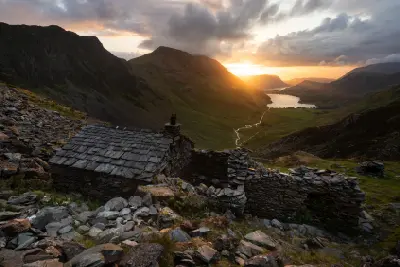
Golden sunset illuminates Crummock Water and the surrounding fields, viewed from Rannerdale Knotts in England's Lake District National Park.
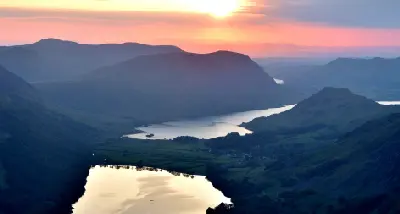
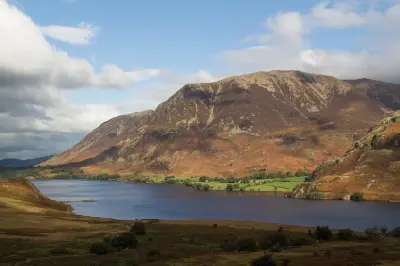
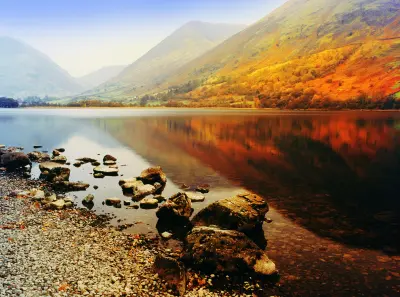
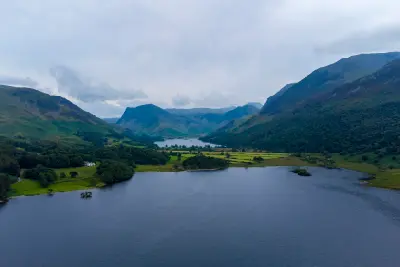
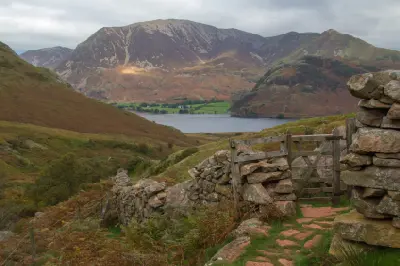
Crummock Water is a glacial lake in the western Lake District, situated between Buttermere and Loweswater beneath the steep slopes of Mellbreak and Grasmoor. Its open shoreline, scattered trees and surrounding fells provide broad views across the water, with fewer developed lakeside facilities than neighbouring Buttermere. The lake's mountain reflections, shoreline textures and changing weather offer varied opportunities for landscape photography.
54.55831, -3.30352
Gallery
Quick Facts
Access
Short Walk
5–15 min
Elevation Gain
20 m
Best Light
Low-angle sunlight defines the surrounding fells and shoreline trees, while calm conditions create mountain reflections across the lake.
Why This Light
Season
Seasonally Distinct
Summer brings green fell slopes, flowering grasses and leafy trees along the shoreline. Winter reveals muted vegetation and more open views through bare branches, with occasional snow on the surrounding fells and mist above the lake.
Crowds
Usually Quiet
Restrictions
Low-angle sunlight defines the surrounding fells and shoreline trees, while calm conditions create mountain reflections across the lake.