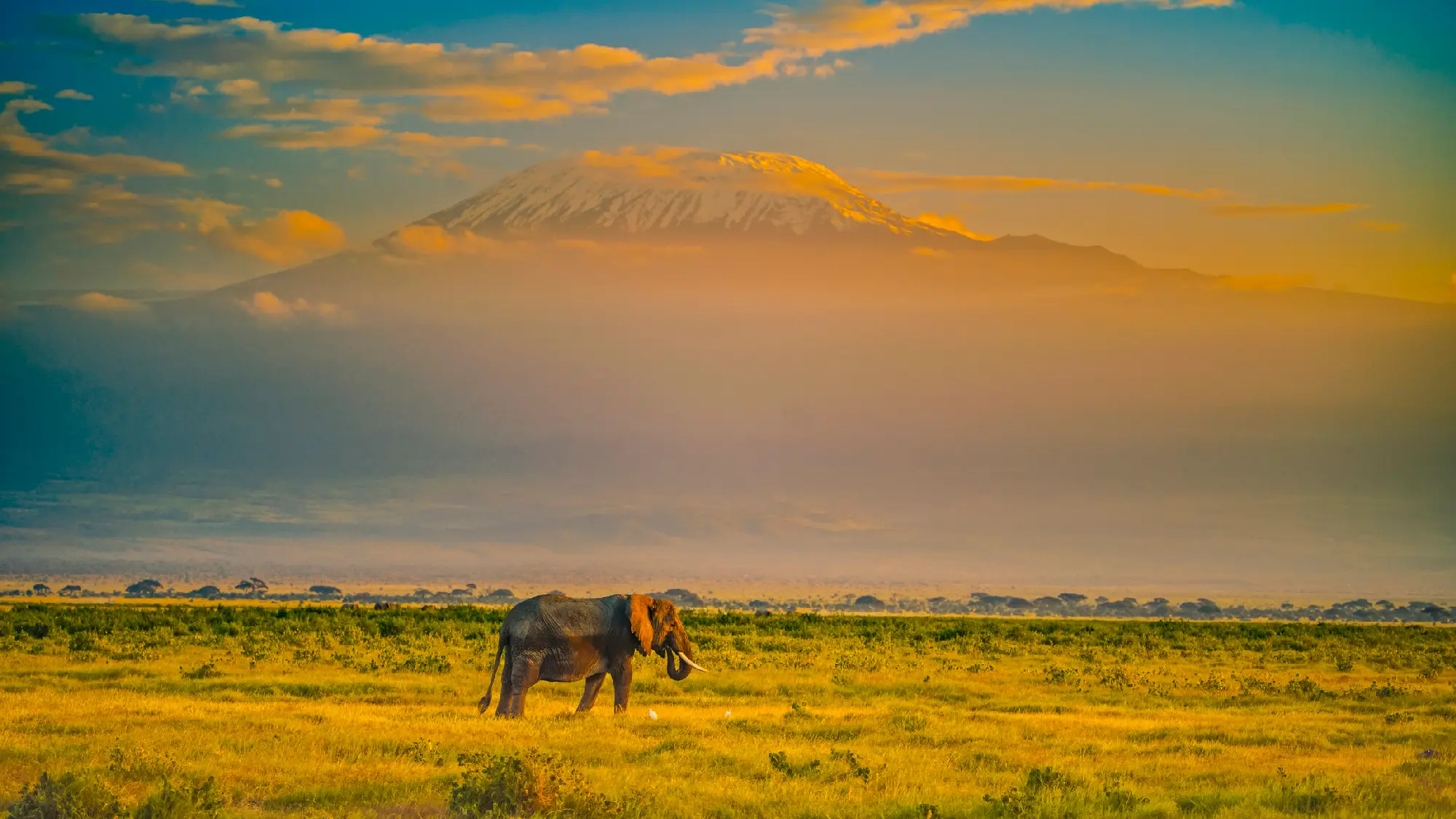
African elephant on the Amboseli plains with snow-capped Mount Kilimanjaro at sunrise, Kenya.
Kilimanjaro National Park protects Africa's highest mountain and one of the world's most iconic volcanic landscapes. Rising to 5,895 metres above the surrounding plains of northern Tanzania, Mount Kilimanjaro is the tallest free-standing mountain on Earth and an internationally recognised UNESCO World Heritage Site. The park encompasses an extraordinary range of ecosystems, from dense montane rainforest and giant heathlands to alpine desert and permanently glaciated summit slopes, creating one of the planet's most remarkable ecological gradients. Mount Kilimanjaro was formed by successive volcanic eruptions that created three distinct volcanic cones: Shira, Mawenzi and Kibo. While Shira has largely eroded and Mawenzi forms a rugged, deeply eroded peak, Kibo remains the highest summit and supports the mountain's famous glaciers and Uhuru Peak. As altitude increases, vegetation changes dramatically through a succession of ecological zones, with tropical forest giving way to heath, giant groundsel and lobelia moorlands before transitioning into barren volcanic desert and the ice-covered summit plateau. Conditions on Kilimanjaro change rapidly with both altitude and season. The lower slopes experience warm tropical conditions, while temperatures near the summit regularly fall below freezing. The dry seasons generally provide the clearest mountain views and best climbing conditions, while the rainy seasons transform the forests into lush green landscapes filled with waterfalls, mist and rich biodiversity. Throughout the year, sunrise and sunset create spectacular alpenglow across the glaciers, volcanic cliffs and surrounding plains.
Gallery
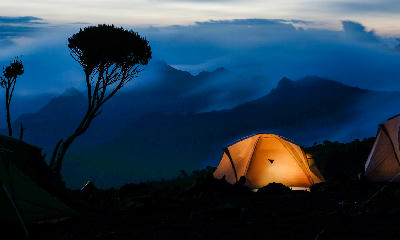
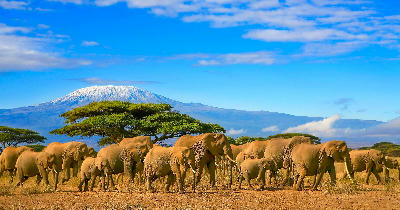
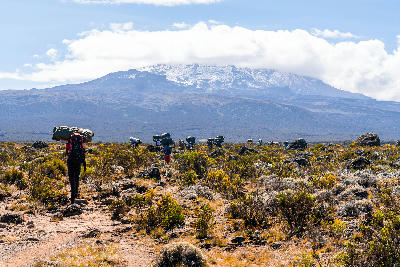
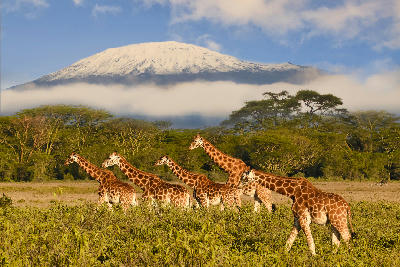
Key POIs in Kilimanjaro National Park
Overview
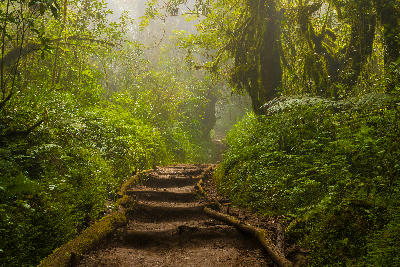
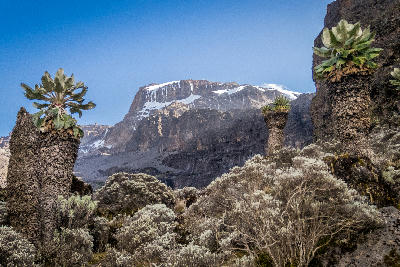
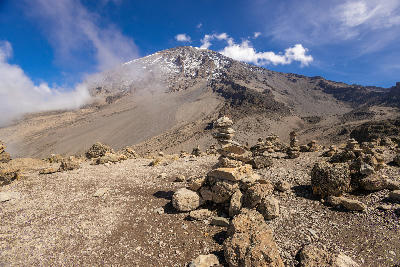
Kilimanjaro National Park is structured around Mount Kilimanjaro's three volcanic cones and the dramatic changes in landscape that occur with increasing elevation. The lower mountain is cloaked in dense montane rainforest rich in wildlife and endemic plants, above which lies an extensive heath and moorland zone characterised by giant groundsels and lobelias. Higher still, the alpine desert consists of lava fields, volcanic ridges and barren slopes leading to the glaciers, ice fields and volcanic crater surrounding Uhuru Peak. Features such as the Shira Plateau, Barranco Wall and The Saddle each represent distinctive stages within this remarkable ascent. Each elevation zone possesses its own photographic identity. The rainforest offers towering trees, moss-covered trails and abundant birdlife, while the heathlands are dominated by surreal high-altitude vegetation found nowhere else in East Africa. The alpine desert reveals dramatic volcanic formations, lava towers and sweeping mountain vistas, before giving way to glaciers, crater rims and the snow-covered summit that has become one of Africa's most recognisable landscapes. Few mountains in the world display such dramatic environmental transitions over such a relatively short horizontal distance. The visual character of Kilimanjaro National Park is defined by immense scale, dramatic elevation and constantly changing mountain weather. Clouds frequently wrap around the lower slopes while the summit rises into clear blue skies above, creating striking contrasts between tropical forest and permanent ice. Clear mornings provide exceptional long-distance views across the surrounding plains, while sunrise and sunset illuminate the glaciers, volcanic cliffs and high-altitude landscapes with rich golden and pink alpenglow.
Key photography subjects
- Uhuru Peak and Africa's highest summit
- Kibo, Mawenzi and the Shira volcanic cone
- Glaciers, crater rim and alpine desert landscapes
- Giant groundsels, lobelias and high-altitude vegetation
- Barranco Wall, Shira Plateau and The Saddle
- Montane rainforest, moorland and volcanic scenery
- Sunrise, alpenglow, cloud inversions and panoramic mountain views
Workshops in Kilimanjaro National Park
No upcoming workshops scheduled for Kilimanjaro National Park at this time.
Check back soon or explore other destinations.