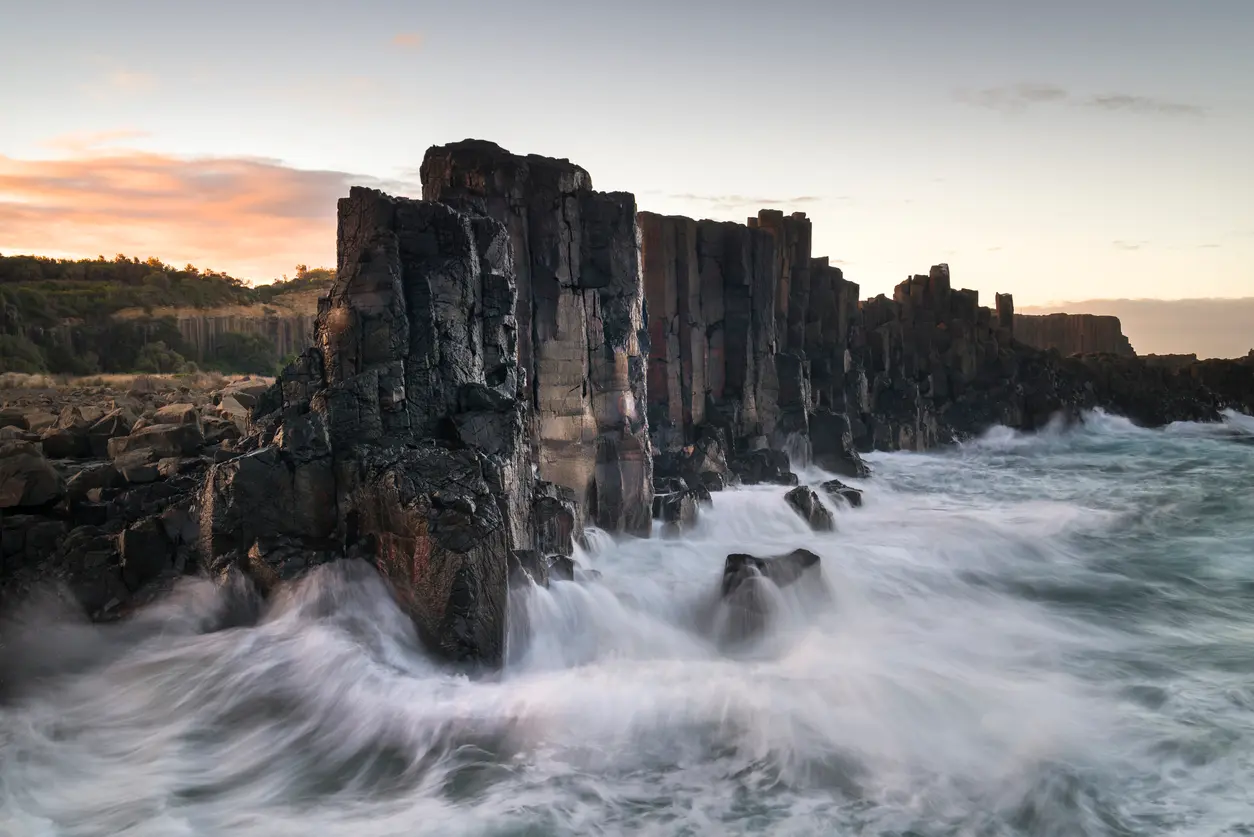
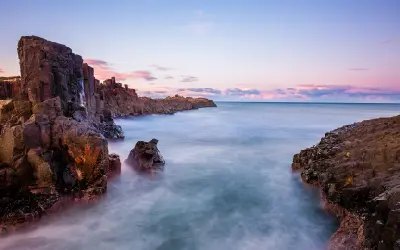
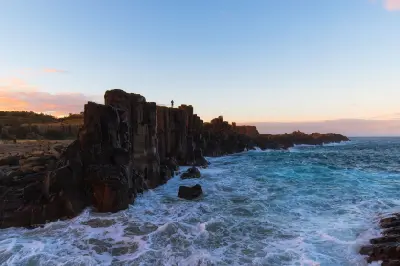
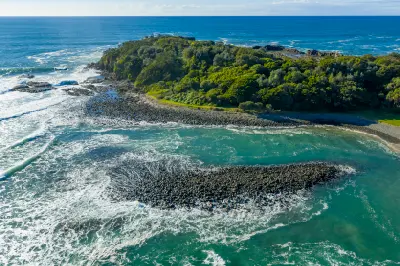
Waves breaking against the basalt columns of Bombo Headland Quarry, Kiama, Australia.
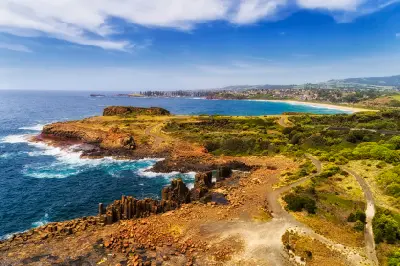
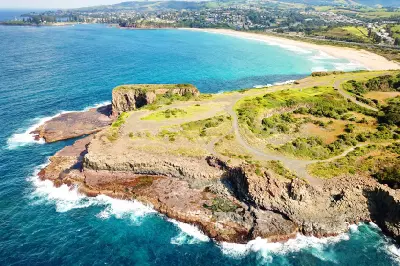
Bombo Headland is a dramatic volcanic coastal landscape near Kiama, defined by dark basalt columns, quarry walls and exposed rock platforms beside the Pacific Ocean. Historic quarrying has left an unusual geometric landscape where vertical rock formations meet breaking waves. Its distinctive geology and powerful coastal setting make it one of the NSW South Coast's strongest photography locations.
-34.65037, 150.86344
Gallery
Quick Facts
Access
Short Walk
5–15 min
Elevation Gain
20 m
Best Light
Low-angle light defines the basalt columns and quarry walls, while the open coast handles contrast well across dark rock, ocean and sky.
Why This Light
Season
Seasonally Distinct
Summer brings longer daylight and generally calmer coastal conditions, while winter can produce stronger swell and dramatic seas. Autumn and spring often combine changing weather, moderate temperatures and quieter conditions.
Crowds
Usually Quiet
Restrictions
Bombo Headland is reached from parking areas near Bombo and the coastal walking track, followed by a short walk towards the former quarry and shoreline. Established paths provide access to the headland, but many photographic positions involve uneven rock close to the ocean. Swell, spray and wet basalt can make exposed platforms hazardous, particularly during rough conditions.