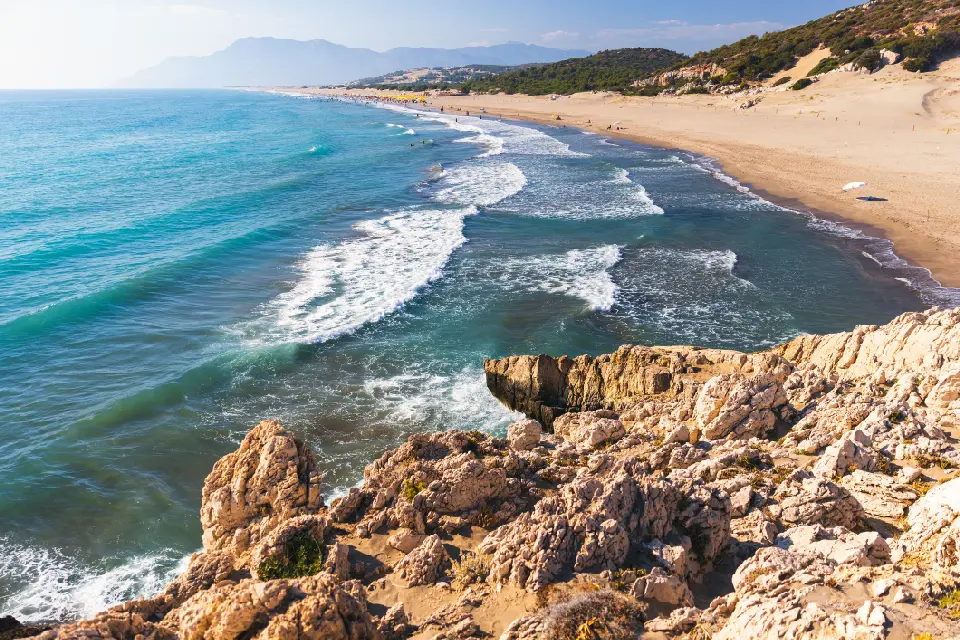
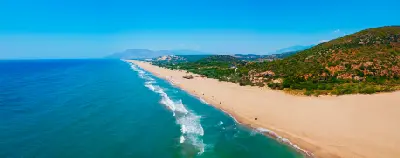
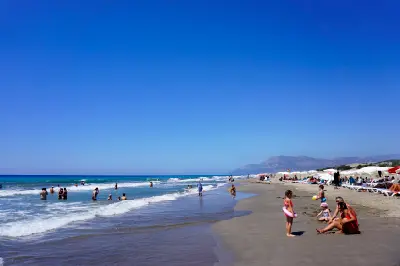
Patara Beach, a vast sweep of sand along Turkey’s Mediterranean coast.
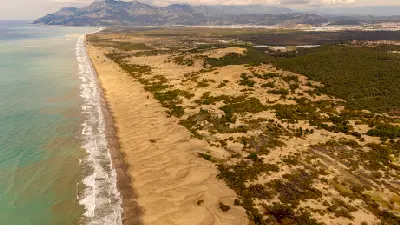
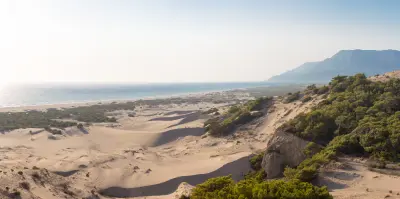
Patara Beach is an extensive sandy beach on Turkey's Turquoise Coast, stretching for kilometres along an largely undeveloped section of Mediterranean shoreline. Broad dunes separate the beach from the surrounding wetlands and the archaeological remains of ancient Patara farther inland. Unlike the enclosed coves around Kaş and Kalkan, Patara is characterised by open horizons, sweeping sand and a long exposed coastline. The beach is also an important nesting site for loggerhead sea turtles.
36.27161, 29.28959
Gallery
Quick Facts
Access
Visitor Access
5–15 min
Elevation Gain
10 m
Best Light
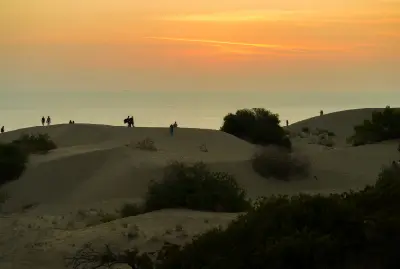
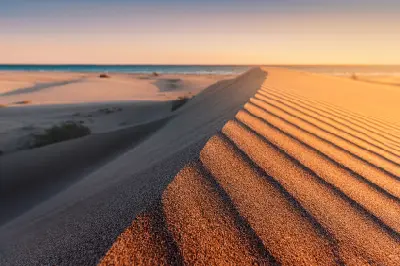
Low evening light reveals texture across the dunes and beach, while sunset creates silhouettes and colour across the open western horizon.
Why This Light
Season
Seasonally Distinct
Summer brings dry dunes, warm Mediterranean water and the highest visitor numbers, while spring introduces greener vegetation around the surrounding wetlands. Autumn is generally quieter with warm sea conditions, while winter can bring stronger winds and rougher surf.
Crowds
Often Busy
Restrictions
Patara Beach is reached through a managed protected and archaeological area, followed by a short walk to the shoreline. Loggerhead turtles nest along the beach, and seasonal rules restrict access and activities during nesting periods. Visitors should remain clear of marked nests and protected dune areas.