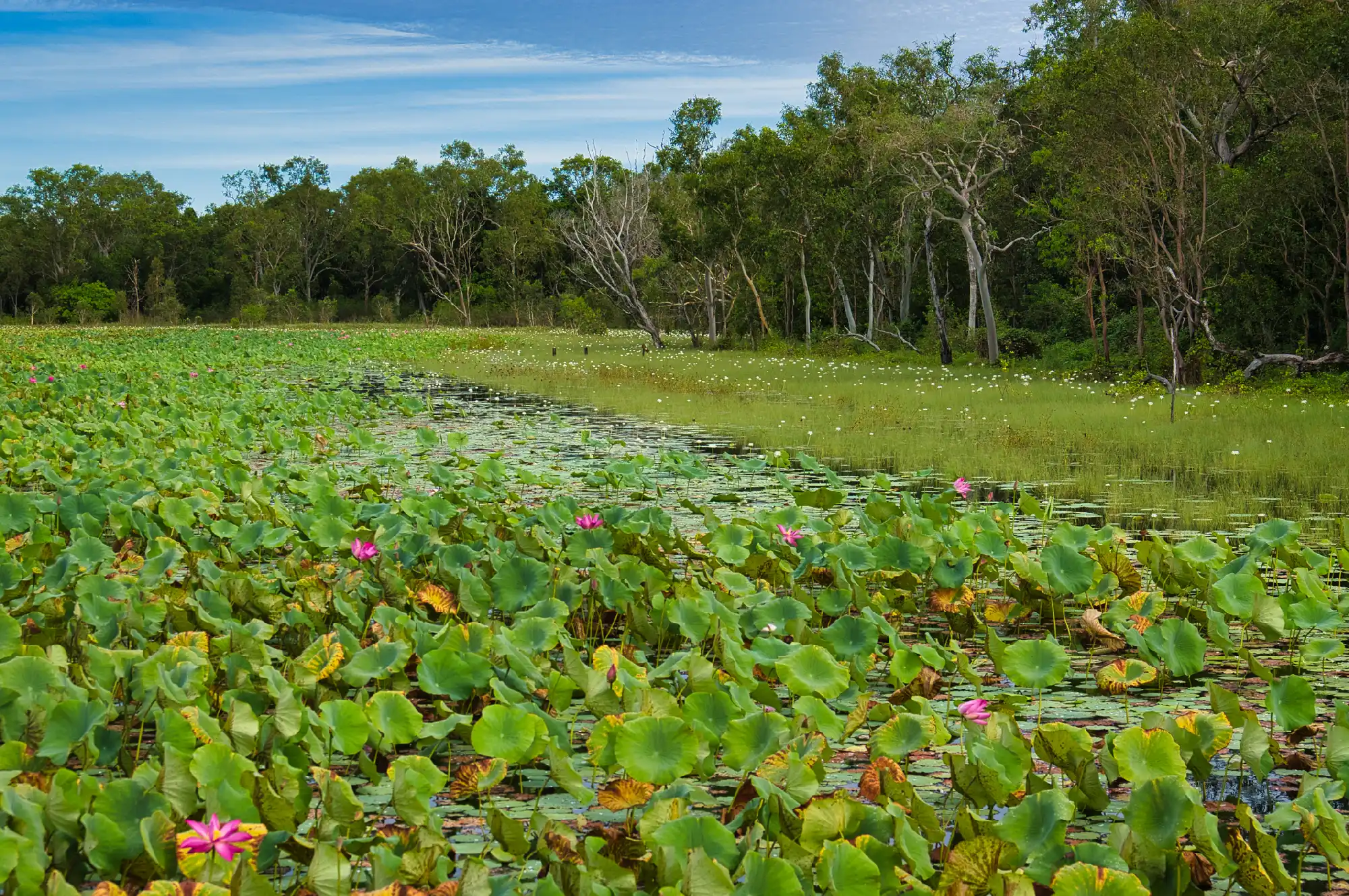
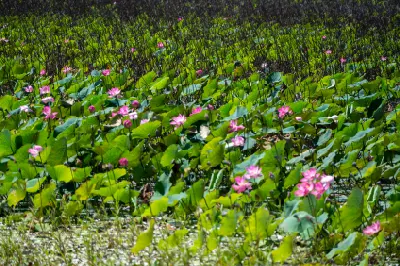
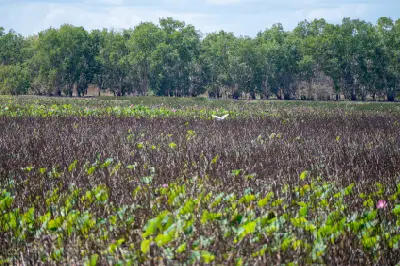
Pink lotus flowers spread across the shallow waters of Mamukala Wetlands in Kakadu National Park, where seasonal floodplains meet dense tropical woodland and provide habitat for abundant birdlife.
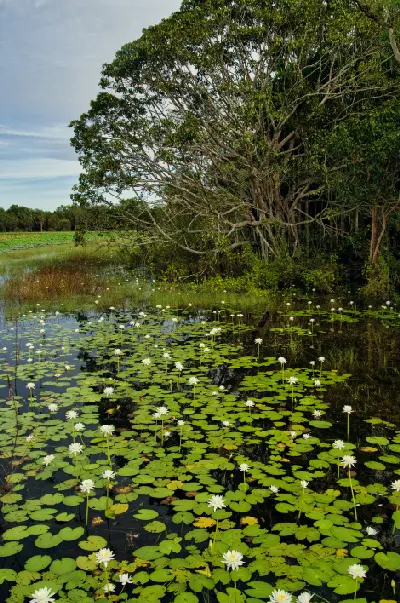
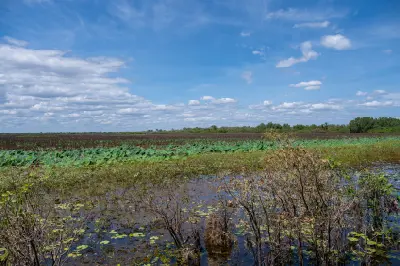
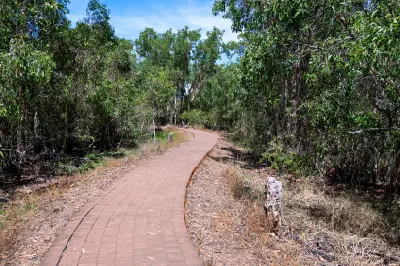
Mamukala Wetlands is a seasonal floodplain wetland in Kakadu National Park, Northern Territory, known for its large concentrations of waterbirds during the dry season. A bird hide and short walking tracks overlook shallow lagoons, paperbark woodland and aquatic vegetation, with magpie geese gathering in particularly large numbers as water levels recede. The abundant birdlife, reflective water and changing wetland landscape provide opportunities for wildlife, nature and landscape photography.
-12.65060, 132.57575
Gallery
Quick Facts
Access
Short Walk
5–15 min
Elevation Gain
5 m
Best Light
Low-angle sunlight illuminates waterbirds and wetland vegetation, while calm water reflects paperbark trees, reeds and changing sky conditions.
Why This Light
Season
Seasonally Distinct
Summer brings monsoon flooding, extensive shallow water and lush green vegetation, with birdlife dispersed across the wider floodplain. Winter brings receding water, exposed mudflats and increasingly concentrated waterbirds, particularly large flocks of magpie geese towards the late dry season.
Crowds
Usually Quiet
Restrictions
Mamukala Wetlands is reached from the Arnhem Highway within Kakadu National Park, with parking near a short walking path leading to the bird hide. A longer walking trail explores the surrounding wetland margins when conditions permit. A Kakadu park pass generally applies, and drone operations require prior authorisation. Seasonal flooding can affect walking tracks and access, while visitors should remain on designated paths and observe crocodile warning signs.