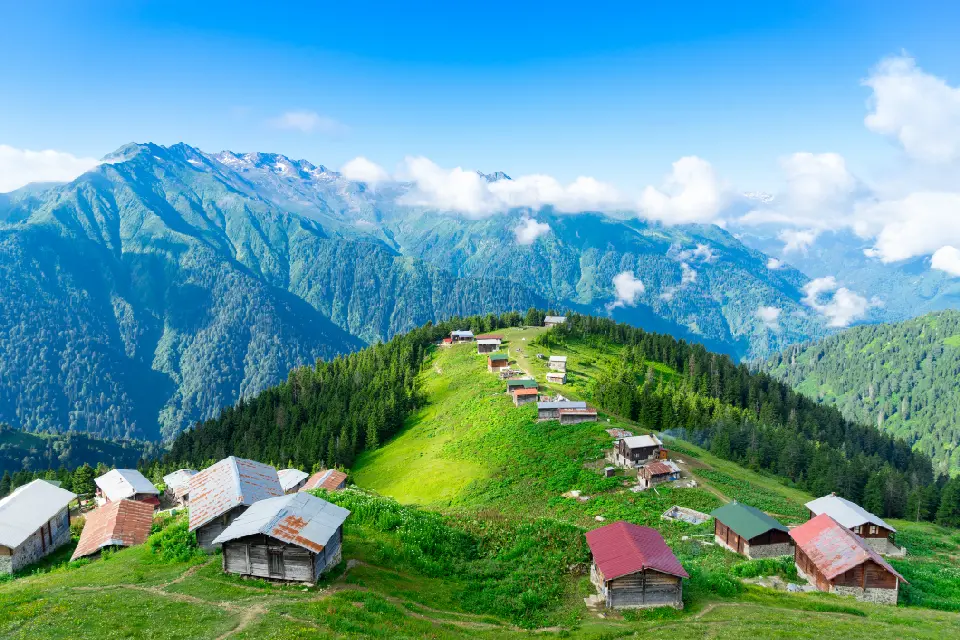
Traditional highland houses on Pokut Plateau, Çamlıhemşin, Rize, Turkey
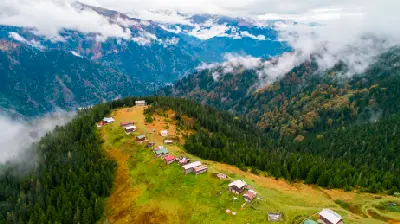
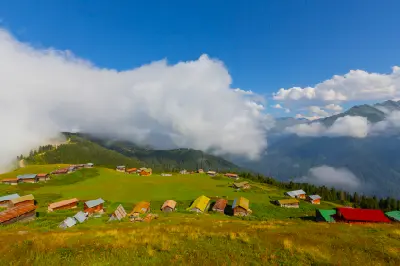
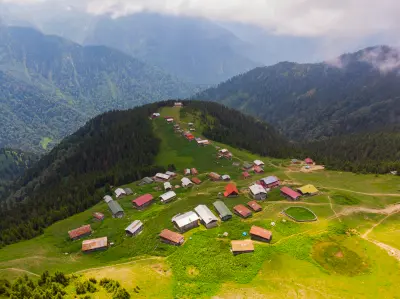
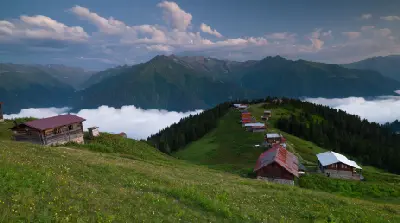
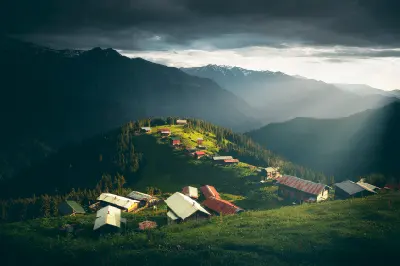
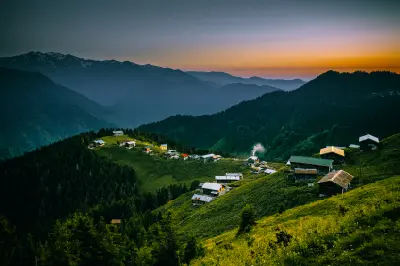
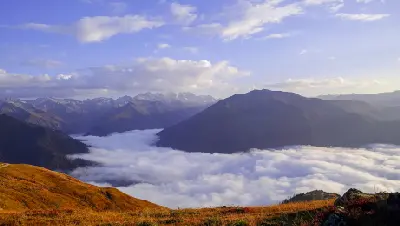
Pokut Plateau is a traditional highland settlement above Çamlıhemşin in Turkey's eastern Black Sea mountains. Wooden yayla houses are scattered across steep grassy ridges surrounded by dense forest, with the higher Kaçkar Mountains forming a dramatic backdrop. Its elevated position frequently places the settlement among low cloud and mist, while breaks in the weather reveal successive layers of forested mountains. The combination of traditional highland architecture and expansive mountain scenery gives Pokut a particularly distinctive landscape character.
40.96347, 41.02880
Gallery
Quick Facts
Access
Roadside / Step-out
5–15 min
Elevation Gain
30 m
Best Light
Low-angle light separates the mountain ridges and highland houses, while mist and broken cloud can create dramatic shafts of light across the landscape.
Why This Light
Season
Seasonally Distinct
Summer brings green meadows, wildflowers and active highland settlements, while spring can retain snow on the surrounding peaks. Autumn introduces warmer vegetation tones, while winter snow can make access difficult or impractical.
Crowds
Often Busy
Restrictions
Pokut is reached from the Çamlıhemşin area by a steep mountain road, with the final approach considerably rougher than the main valley roads. Conditions can deteriorate after heavy rain, and winter snow may restrict access. Short walks around the settlement reach many of the principal viewpoints.