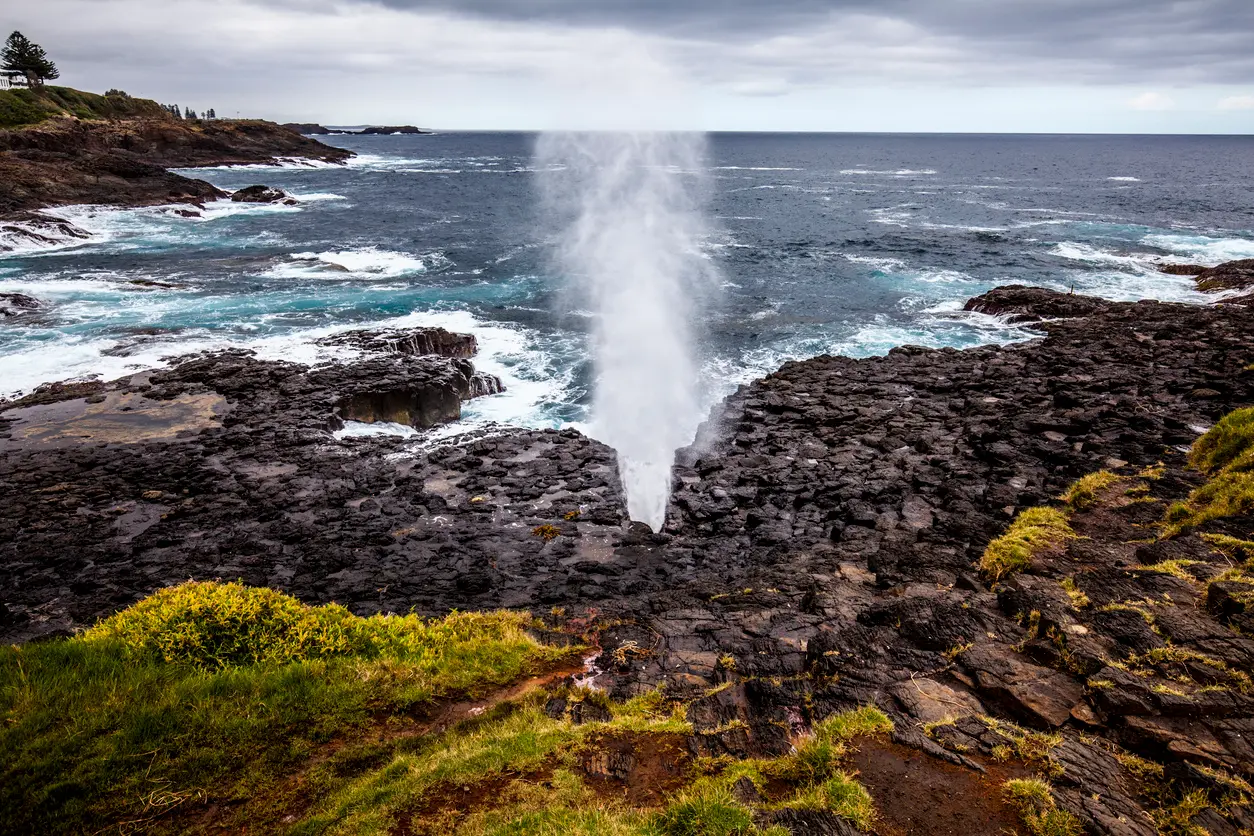
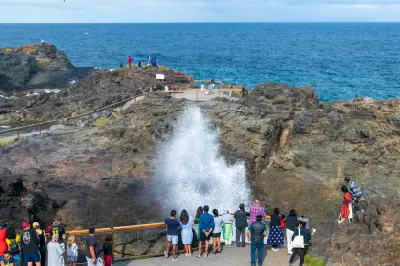
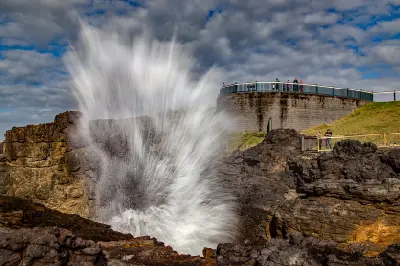
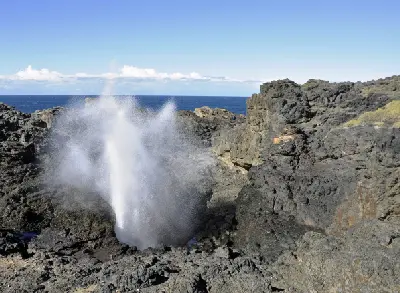
Little Kiama Blowhole erupting on the rocky coast near Kiama, New South Wales, Australia.
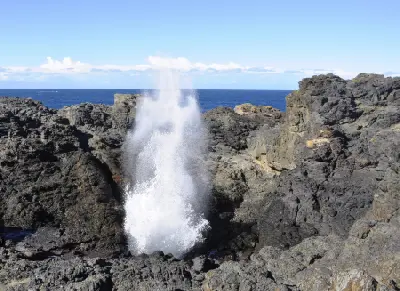
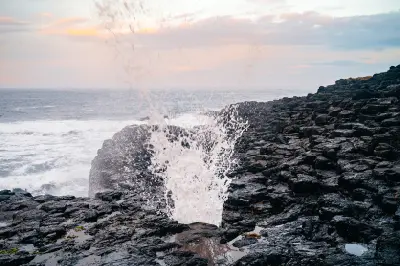
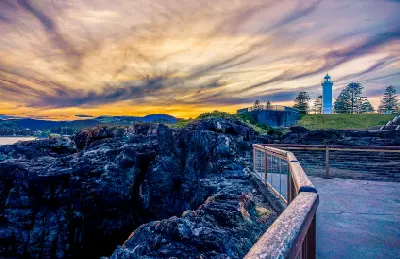
Kiama Blowhole is a natural sea cave and blowhole on a rocky headland beside the town of Kiama. Incoming waves force compressed water and air through an opening in the rock, producing powerful bursts of spray above the coastline. The combination of wave action, volcanic rock and an easily accessible coastal setting makes it a distinctive location for seascape and action photography.
-34.67185, 150.86316
Gallery
Quick Facts
Access
Short Walk
0–5 min
Elevation Gain
5 m
Best Light
Backlight can illuminate airborne spray, while lower-angle light adds definition to the dark volcanic rock and breaking waves.
Why This Light
Season
Seasonally Distinct
Winter often brings stronger swell and more dramatic coastal conditions, while summer generally has calmer seas and higher visitor numbers. Autumn and spring can combine changing weather with active swell and fewer peak-season crowds.
Crowds
Often Busy
Restrictions
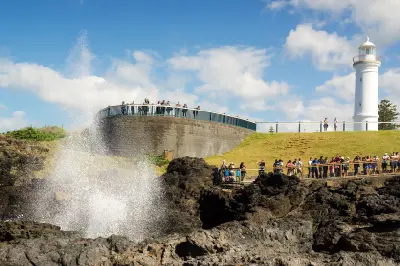
Kiama Blowhole is reached from the headland beside central Kiama, with parking and established paths close to the main viewing areas. Fenced platforms overlook the blowhole, so the principal experience requires very little walking. The strength of the blowhole depends heavily on swell and wind direction, while rough seas make exposed rocks around the headland hazardous.