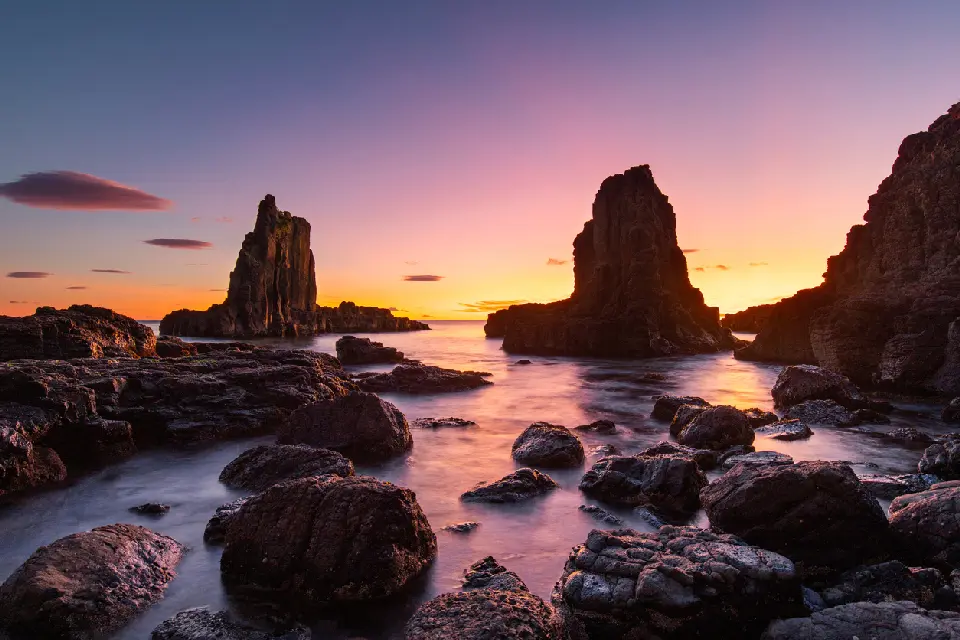
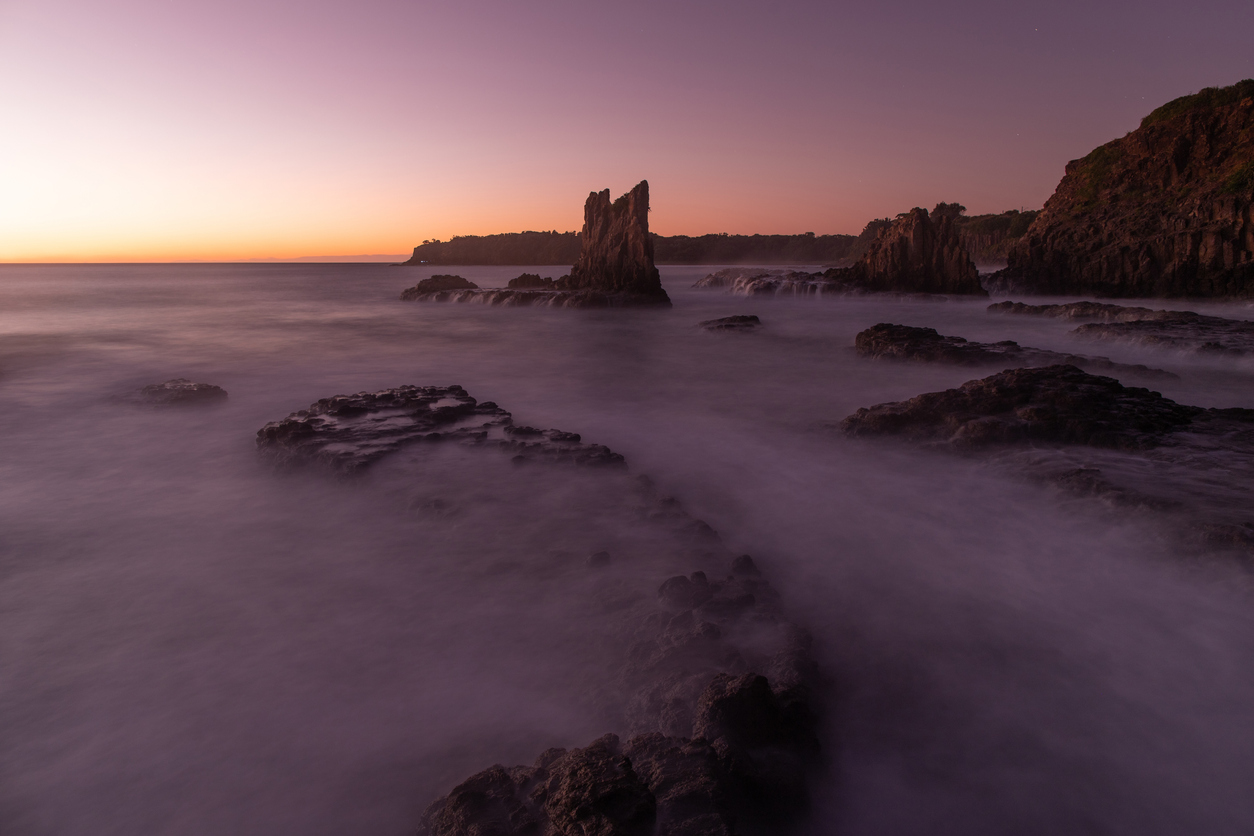
Cathedral Rocks at dawn near Kiama, New South Wales, Australia.
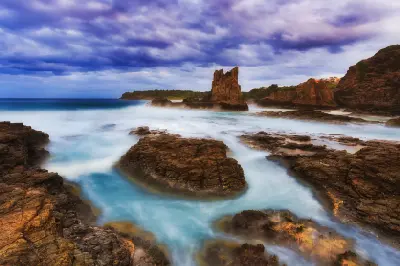
Cathedral Rocks is a striking basalt rock formation on the coast near Kiama, where dark volcanic columns and offshore stacks rise from the Pacific Ocean. Waves, tidal pools and exposed rock platforms surround the formations, creating a dramatic contrast between angular geology and open sea. Its distinctive shapes and strong interaction with changing light and water make it one of the NSW coast's strongest seascape photography locations.
-34.64483, 150.85653
Gallery



Quick Facts
Access
Short Walk
5–15 min
Elevation Gain
10 m
Best Light
Low-angle light defines the basalt formations, while tidal pools can reflect the rocks and changing colour around sunrise.
Why This Light
Season
Seasonally Distinct
Summer brings longer daylight and generally warmer coastal conditions, while winter can produce stronger swell and more dramatic seas. Autumn and spring often combine changing weather, moderate temperatures and quieter conditions.
Crowds
Usually Quiet
Restrictions
Cathedral Rocks is reached from the coastal streets around Kiama Downs, followed by a short walk towards the shoreline. The strongest views can involve uneven rock platforms and areas affected by tide and swell. Wet rocks can be extremely slippery, and photographers should remain well clear of exposed platforms when seas are rough.